
Ordering Number: AS22650
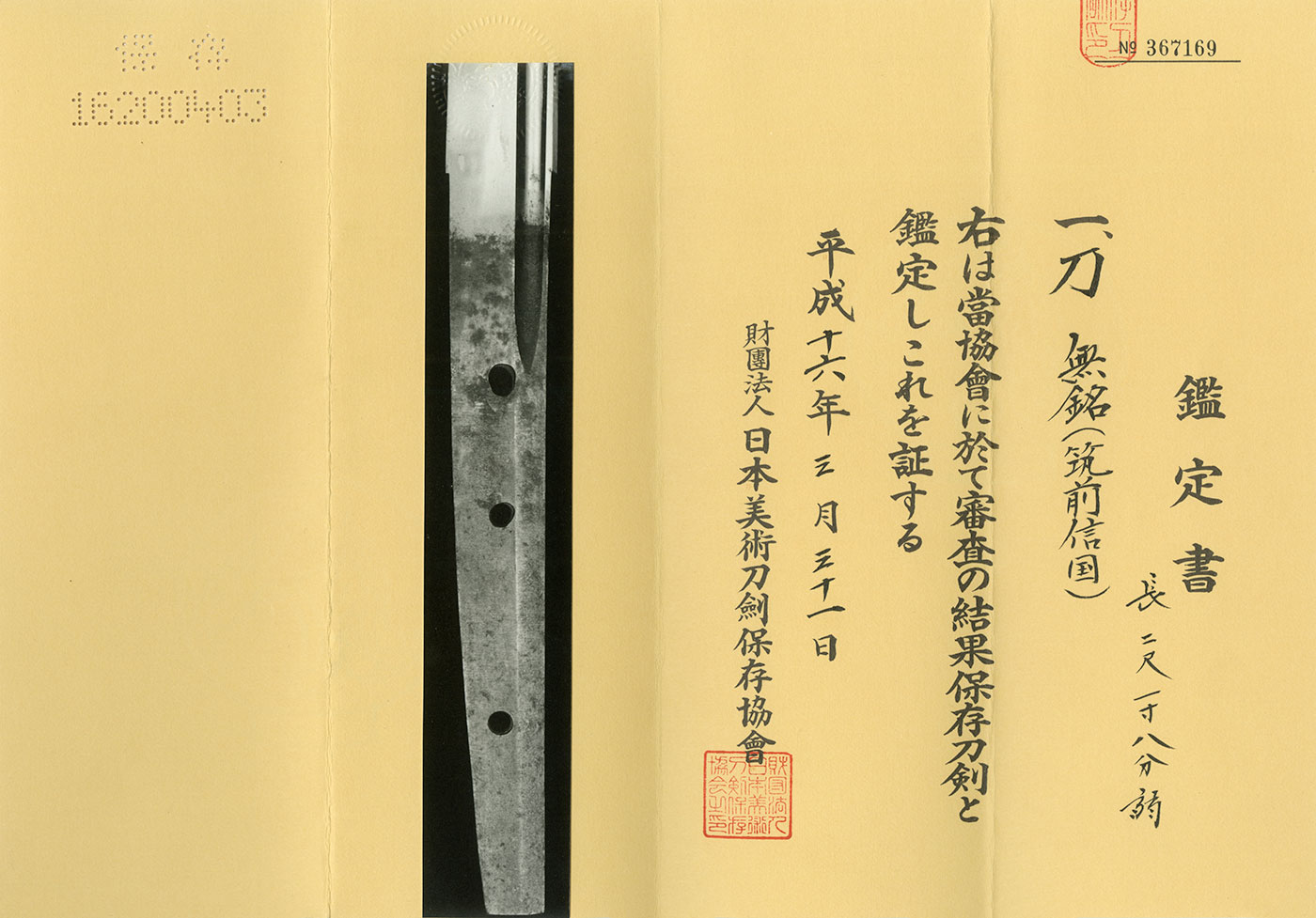
Katana in Koshirae (NBTHK Hozon Token)
Signature: Mumei (Chikuzen Nobukuni)
無銘(筑前信国)
(We divide 4 sections for each sword as Saijyo Saku, Jyojyo Saku, Jyo Saku and Regular Saku).
This blade is ranked as Jyojyo Saku among works attributed to Mumei (Chikuzen Nobukuni).
Habaki: Single gold-foiled habaki.
Blade Length: 66.1 cm (26.02 in).
Curvature: 1.3 cm (0.51 in).
Mekugi Hole: 3.
Width at Base (Motohaba): 3.02 cm (1.19 in).
Width at Yokote: 2.11 cm (0.83 in).
Thickness of rim (Kasane): 0.59 cm (0.23 in).
Sword Weight: 675 g.
Era: Late Muromachi period to early Edo period.
Shape: A well-proportioned blade.
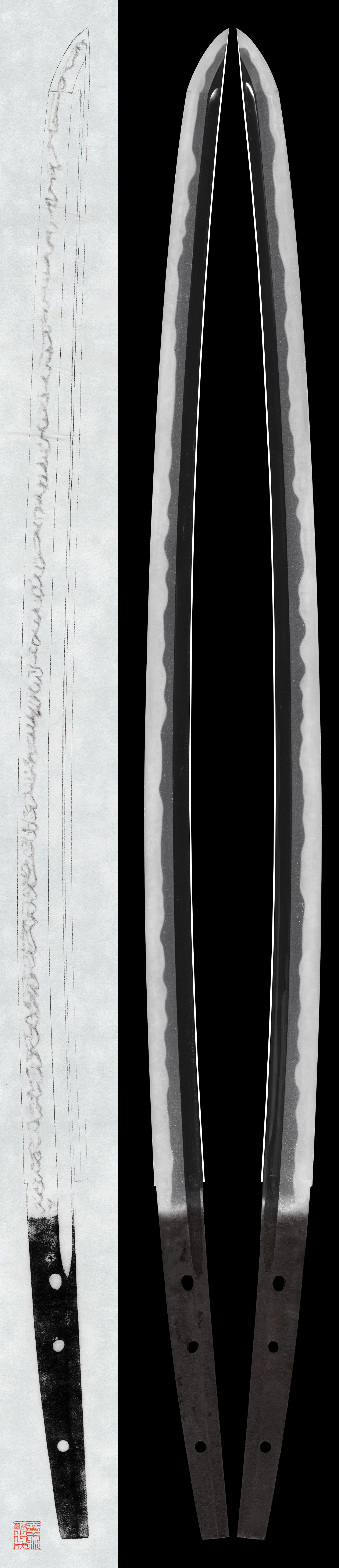
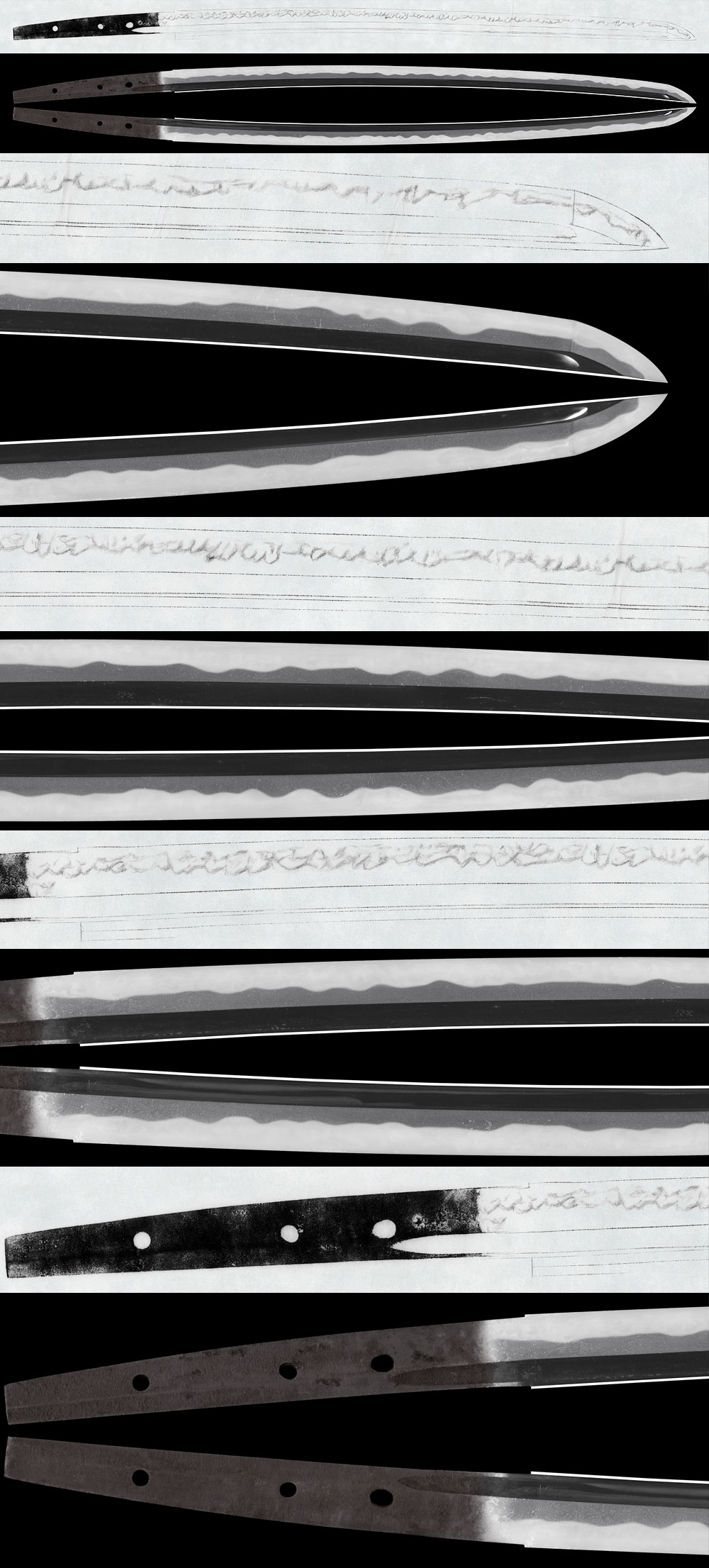
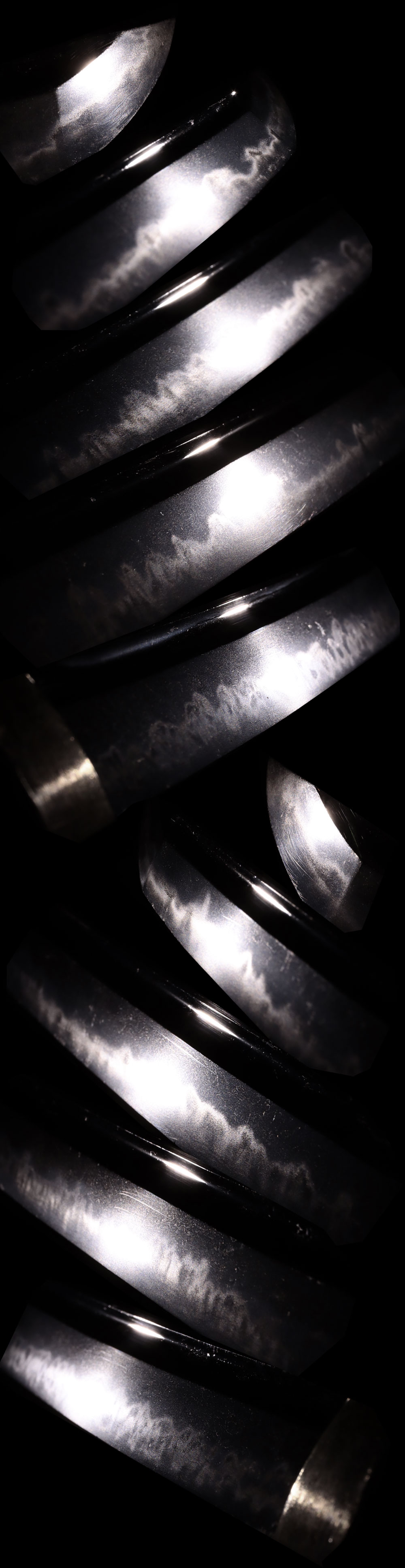
Jigane: Well-forged ko-itame hada with excellent activity, resulting in a finely crafted jigane.
Hamon: Gunome-midare with abundant ashi and rich internal activities within the hamon. The boshi continues in midare and turns back.
Features: Chikuzen Nobukuni refers to the line of swordsmiths active from the late Muromachi period through the early Edo period in Chikuzen Province. Although attributed to the early Edo period, this blade appears stylistically to have been forged in the late Muromachi period.
Koshirae:
Tsuba: Vertically oval iron tsuba with openwork design, decorated with cherry blossoms in gold and silver nunome-zogan.
Fuchikashira: Iron fittings decorated with cherry blossoms in gold.
Saya (Scabbard): Vermilion lacquered saya.
Menuki: Banner motif, decorated with gold iroe.
Historical Background: The Azuchi-Momoyama period, which followed the Muromachi period, was an era in which Oda Nobunaga and Toyotomi Hideyoshi consolidated central authority, bringing an end to the long years of warfare during the Sengoku period and achieving the unification of Japan. It encompasses roughly the thirty years leading up to the establishment of the Edo Shogunate following Tokugawa Ieyasu's victory at the Battle of Sekigahara. Nobunaga expanded his power by making effective use of firearms, most notably at the Battle of Nagashino, where he defeated the powerful Takeda forces. In 1573, he overthrew the Muromachi Shogunate, but in 1582 he was betrayed and killed by his retainer Akechi Mitsuhide during the Incident at Honno-ji.
NBTHK Hozon Token.
AoiArt estimation paper: Whole Oshigata.
Please note: The price does not include the international shipping fees.
Auction Starting Price:550,000JPY
Place Bid



Related Items:
 Katana: Chikuzen-no-kami Nobuhide 筑前守信秀 Keio Ni-nen Hachi-gatsu Hi 慶応二年八月日 (NBTHK Tokubetsu Hozon Token)
 Katana:Soushi Chikuzen Daijo Taikei Naotane(Kao)(NBTHK Tokubetsu Hozon Token)
 Tachi : Bishu Osafune Yukihisa (NBTHK Tokubetsu Hozon Token)
 Katana:Yamato Shizu Kaneuji (with gold-inlaid attribution) Hon'ami (kao) (Koson) (NBTHK Tokubetsu Hozon Token)
 Katana:: Mumei (Ichimonji) (NBTHK Tokubetsu Hozon Token) (Consignment Sale)
 Katana:Mumei (Attributed to Naoe Shizu) (NBTHK Tokubetsu Hozon Token)