
Ordering Number: 26021
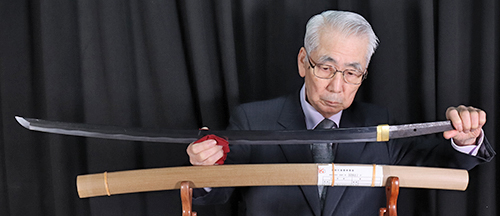
Katana in Shirasaya (NBTHK Tokubetsu Hozon Token)
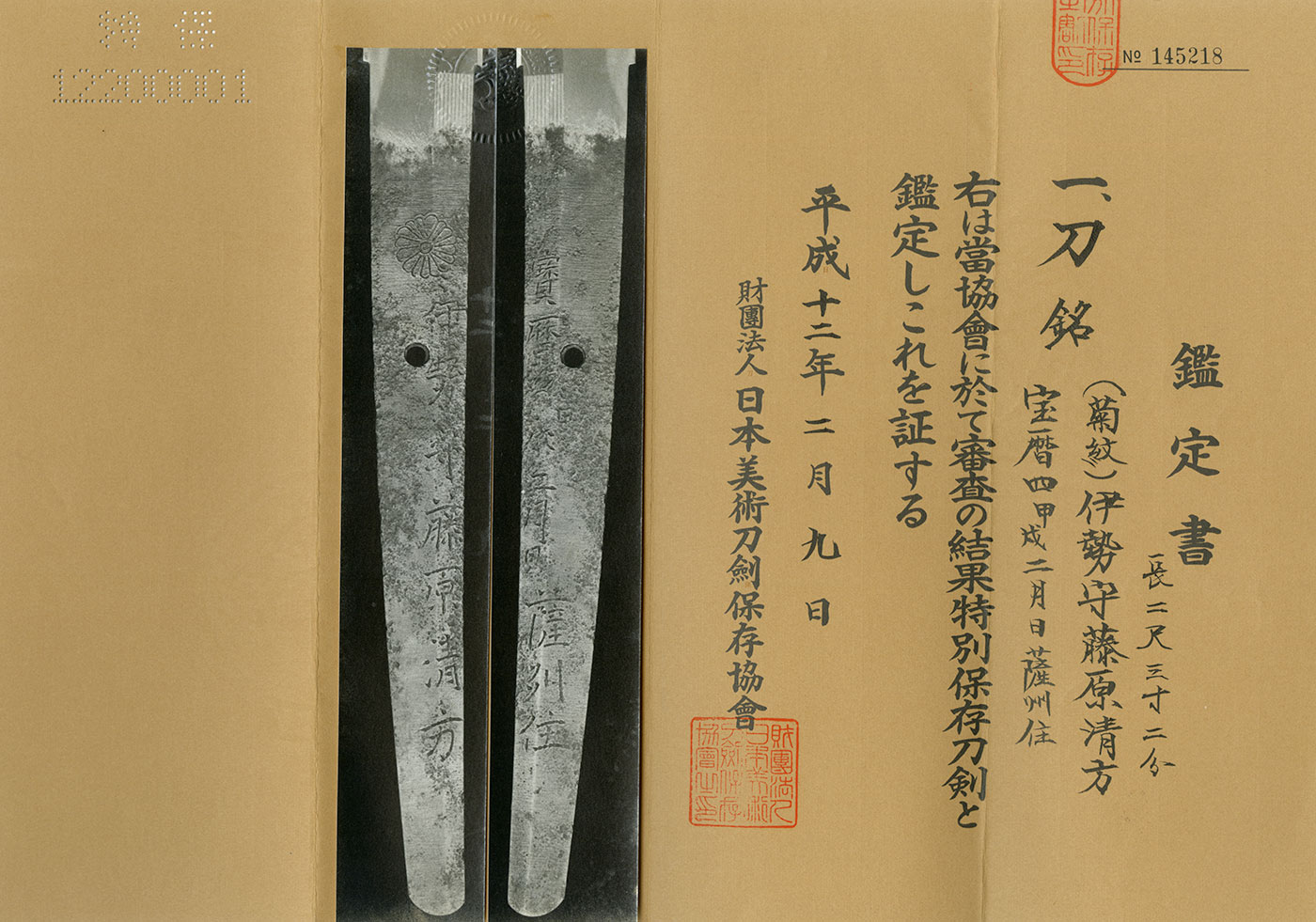
Signature: (Kimo mon) Ise Kami Fujiwara Kiyokata
Dated February, Hōreki 4 (1754), residing in Satsuma Province.
(菊紋)伊勢守藤原清方
宝暦四甲戌年二月日薩摩州住
(We divide 4 sections for each sword as Saijyo Saku, Jyojyo Saku, Jyo Saku and Regular Saku).
This blade is ranked as Jyojyo Saku among the works of Kikumon Ise no Kami Fujiwara Kiyokata.
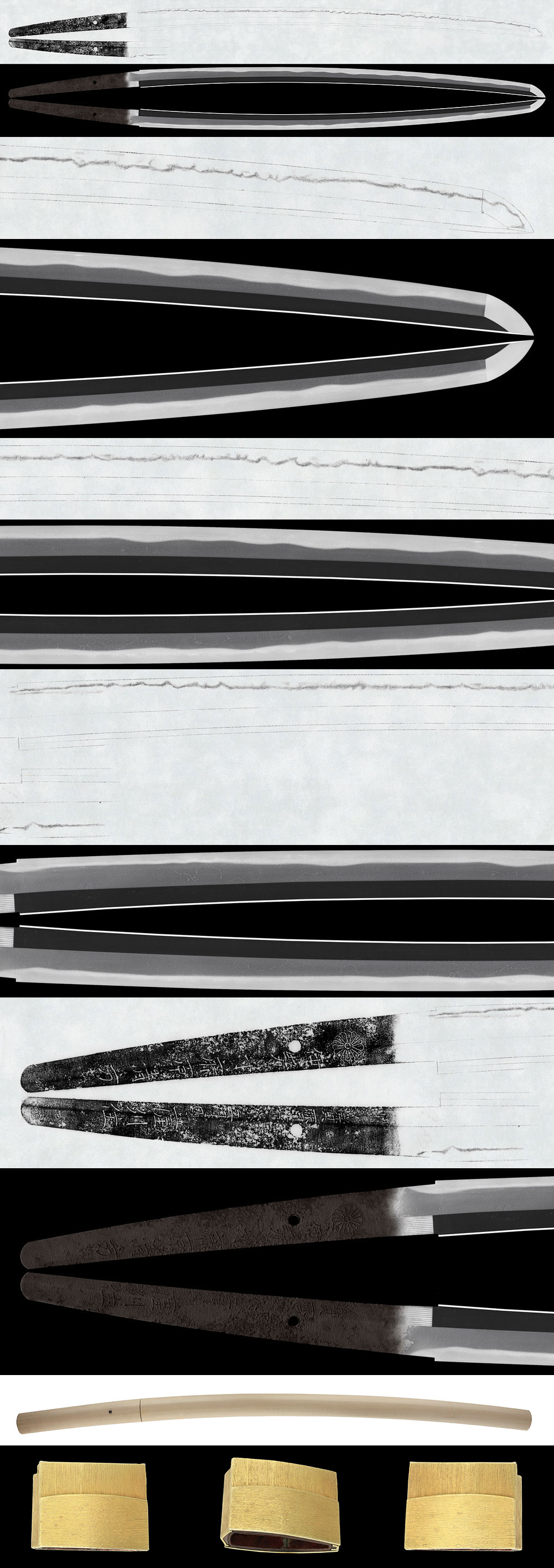
Habaki: Double-layer gold-covered habaki.
Blade Length: 69.55 cm (27.38 in).
Curvature: 0.0 cm (0.00 in).
Mekugi Hole: 3.
Width at Base (Motohaba): 2.27 cm (0.89 in).
Thickness of rim (Kasane): 0.63 cm (0.25 in).
Sword Weight: 805 g.
Era: Mid Edo period, Hōreki 4 (1754).
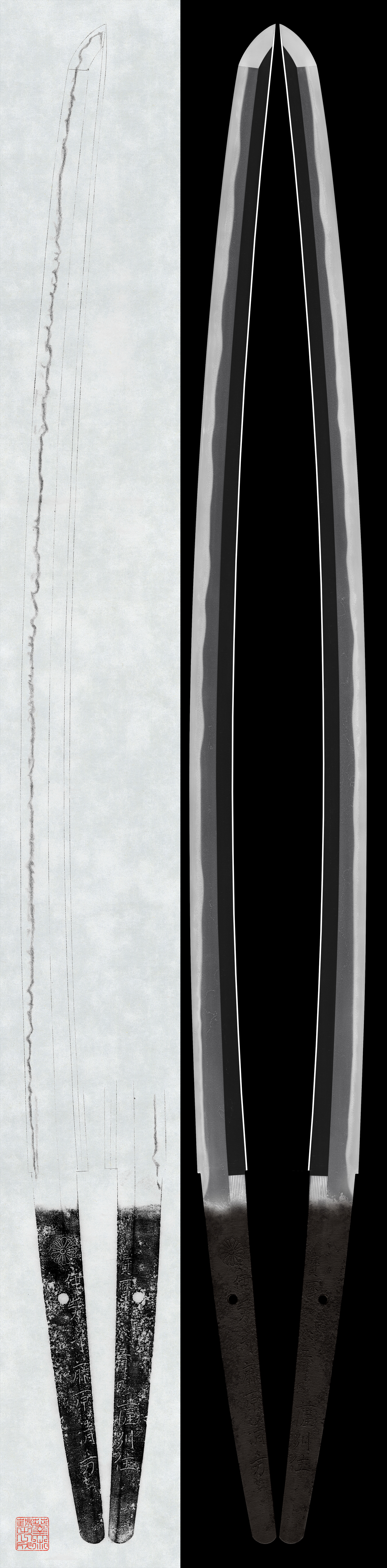
Shape: A robust katana with wide mihaba and substantial thickness.
The kissaki is slightly elongated.
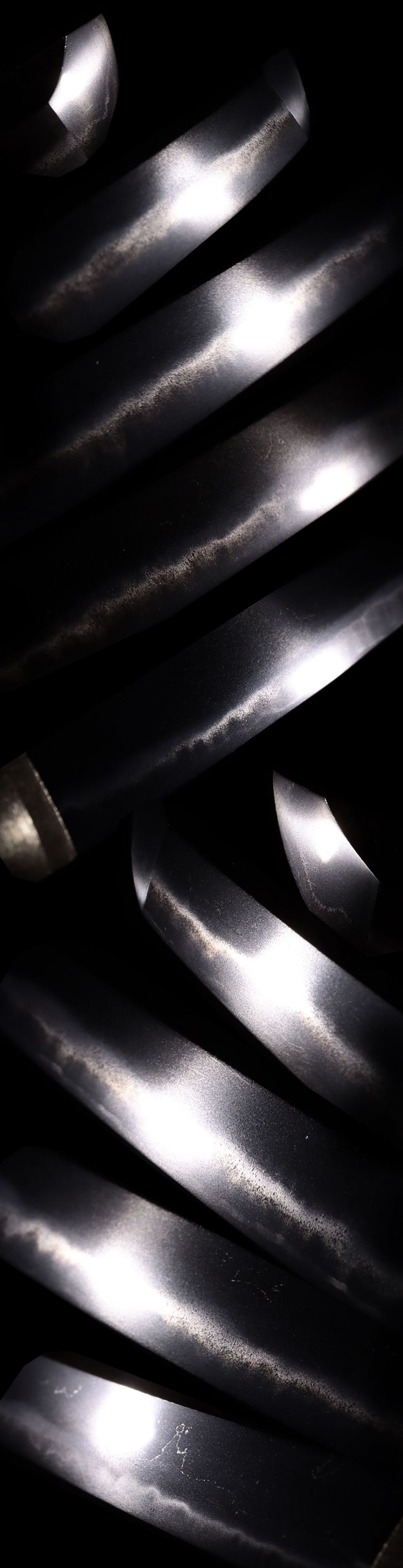
Jigane: Well-forged ko-itame hada with the grain pattern clearly visible.
Hamon: Nie-deki gunome-midare with prominent texture and active ashi.
Boshi: Midare pattern turning back in a small round form (komaru).
Ashi are very active throughout.
Features: Ise no Kami Fujiwara Kiyokata was a student of Iga no Kami Kinmichi and was active in Satsuma.
A chrysanthemum crest (kikumon) is engraved above the signature.
This chrysanthemum crest closely resembles that used by Iga no Kami Kinmichi.
Satsuma swords are often characterized by their robust construction and hamon featuring prominent ara-nie.
Historical Background: Hōreki 4 (1754) was during the middle of the Edo period and is particularly noted for major historical events, especially the severe flood-control works imposed upon the Satsuma Domain.
• Hōreki Flood Control Project (commencement): By order of the Tokugawa shogunate, the Satsuma Domain began river improvement works on the Kiso Three Rivers (the Kiso, Nagara, and Ibi Rivers) in the Nōbi Plain on February 27, 1754.
This project, known as the Hōreki Flood Control Works, became infamous as an extremely difficult undertaking that imposed enormous financial burdens and human sacrifices upon the Satsuma Domain due to the shogunate’s coercive orders, resulting in numerous deaths from illness and more than 80 retainers who took their own lives in protest against the harsh treatment they received.
NBTHK Tokubetsu Hozon Token.
AoiArt estimation paper: Whole Oshigata.
Please note: The price does not include the international shipping fees.
Price:1,000,000JPY
Order Form


Related Items:
 Katana:Sashu Ju Masayoshi(NBTHK Tokubetsu Hozon Token)
 Katana: Hoki Kami Ason Masayuki
 Katana: Ho-ki Kami Taira Ason Masayuki
 Katana:Echizen Ju Harima Daijo Fujiwara Shigetaka (1st generation) / Iwami no Kami Fujiwara Nobuyori(NBTHK Tokubetsu Hozon Token)
 Katana:Mino Koku Okachiyama Sanroku Junin Fujiwara Nagasada. August, 1866. Made at Aoyama in Edo. (NBTHK Tokubetsu Hozon Token)
 Katana: Satsuyoshi Motohira/Tenmei 2 nen 2 gatsuhi