
Ordering Number: AS26370
Katana in Shirasaya (NBTHK Hozon Token)
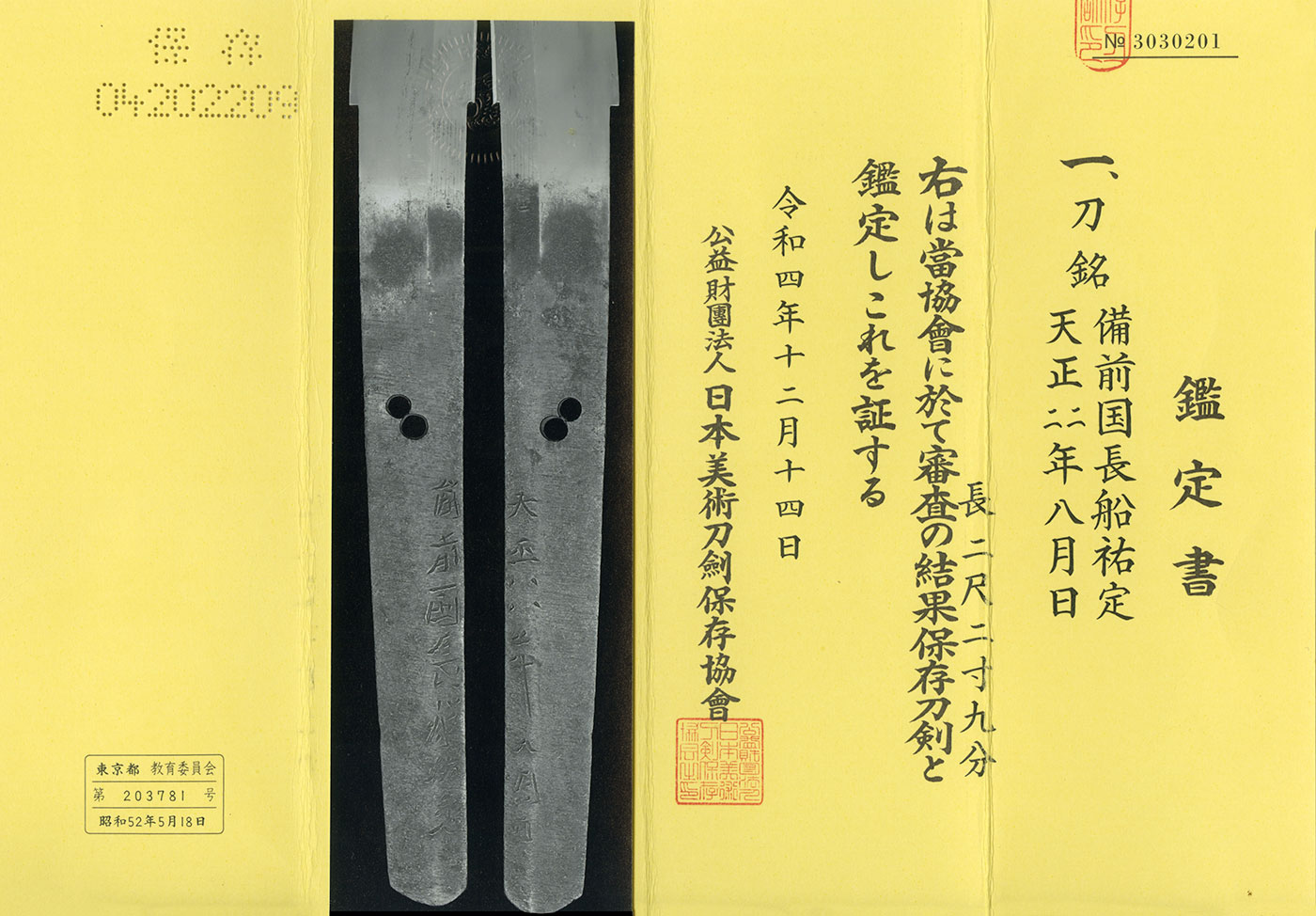
Signature: Bishu Osafune Sukesada
A day in the 8th month of Tensho 4 (1576)
備前国長船祐定
天正四年八月日
(We divide 4 sections for each sword as Saijyo Saku, Jyojyo Saku, Jyo Saku and Regular Saku).
This blade is ranked as Jyo Saku among the works of Bishu Osafune Sukesada.
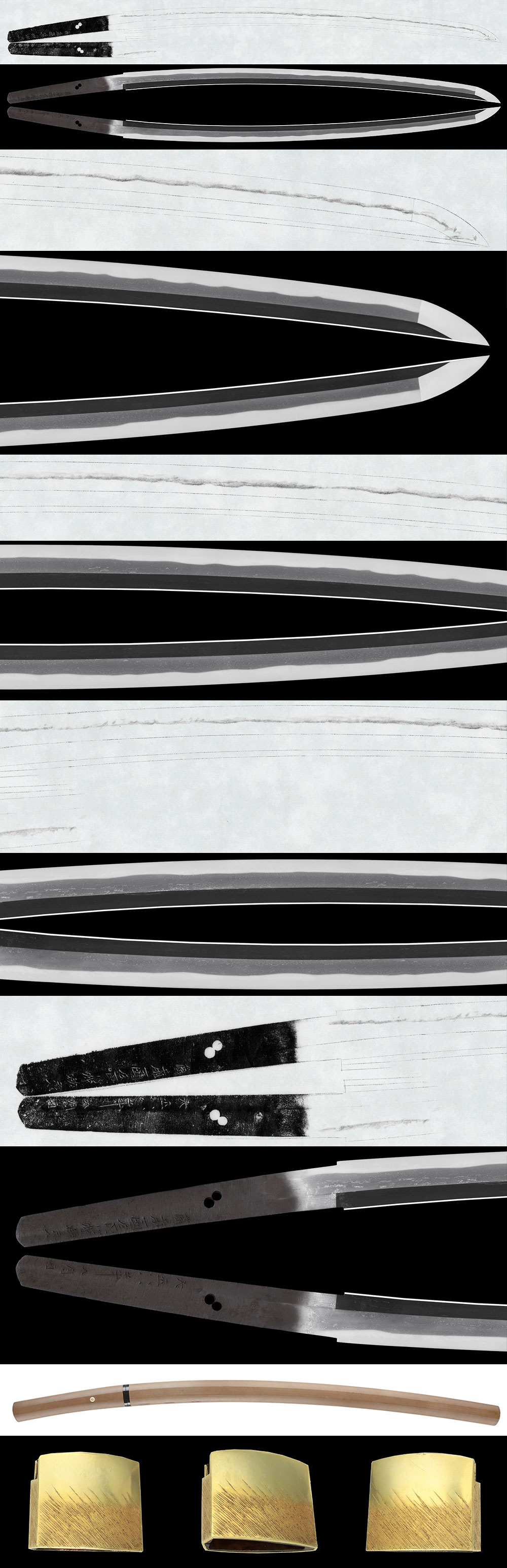
Habaki: Single gold-foiled habaki.
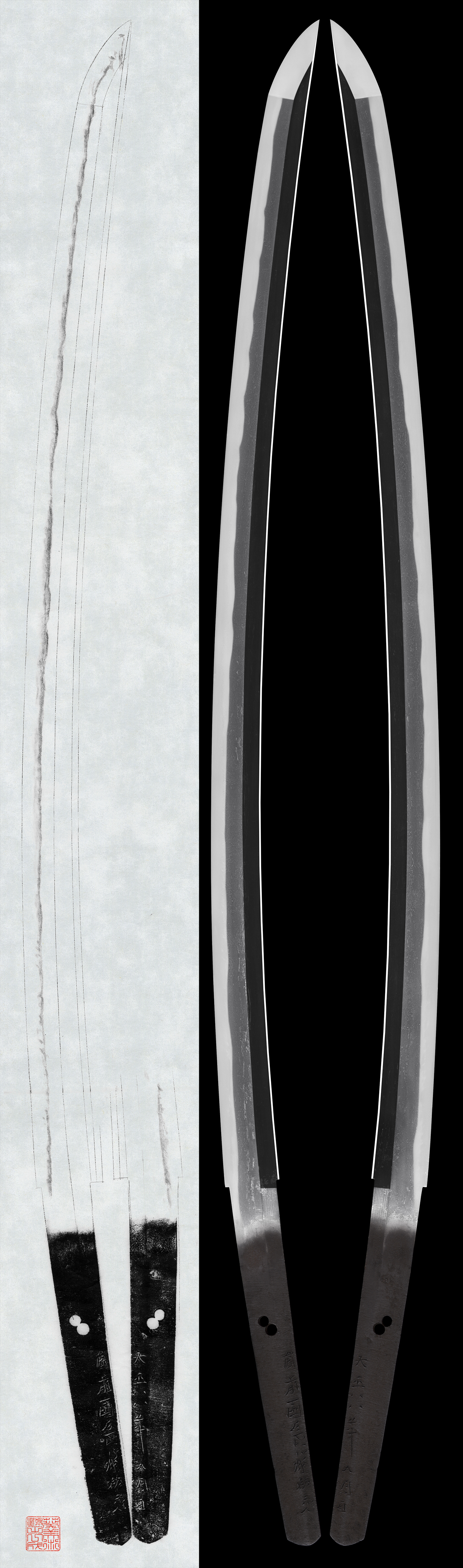
Blade Length: 69.4 cm (27.32 in).
Curvature: 2.3 cm (0.91 in).
Mekugi Hole: 2.
Width at Base (Motohaba): 3.37 cm (1.33 in).
Width at Yokote: 2.41 cm (0.95 in).
Thickness of rim (Kasane): 0.68 cm (0.27 in).
Sword Weight: 935 g.
Era: Late Muromachi period, Tensho 4 (1576).
Shape: A magnificent katana with a wide mihaba, thick kasane, deep curvature, and an extended kissaki.
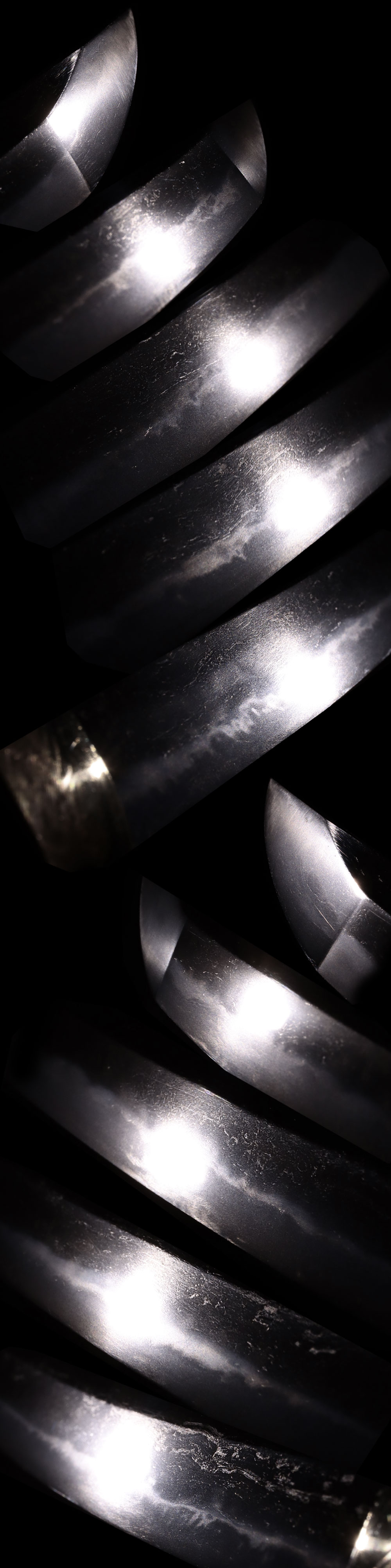
Jigane: Well-forged ko-itame hada with a slightly standing grain.
Hamon: Nie-deki suguha.
Features: Bishu Osafune Sukesada refers to a group of swordsmiths active during the late Muromachi period. As Japan was in the midst of the Sengoku era, demand for swords was extremely high, and many blades were produced in Bizen and Mino. The Sukesada workshop employed numerous craftsmen and produced a large number of swords bearing the same signature.
Historical Background: Tensho 4 (1576) falls within the Azuchi-Momoyama period (approximately 1568–1600), an era during which Oda Nobunaga and Toyotomi Hideyoshi advanced the unification of Japan. The period takes its name from Nobunaga's Azuchi Castle and Hideyoshi's Momoyama (Fushimi) Castle. It witnessed many decisive battles, as well as reforms such as the Taiko Land Survey and the Sword Hunt, which established Japan's social class system. Nobunaga promoted commerce through the Rakuichi-Rakuza free-market policy and defeated the Takeda clan at the Battle of Nagashino in 1575 before being killed by Akechi Mitsuhide in the Honno-ji Incident of 1582. Hideyoshi completed the unification of Japan in 1590 and further strengthened the separation of warriors and farmers through the land survey and sword hunt. The flourishing culture of the period included the tea ceremony perfected by Sen no Rikyu, grand castle architecture, and magnificent decorative screen paintings.
NBTHK Hozon Token.
AoiArt estimation paper: Whole Oshigata.
*Please note: The price does not include shipping fees.
Please note: The price does not include the international shipping fees.
Auction Starting Price:550,000JPY
Place Bid


Related Items:
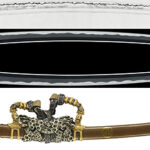 Tachi : Bishu Osafune Yukihisa (NBTHK Tokubetsu Hozon Token)
 Katana: Horimono Ikkanshi technique Ryuouji Minamoto Sadatsugu (kao) (1955) (NBTHK Tokubetsu Hozon Token)
 Katana: Yamato Kami Hidekuni (February 1870)(NBTHK Tokubetsu Hozon Token)
 Katana:Echigo no Kami Fujiwara Kunitomo (40th NBTHK Juyo Token)
 Katana:Osaka Gassan Sadakazu Saku(stamped) Meiji 30 Nen 8 Gatsu Hi Motte Soushu Kamakura Masamune Den(NBTHK Tokubetsu Hozon Token)
 Katana: Seitan Ryuoji Minamoto Sadatsugu (NBTHK Tokubetsu Hozon Token)