
Ordering Number: AS26347
Katana in Shirasaya (53rd NBTHK Juyo Token)
Signature: Mumei (Senjuin)
無銘(千手院)
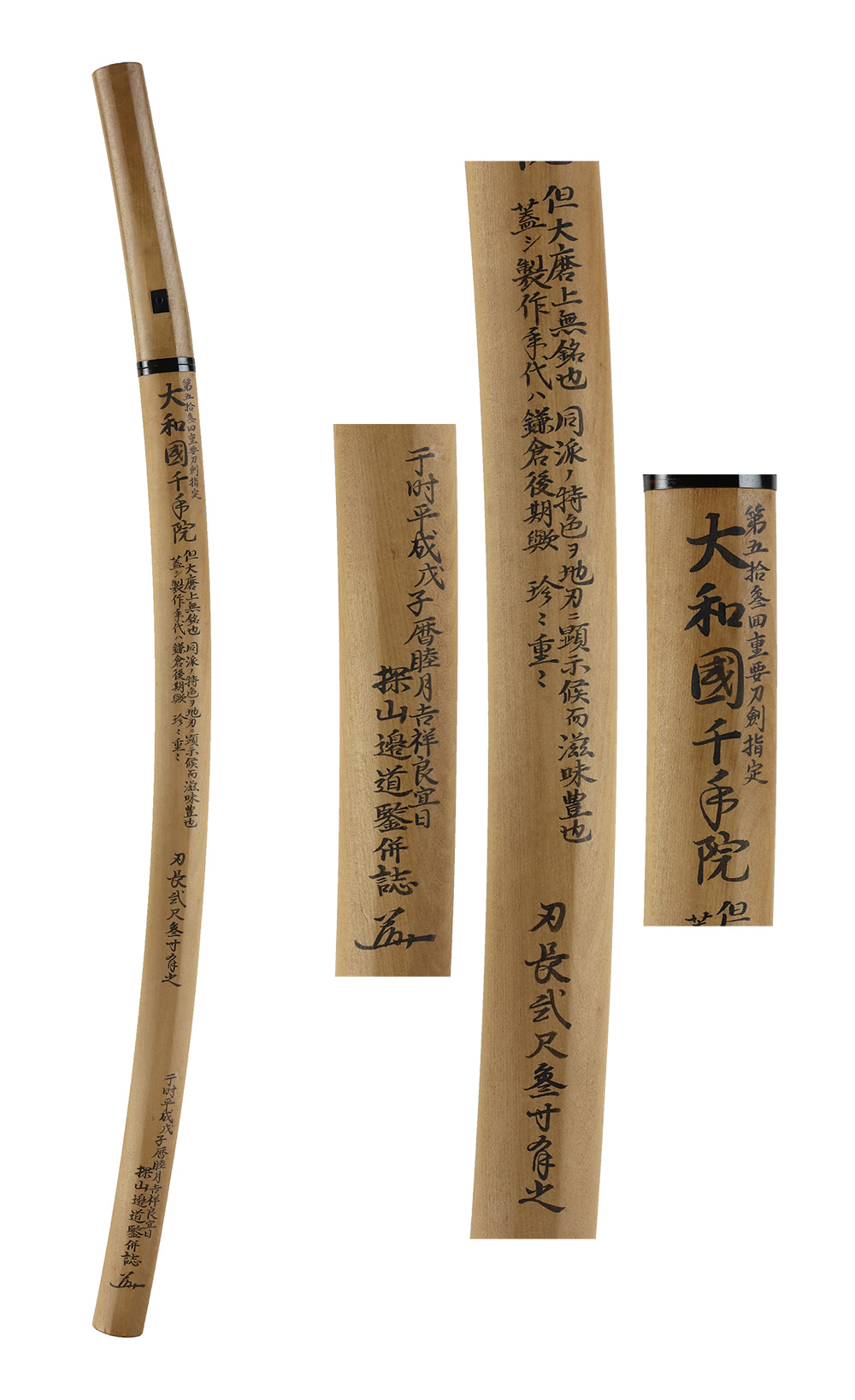
Sayagaki: By Dr. Tanobe Michihiro
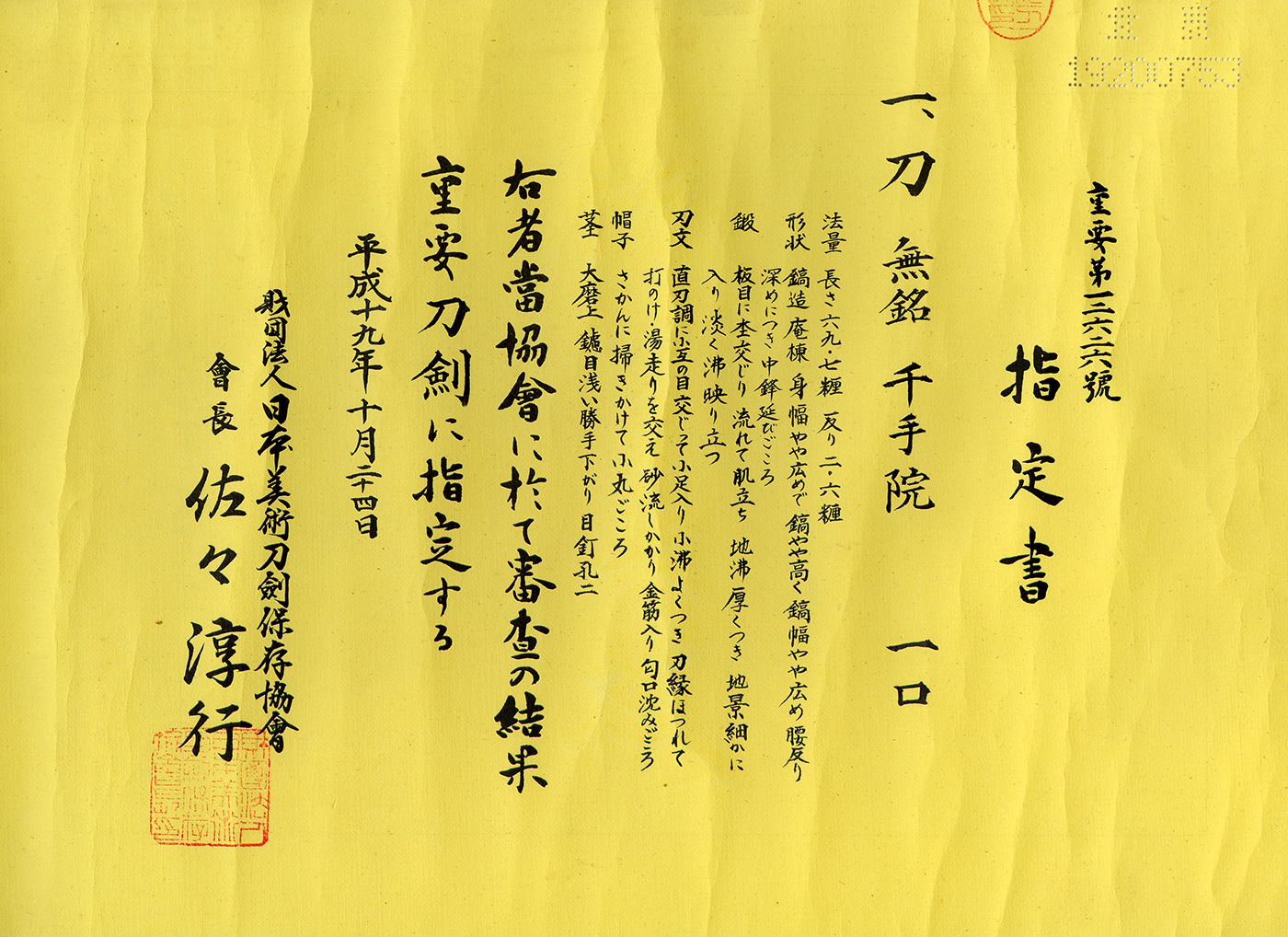
53rd NBTHK Juyo Token Designation.
Yamato Province Senjuin.
Greatly shortened, unsigned.
The jihada and hamon clearly display the distinctive characteristics of the Senjuin school, exhibiting profound depth and refined elegance.
It is considered to have been forged in the late Kamakura period.
An exceptionally rare and highly important example.
Blade Length: 2 shaku 3 sun.
Written and inscribed by Tanzan (kao).
(We divide 4 sections for each sword as Saijyo Saku, Jyojyo Saku, Jyo Saku and Regular Saku).
This blade is ranked as Saijyo Saku among works attributed to Senjuin.
Habaki: Single gold-foiled habaki.
Blade Length: 69.4 cm (27.32 in).
Curvature: 2.4 cm (0.94 in).
Mekugi Hole: 2.
Width at Base (Motohaba): 3.05 cm (1.20 in).
Width at Yokote: 1.81 cm (0.71 in).
Thickness of rim (Kasane): 0.65 cm (0.26 in).
Sword Weight: 715 g.
Era: Kamakura period, Bunpo era (1317), approximately 709 years ago.
Shape: A grand and powerful blade with a wide mihaba, thick kasane, deep curvature, and an elongated kissaki.
Jigane: Well-forged ko-itame mixed with mokume, producing a tightly compact and refined steel surface with prominent utsuri. The shinogi-ji displays finely forged masame hada.
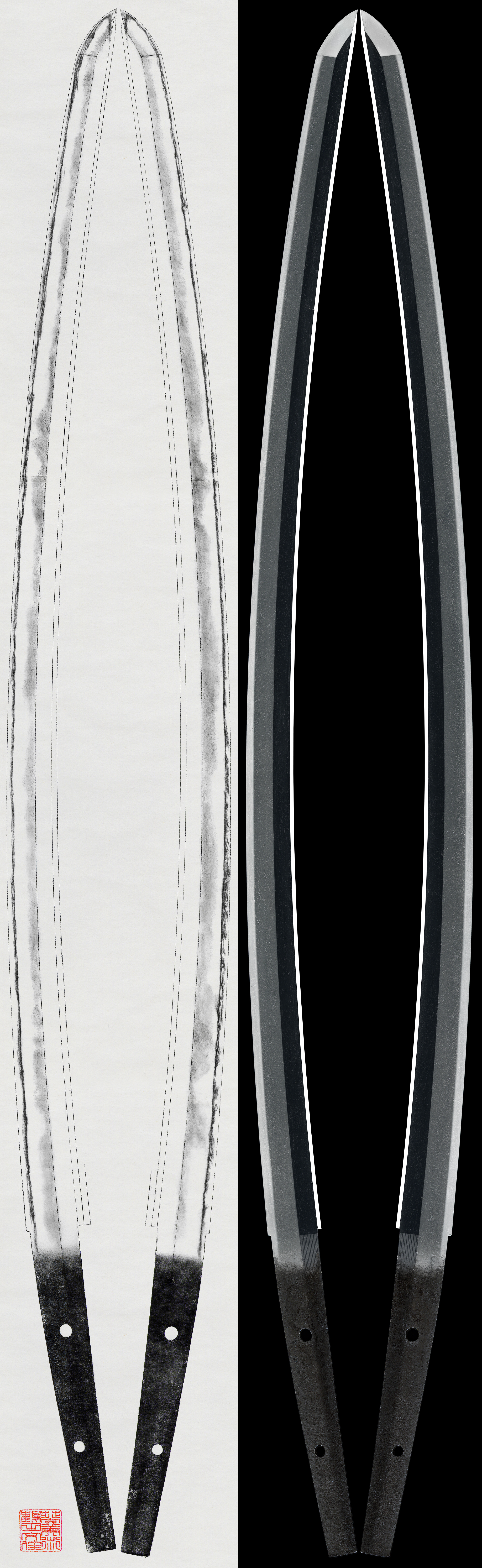
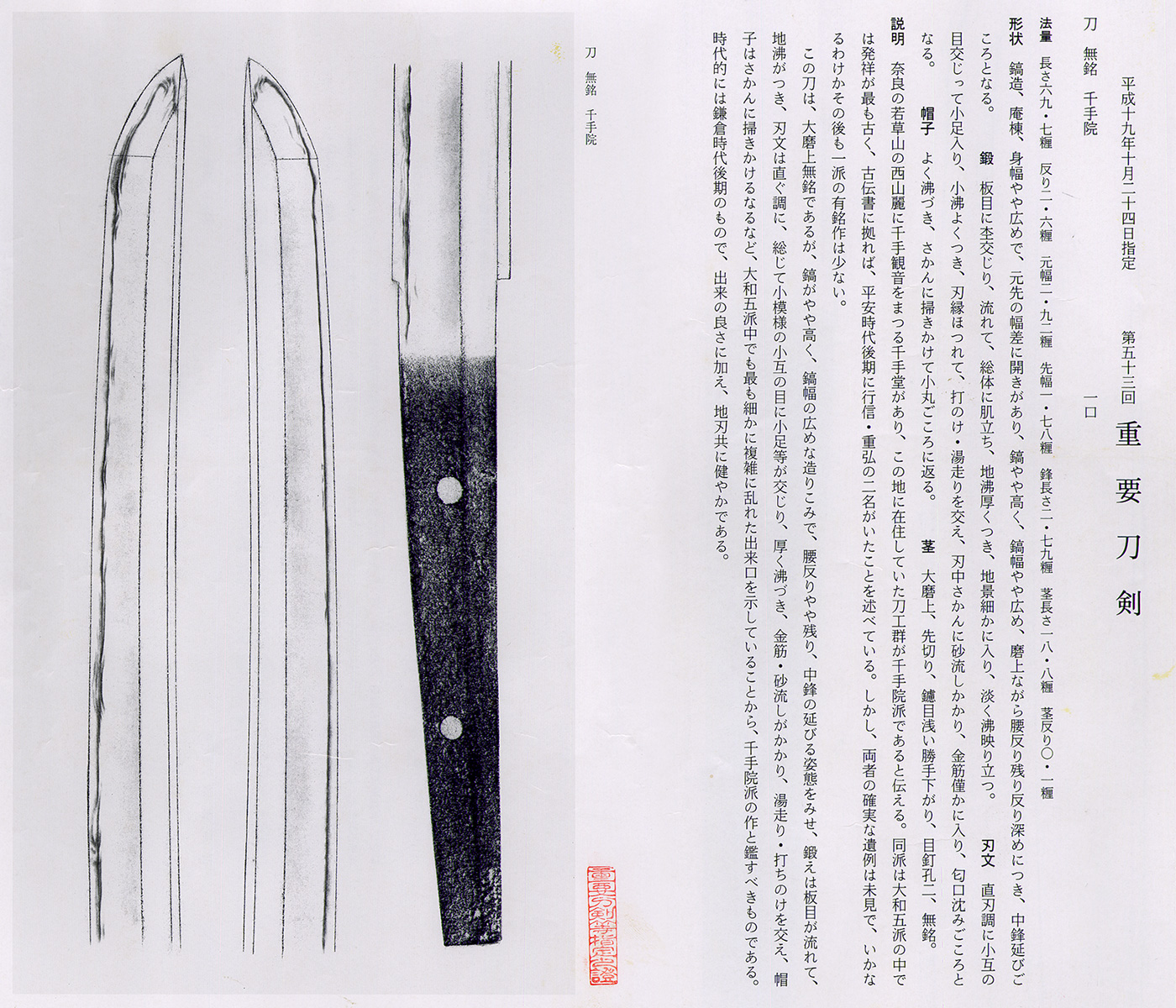
Hamon: Nioi-deki suguha with abundant ko-ashi. The activities within the hamon are exceptionally rich and varied. Although the oshigata published in the Juyo Token records depicts a simple suguha, please refer to Aoi Art's oshigata for a more accurate representation of the blade's intricate activities.
Features: Although the oshigata published in the Juyo Token records gives the impression of a rather plain suguha, the actual blade displays remarkably rich hataraki throughout the hamon. According to the Japanese Sword Museum, the Senjuin school is regarded as the oldest of the Yamato traditions, with origins dating back to the Heian period. This sword is identified as a work of the late Kamakura period. Though greatly shortened and unsigned, it retains a slightly elevated shinogi, broad construction, vestiges of koshi-zori, and a medium-length kissaki. The hamon is basically suguha, heavily covered with fine nie, and enlivened with ko-ashi, kinsuji, yubashiri, sunagashi, uchinoke, and vigorous hakikake. In addition to its outstanding workmanship, the blade possesses an elegant and brilliant character.
The blade has a kirikomi (battle nick) on the omote side near the mune, around the monouchi area.
Historical Background: During the late Kamakura period, Japan faced severe social and political instability. The Mongol invasions placed enormous financial burdens on the warrior class, yet the lack of new lands to reward them weakened their loyalty to the Kamakura shogunate. The division of family estates through inheritance further impoverished many gokenin, while dissatisfaction with the autocratic rule of the Hojo regents reached its peak. These circumstances ultimately led to the rise of rebellious forces and Emperor Go-Daigo's movement to overthrow the shogunate.
53rd NBTHK Juyo Token Designation.
AoiArt estimation paper: Whole Oshigata.
Please note: The price does not include the international shipping fees.
Auction Starting Price:4,000,000JPY
Place Bid



Related Items:
 Katana: Mumei (Unsigned)(Yamato-Shizu) (16th NBTHK Juyo Token)
 Mitokoromono Set (Kogai, Kozuka, Menuki): Kozuka and Kogai: Goto Mitsumori Menuki: Unsigned (attributed to Mitsumori) (Juyo Tosogu, 37th Designation)
 Katana:Mumei(Unsigned)(Tegai school 手掻) (the 22th NBTHK Juyo Token)
 Katana:Mumei (attributed to Den Hosho).(NBTHK Tokubetsu Hozon Token)
 Katana:: Mumei(Unsigned) (attributed to Den Taima) (17th NBTHK Juyo Token)
 Katana: Mumei (Unsigned) (Tegai 手掻) (NBTHK Tokubetsu Hozon Token)(Koshirae: NBTHK Tokubetsu Kicho Tosogu)