
Ordering Number: 25797
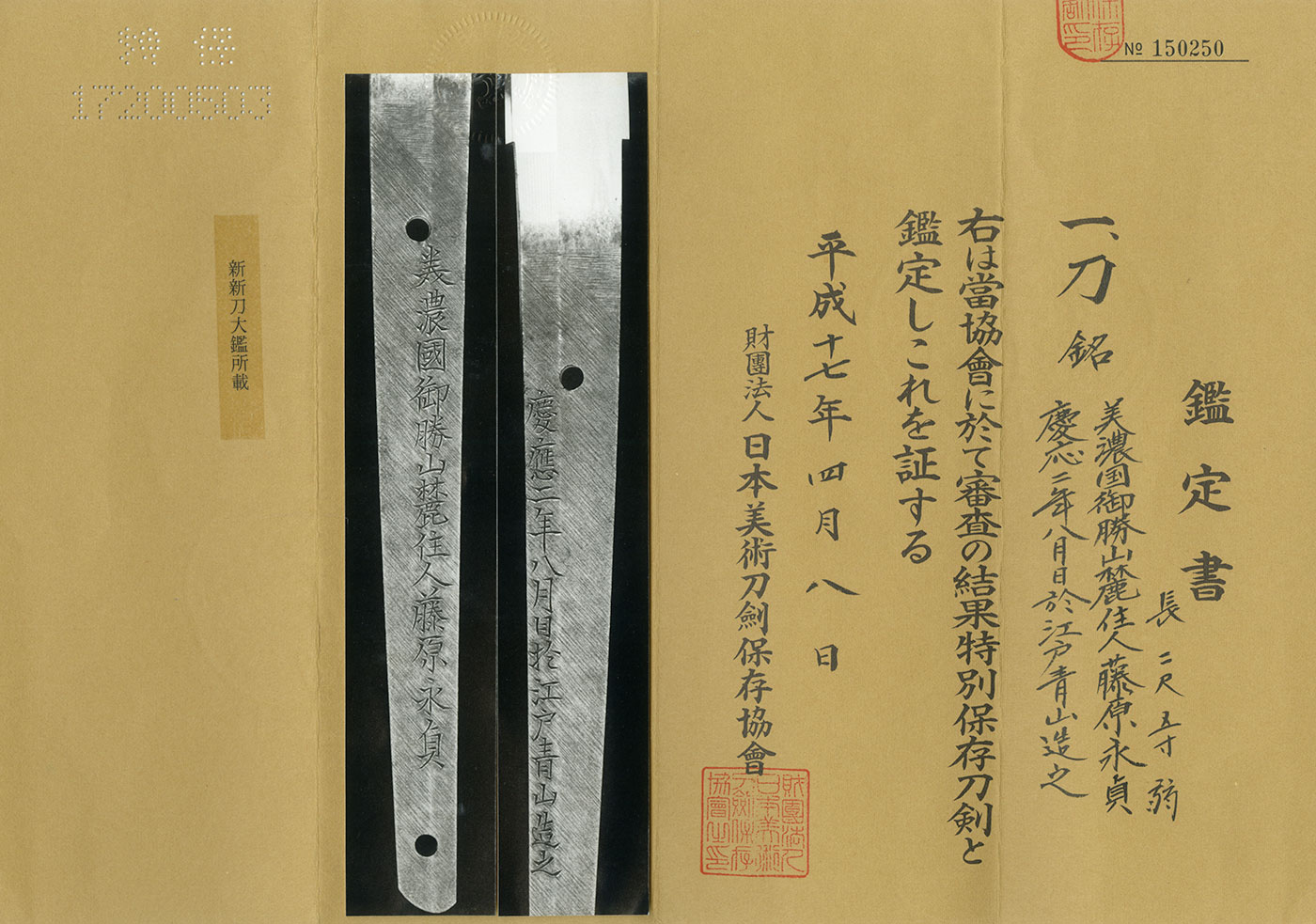
Katana in Shirasaya (NBTHK Tokubetsu Hozon Token).
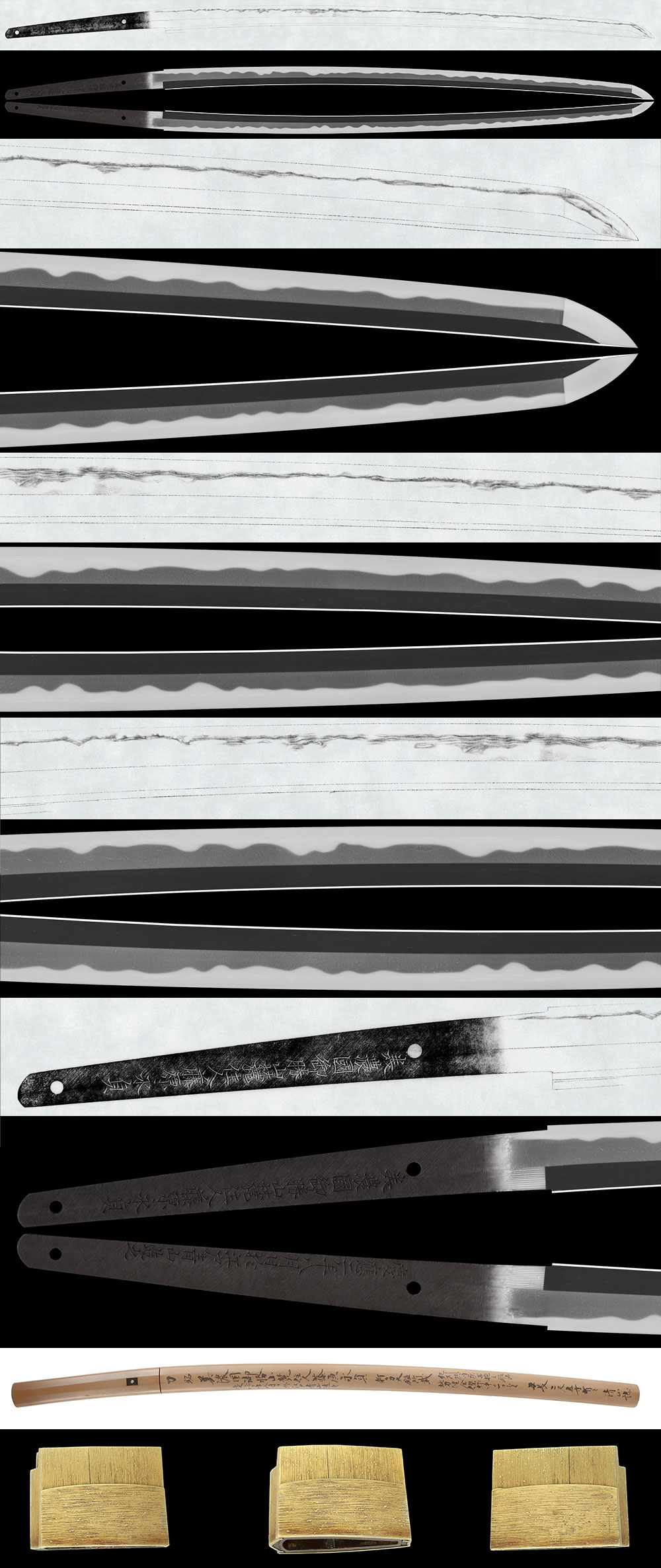
Signature: Mino Koku Okachiyama Sanroku Junin Fujiwara Nagasada.
August, 1866.
Made at Aoyama in Edo.
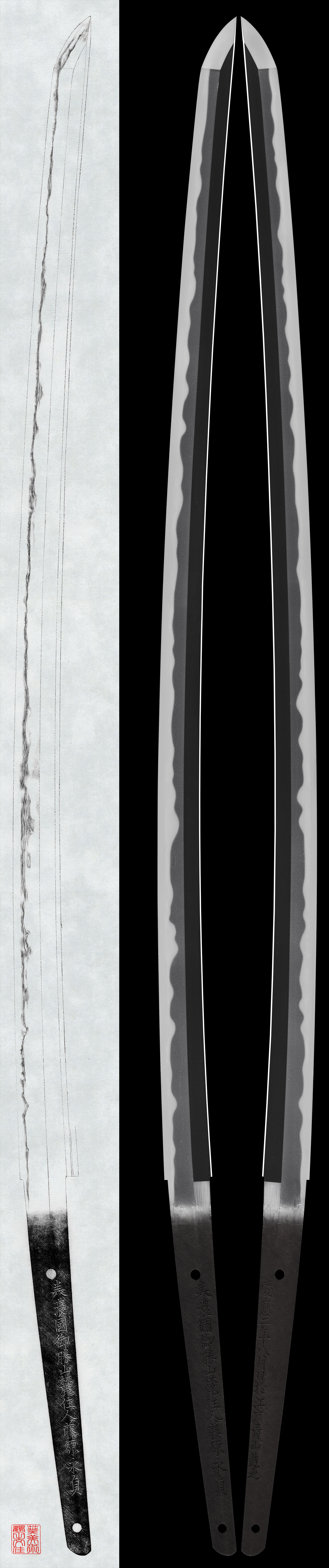
美濃国御勝山麓住人藤原永貞
慶應二年八月日
於江戸青山造之
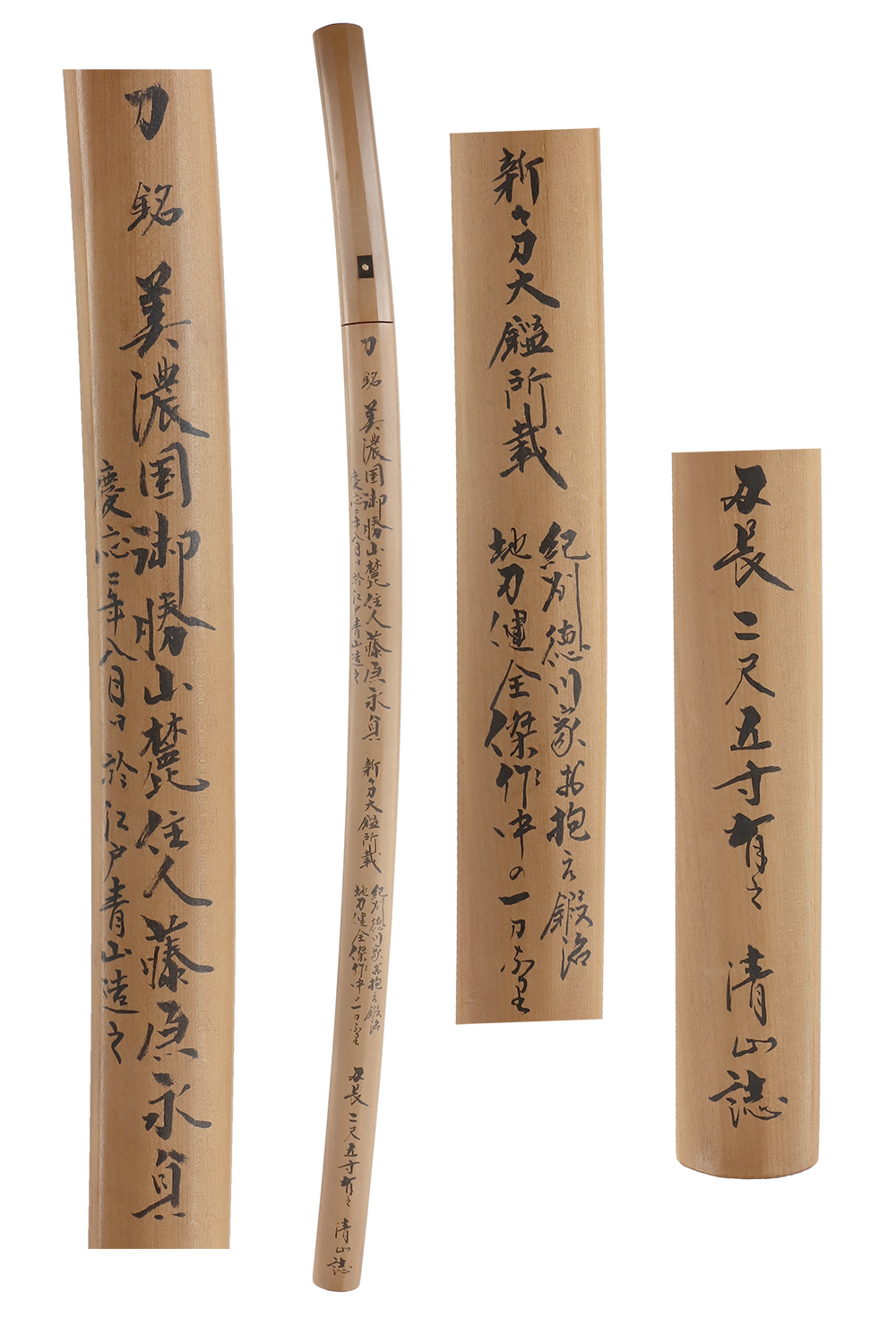
Sayagaki: Signature: Minokuni Okachiyama Sanroku Junin Fujiwara Nagasada.
August, 1866, made at Aoyama in Edo.
Listed in Shinshinto Taikan, a retained smith of the Kishu Tokugawa family.
A superb and healthy blade among his उत्कृष्ट works.
Length: 2 shaku 5 sun.
Seizan inscription.
(We divide 4 sections for each sword as Saijyo Saku, Jyojyo Saku, Jyo Saku and Regular Saku).
A superb and healthy blade among his Jyopjyo(उत्कृष्ट) works.
Habaki: Gold-plated double habaki.
Blade Length: 75.76 cm (29.83 in).
Curvature: 1.52 cm (0.60 in).
Mekugi Hole: 2.
Width at Base (Motohaba): 3.28 cm (1.29 in).
Width at Yokote: 2.15 cm (0.85 in).
Thickness of rim (Kasane): 0.68 cm (0.27 in).
Sword Weight: 785 g.
Shape: Wide mihaba with thick kasane, extended kissaki, and slightly deep curvature, forming an उत्कृष्ट and well-balanced shape.
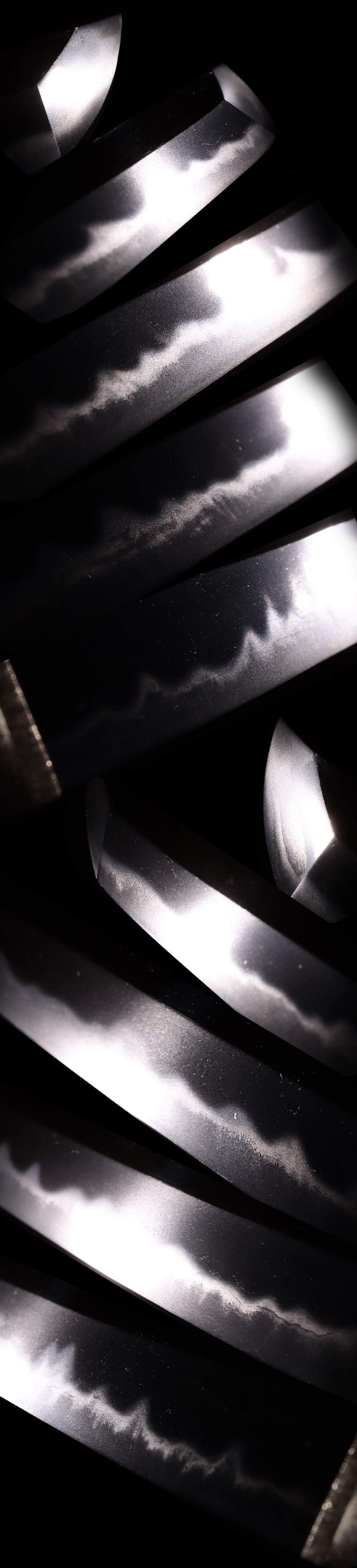
Jigane: Fine ko-itame hada tightly forged with ji-nie and chikei, resulting in a refined steel surface.
Hamon: Nie-deki, gunome-midare with kinsuji activity. The boshi has a deep nioiguchi and is sufficiently long.
Features: Excerpt from Shinshinto Taikan.
Nagasada descended from the Akasaka Senjuin lineage of Mino Province and studied within that school.
He was born in Omotesa Village, Tarui Town, Fuwa District, present-day Gifu Prefecture, with the family name Matsui and given name Osamu.
His maternal hometown was Tamura Town, near Tamura Castle.
The Matsui family is said to have originated from Ise Province, and due to this connection, he occasionally traveled to Tamamaru in Ise to forge swords.
Although he did not reside in Tamamaru, he is said to have lived in Okachiyama.
During the historic Battle of Sekigahara, Tokugawa Ieyasu established his headquarters there and commanded his army.
Because victory was achieved at that location, it came to be called Okachiyama, and Nagasada adopted the name “Okachiyama Sanroku” as he forged swords nearby.
Due to his service on the Tokugawa side in that battle tradition, he became an officially retained smith of the Tokugawa family.
From the Koka to Kaei eras (1844–1854), Nagasada went to Edo and studied under Taikei Naotane, establishing a forge in Aoyama and producing swords known as “Aoyama-uchi.”
He is described as a sincere and earnest individual, and his works show no signs of careless production, reflecting his integrity.
Many of his works exhibit fine shinogi-ji with ko-itame tendencies and a Soshu-style influence, and some have been overly polished and mistaken for Koto blades, which is regrettable.
His active period spans from around the Koka era to the spring of 1869, and he passed away at the age of 61.
Aoi Art’s Comment: This sword has been beautifully and elegantly polished.
A considerable amount of original ha remains, clearly indicating its excellent preservation.
The polish shows a splendid black and bluish tone.
We highly recommend acquiring this masterpiece.
NBTHK Tokubetsu Hozon Token.
Listed in Shinshinto Taikan (page 263).
AoiArt estimation paper: Whole Oshigata.
Please note: The price does not include the international shipping fees. Auction Starting Price:2,800,000JPY
Order Form


Related Items:
 Katana:Echigo no Kami Fujiwara Kunitomo (40th NBTHK Juyo Token)
 Tachi : Bishu Osafune Yukihisa (NBTHK Tokubetsu Hozon Token)
 Katana: Minamoto Masayoshi (Hosokawa Masayoshi)(NBTHK Tokubetsu Hozon Token)
 Katana: Horimono Ikkanshi technique Ryuouji Minamoto Sadatsugu (kao) (1955) (NBTHK Tokubetsu Hozon Token)
 Katana: Higashiyama-jū Yoshihira(NBTHK Tokubetsu Hozon Token) (Featured in Shinto Taikan, Vol. 1, p. 883)
 Katana:: Sakai Ikkansai Shigemasa (Mukansa Tosho) Auspicious day in August, 1970(NBTHK Hozon Token)