
Ordering Number: AS25187
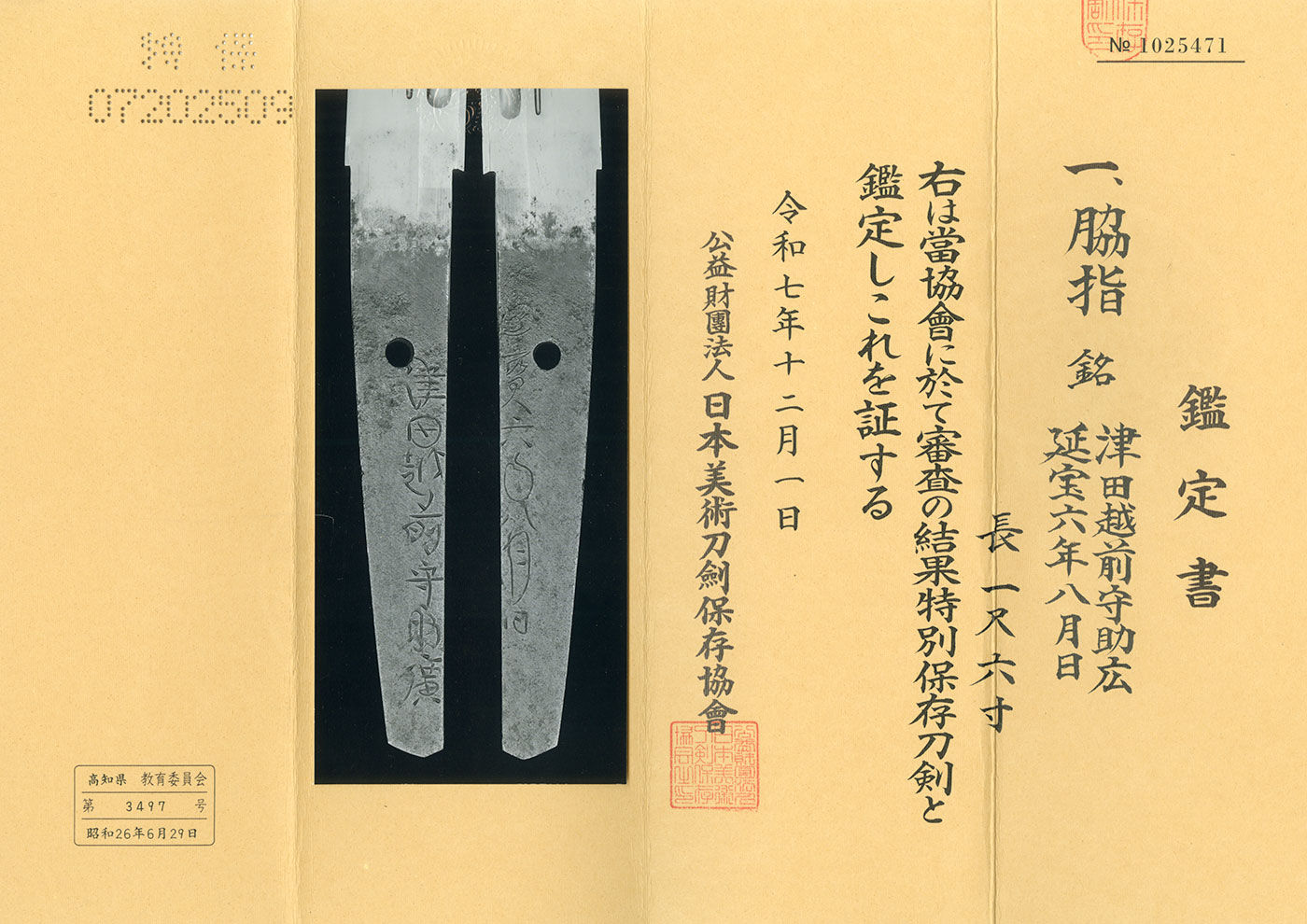
Wakizashi in Koshirae (NBTHK Tokubetsu Hozon Token).
Signature: Tsuda Echizen Kami Sukehiro.
A day in August, Enpo 6 (1678).
津田越前守助広
延宝六年八月日
Shinto: O-Wazamono: Saijyo Saku: Settsu.
(We divide 4 sections for each sword as Saijyo Saku, Jyojyo Saku, Jyo Saku and Regular Saku).
The workmanship of this sword is ranked as Jyojyo Saku for Tsuda Echizen no Kami Sukehiro.
Habaki: Gold-plated single habaki.
Blade Length: 1 shaku 6 sun. (48.5 cm) (19.1 in)
Curvature: 3 bu 5 rin.(1.06 cm (0.42 in))
Mekugi Hole: 1.
Width at Base (Motohaba): 3.08 cm (1.21 in).
Width at Yokote (Sakihaba): 2.27 cm (0.89 in).
Thickness of rim (Kasane): 0.59 cm (0.23 in).
Sword Weight: 445 g.
Era: Edo period, around the Kanbun era (1661–1673).
Shape: A Wakizashi with solid width and thickness.
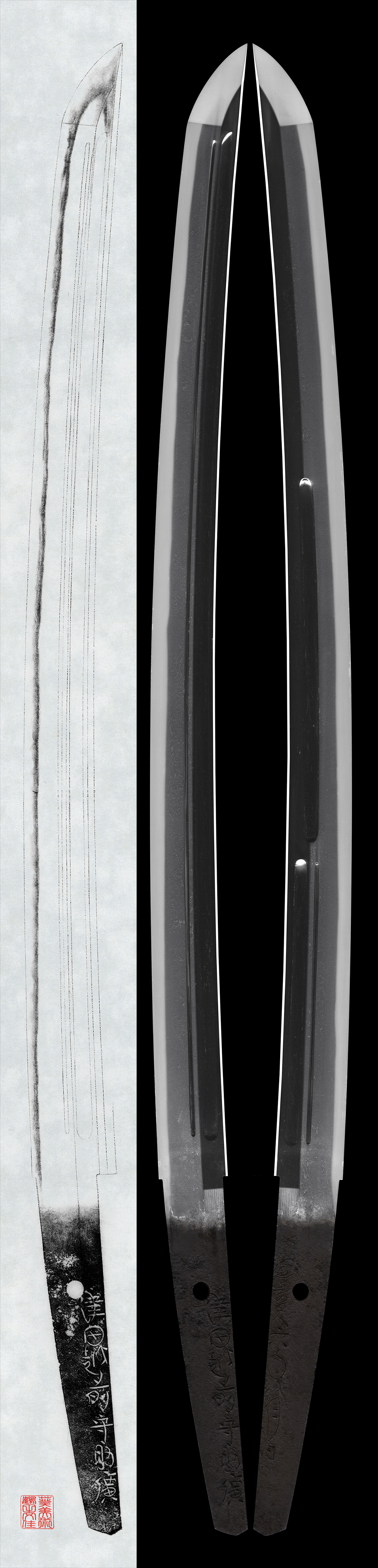
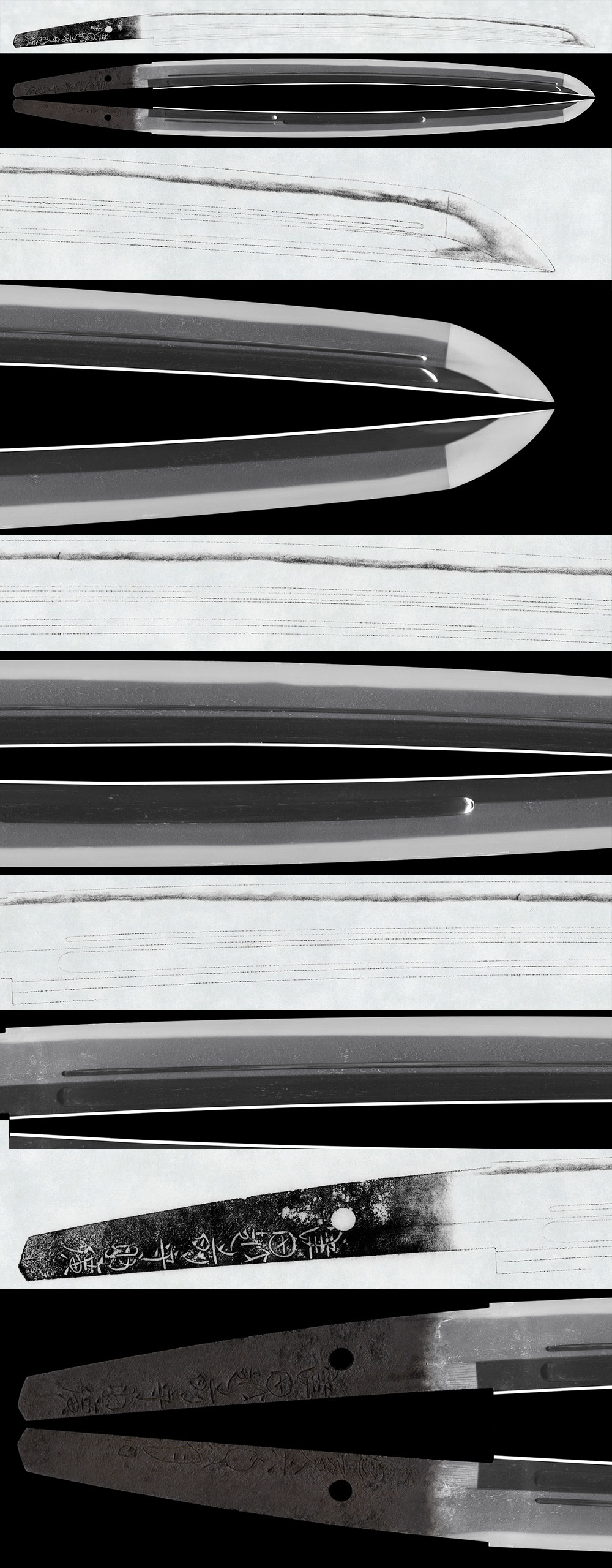
There are bo-hi and soe-hi on both sides, and on the opposite side a bo-hi with an additional groove is carved.
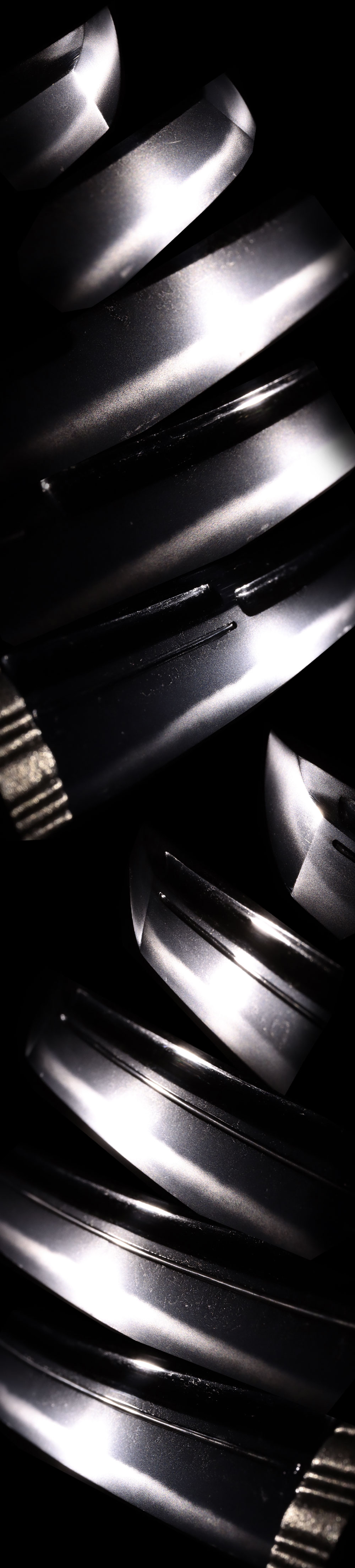
Jigane: Ko-itame hada well packed, forming a very beautiful jigane.
Hamon: Nie-deki with a deep nioiguchi.
At first glance it resembles the work of Inoue Shinkai, though Sukehiro occasionally produced similar works.
Features: Tsuda Echizen no Kami Sukehiro’s works are classified into Kaku-Tsuda and Maru-Tsuda, with Maru-Tsuda being the most highly valued.
Works with a rounded feeling like this example are referred to as Maru-Tsuda.
This sword is thought to have been made when he was around 44 years old, a period when his skill was at its peak.
During this time he produced magnificent suguha with a deep nioiguchi.
Koshirae:
Saya (Scabbard): Black color and Aogaichirashi Saya.
Tsuba: Round iron tsuba with openwork carving of hollyhock leaves. Signature: Echizen ju Kinai saku.
Fuchikashira: Shakudo nanako ground carved with bamboo design and finished with gold coloring.
Menuki: Solid gold with paulownia crest and phoenix design carved. Gold weight 12 g.
Kozuka: Shakudo nanako ground with a dragon in high relief and gold coloring.
Kogatana: Signed, but the signature is unidentified.
Historical Background: Enpo 6 corresponds to 1678.
This was the early Edo period under the rule of the 4th Shogun Tokugawa Ietsuna (during the reign of Emperor Reigen).
Events of this year include the death of Tofukumonin (Tokugawa Masako), flood damage in Saijo City in Ehime Prefecture, and the establishment of district magistrates related to forestry administration.
NBTHK Tokubetsu Hozon Token.
AoiArt estimation paper.
Whole Oshigata.
Overseas shipping fee is not included
Auction Starting Price:1,500,000JPY
Place Bid



Related Items:
 Wakizashi:Tsuda Omi no Kami Sukemnao(NBTHK Tokubetsu Hozon Token)
 Wakizashi:Hōki no Kami Fujiwara Hirotaka Echizen-jū (NBTHK Hozon Token) (Consignment Sale)
 Wakizashi: Motte Namban Tetsu Omi Kami Fujiwara Tsuguhiro Echizen Ju Shimosaka(NBTHK Tokubetsu Hozon Token)
 Wakizashi (Long Tanto): Hizen Koku Kawachi Daijo Fujiwara Masahiro(NBTHK Tokubetsu Hozon Token)
 Wakizashi: Mumei (attributed to Hatakeda Sanemori)e (43rd NBTHK Juyo Token)
 Wakizashi:Hyoshinshi Hideyo Nyudo Dated: August, Ansei 2 (1855)(NBTHK Tokubetsu Hozon Token)