
Ordering Number: F25621
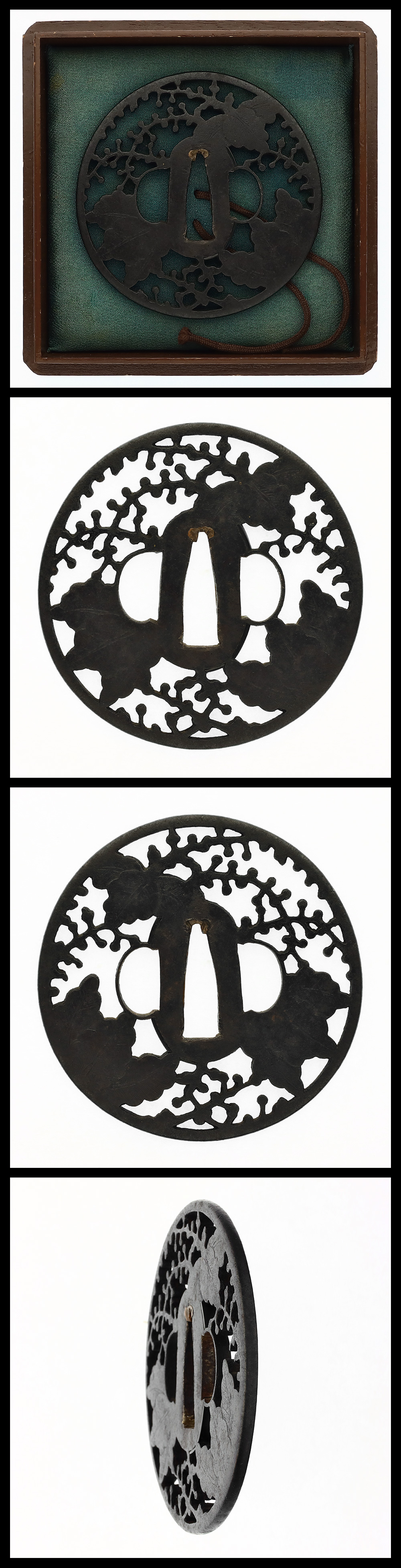
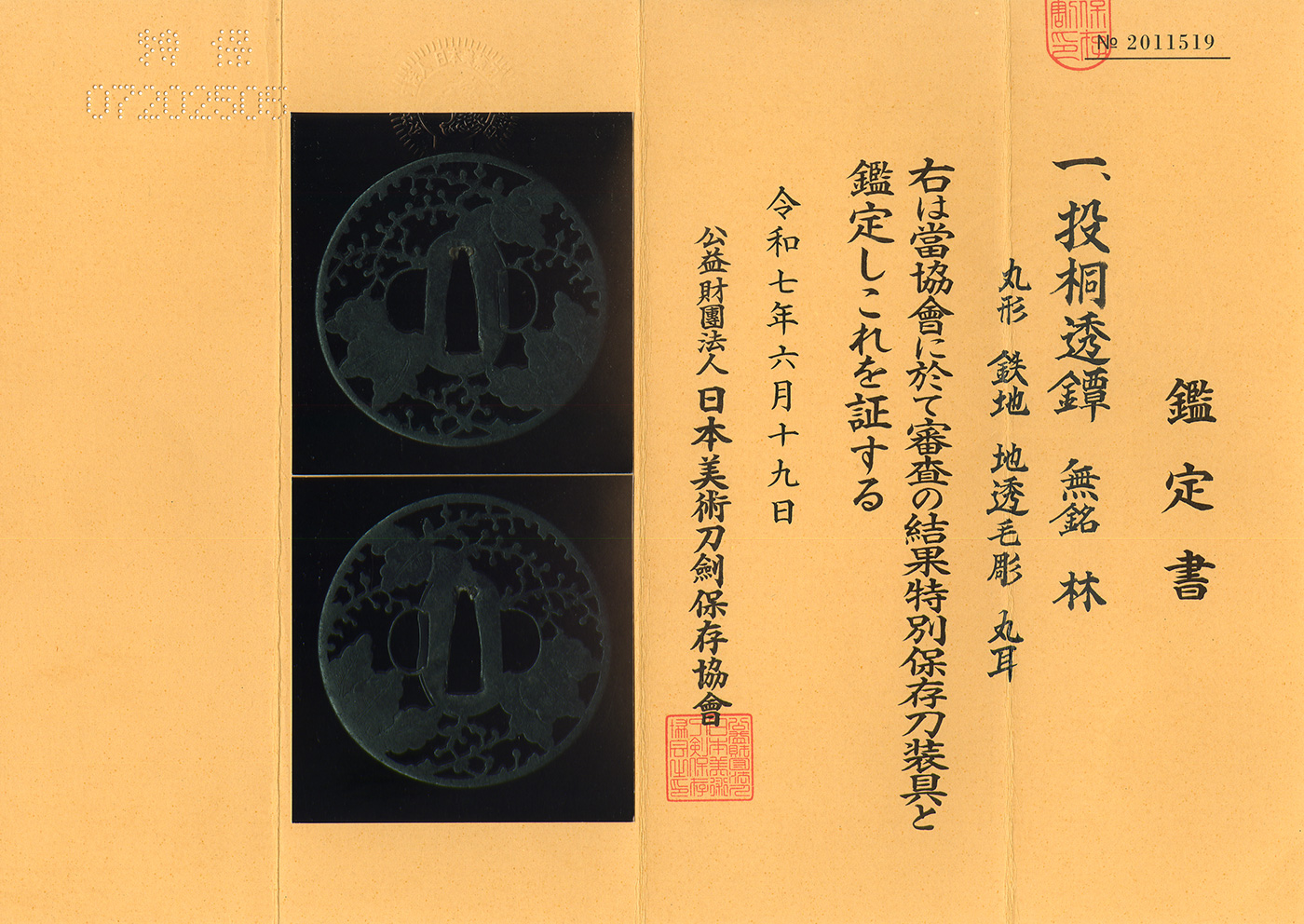
Tsuba:Paulonia(NBTHK Tokubetsu Hozon)
Inscription: Mumei(unsigned)(Hayashi)
(林)
Dimensions:8.17 cm x 8.11 cm (3.22 in x 3.19 in)
Thickness of center:0.39 cm (0.15 in)
Weight: 100 g
Period: Edo period
Features: Round iron tsuba with openwork and kebori (hairline engraving) depicting tōkiri (paulownia leaves).
Notes:
The Higo metalwork tradition was formed by four main schools: the Hayashi, Hirata, Nishigaki, and Shimizu families. Each of these lineages served their feudal lords and passed down their techniques over generations, flourishing until the end of the Edo period.
Among them, the Hayashi family—founded by Hayashi Matashichi—stood out. He was a master craftsman in the service of the Hosokawa clan and is regarded as a leading figure of Higo metalwork. The Hayashi school is especially known for its openwork tsuba, primarily using iron. Their works are celebrated for the refined texture of the iron and their exceptional rust-patinating techniques.
NBTHK Tokubetsu Hozon
In Kiri box
Aoi Art estimation paper
Price: 250,000 JPY
Order Form
Related Items:
 Tsuba:Mumei(unsigned)(Hayashi Fujihachi)(NBTHK Tokubetsu Hozon Tosogu)
 Tsuba:Higo Ju Hayashi Shigehisa(NBTHK Hozon Paper)
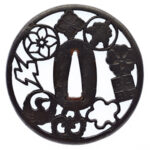 Tsuba:Mumei(judged as Hayashi Shigemitsu)(NBTHK Tokubetsu Hozon Paper)
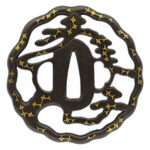 Tsuba:Mumei(unsigned)(Higo)(NBTHK Tokubetsu Hozon)
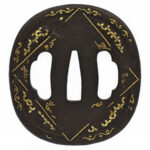 Tsuba: Mumei(unsigned)(Edo Higo)
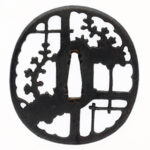 Tsuba: Mumei(unsigned)(Nishigaki school)(NBTHK Hozon Tosogu)