
Ordering Number: 26012
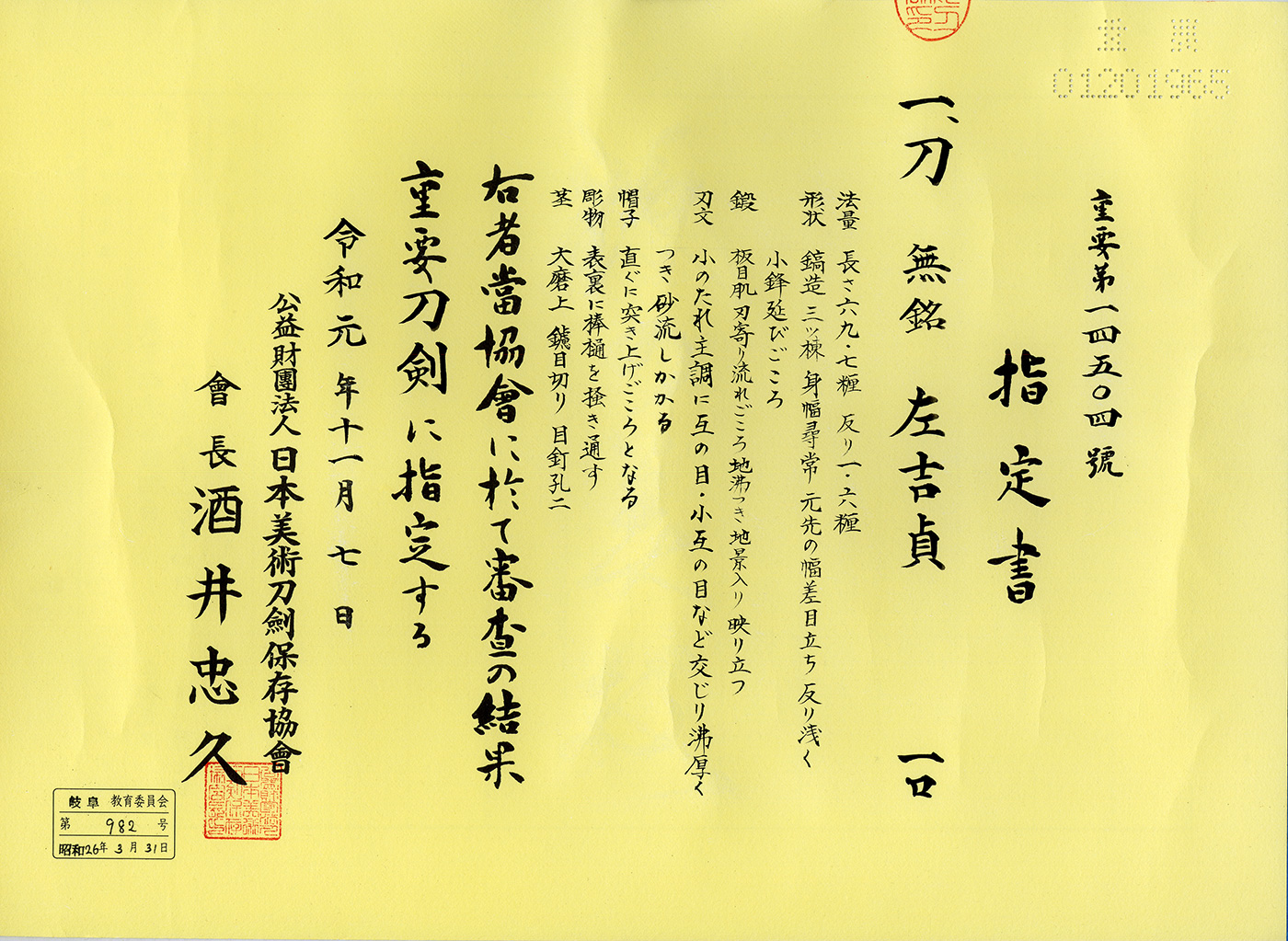
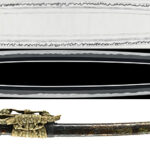
Katana in Shirasaya with Koshirae (65th NBTHK Juyo Token)
Signature: Mumei(Unsigned) (Sa Yoshisada 左吉貞)
Chuko-to: Shohei era (1346–1370): Jyojyo Saku: Chikuzen (Fujishiro Koto-hen Vol.3).
(We divide 4 sections for each sword as Saijyo Saku, Jyojyo Saku, Jyo Saku and Regular Saku).
This work is ranked as Saijyo Saku among Mumei (Sa Yoshisada).
Habaki: Gold-plated single habaki.
Blade Length: 69.54 cm (27.38 in).
Curvature: 0.60 cm (0.24 in).
Mekugi Hole: 2.
Width at Base (Motohaba): 2.91 cm (1.15 in).
Width at Tip: 1.89 cm (0.74 in).
Thickness (Kasane): 0.61 cm (0.24 in).
Sword Weight: 550 g.
Era: Nanbokucho period, around Shohei (1346–1370).
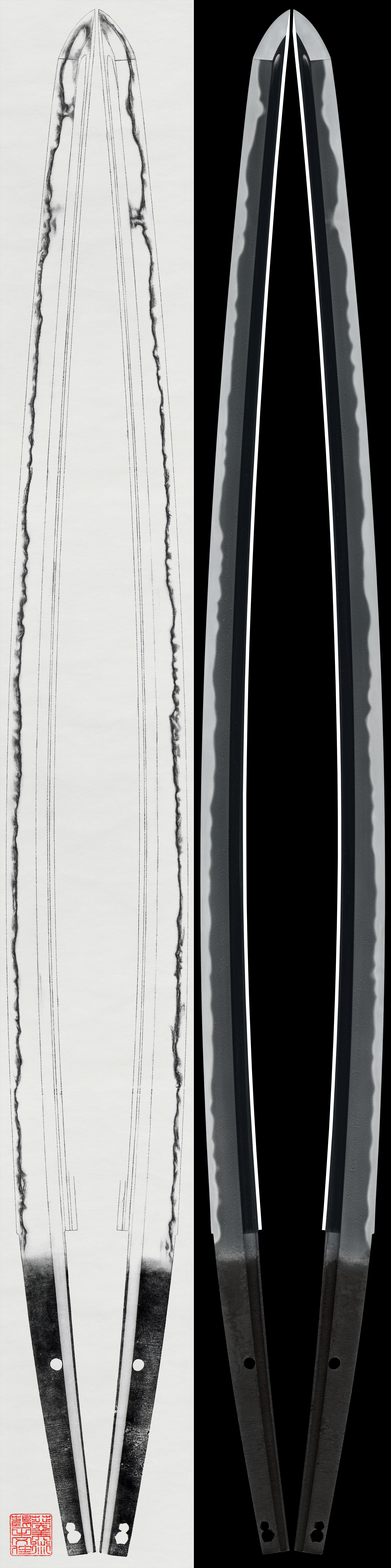
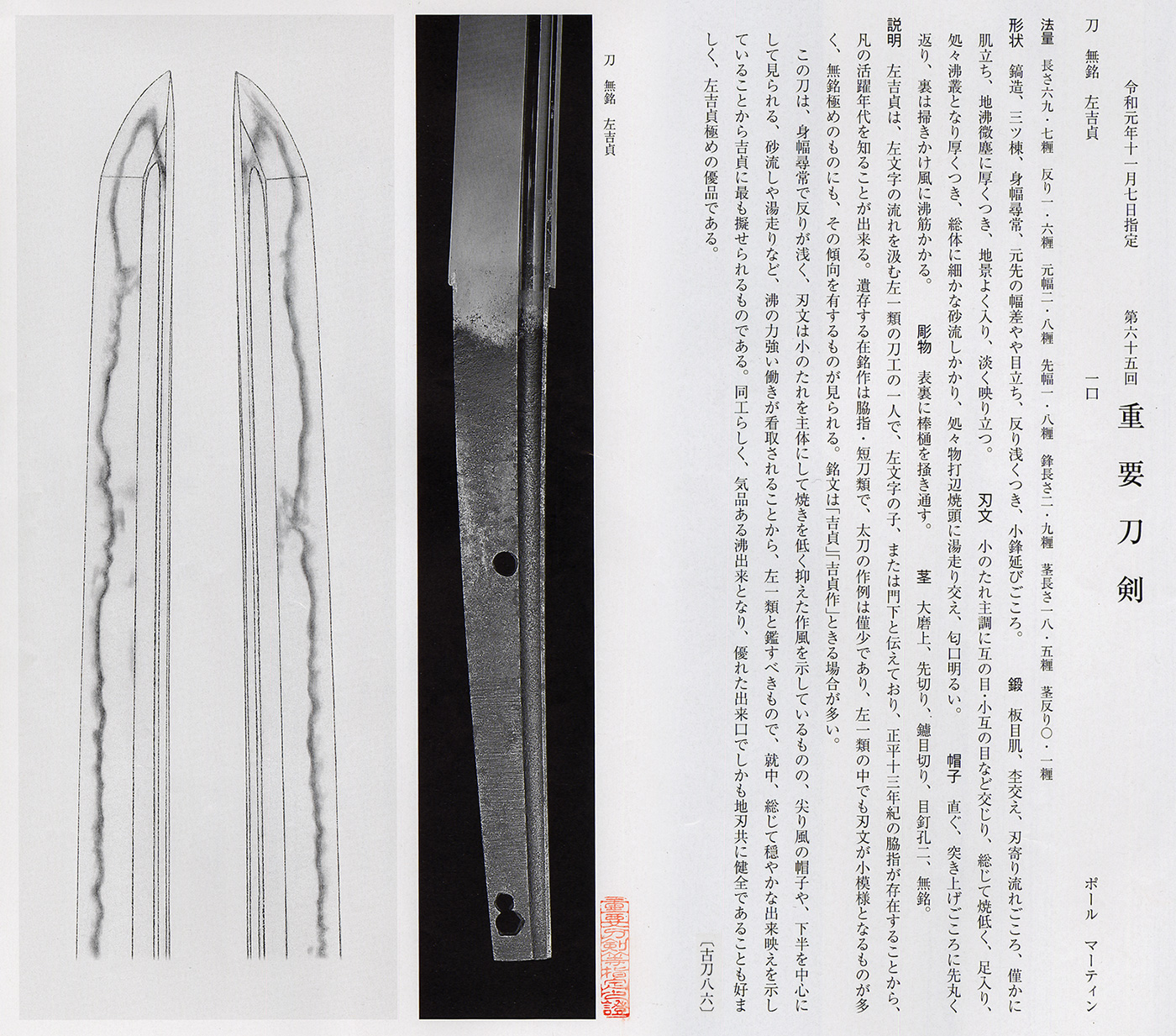
Shape: Both the width and thickness are well preserved, with bohi carved on both sides, and an extended kissaki, forming a well-proportioned and excellent shape.
Jigane: The jigane is a finely forged ko-itame hada, tightly packed and of high quality, with a faint utsuri appearing.
Hamon: Based on notare, mixed with gunome-midare and ko-gunome-midare. The nioiguchi is deep, with well-developed ko-ashi. Sunagashi and yubashiri are present.
Features: The most striking aspect is the excellent jigane, densely forged with visible chikei.
The nioiguchi is deep, with soft yet clearly defined ko-ashi.
This combination of jigane and hamon shows a depth of nioiguchi not seen in Shinto works.
It is a superb piece with a misty, refined appearance.
Sa Yoshisada is one of the Sa school lineage following Samonji, said to be either a son or a disciple of Samonji.
A wakizashi dated Shohei 13 (1358) exists, indicating his activity during that time.
Extant works are few, including tanto, wakizashi, and tachi, and it is said that the hamon often shows small patterns.
Many works are attributed as mumei.
With abundant sunagashi and yubashiri, and a strong yet elegant nie, it should be regarded as a Sa work.
Overall, it shows a calm and refined workmanship.
This is an excellent example by the smith, with both jigane and hamon in healthy condition, making it a superior work of Sa Yoshisada.
Koshirae: Tachi koshirae.
Saya (Scabbard): Gold nashiji saya, made around the Meiji period (1868–1912), of notably high quality.
Historical Background: By the late Kamakura period, the Imperial line had already split into two factions: the Daikakuji line (later the Southern Court) and the Jimyoin line (later the Northern Court). As this division surfaced, the Nanbokucho period began. It is said that the primary cause of this unusual situation was Emperor Go-Daigo’s strong attachment to the imperial throne.
65th NBTHK Juyo Token Certificate
AoiArt estimation paper: Whole Oshigata
Please note: the price does not include the shipping fees.
Price:5,000,000JPY
Order Form





Related Items:
 Set of Tosogu:Tomei:Tsuba, Kozuka, Fuchi-Kashira, Menuki, Ura-gawara, Kurikata (NBTHK Juyo Tosogu, 65th): Millet
 Katana:: Mumei(Unsigned) (attributed to Den Taima) (17th NBTHK Juyo Token)
 Katana: (Gold inlaid)Nagamori (47th NBTHK Juyo Token)
 Katana:Nakagawa Mutsu Kami Fujiwara Kaneshige Saku Kore(NBTHK Tokubetsu Hozon Token)
 Katana:Mumei(Unsigned) (Tegai)(63rd Juyo Token)
 Tachi: Norinari (Ko-Ichimonji)(69th NBTHK Juyo Token)