
Ordering Number: AS26133
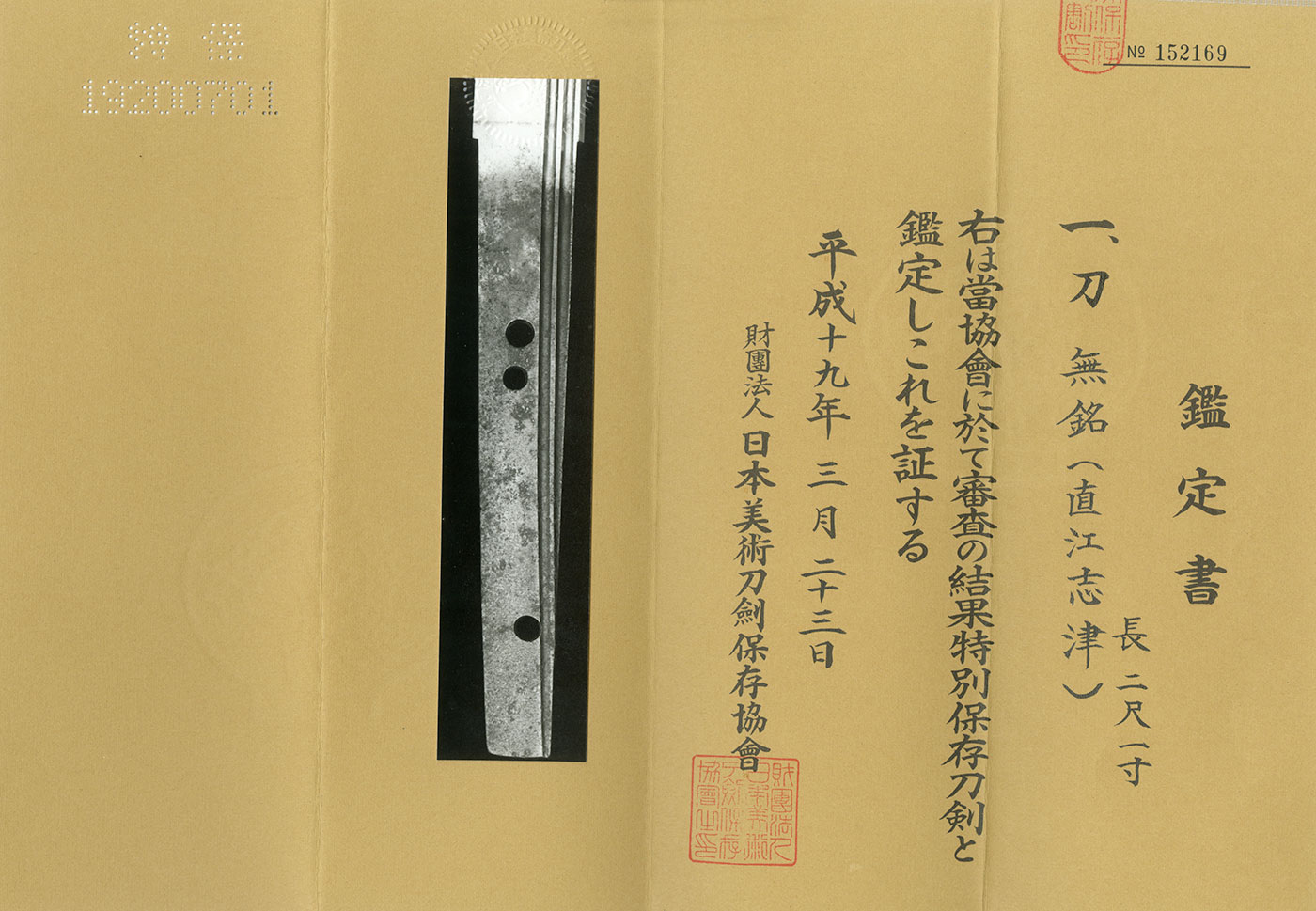
Katana in Shirasaya (NBTHK Tokubetsu Hozon Token).
Signature: Mumei (Naoe Shizu).
無銘(直江志津)
(We divide 4 sections for each sword as Saijyo Saku, Jyojyo Saku, Jyo Saku and Regular Saku).
This work is ranked as Jyojyo Saku for Mumei (Naoe Shizu).
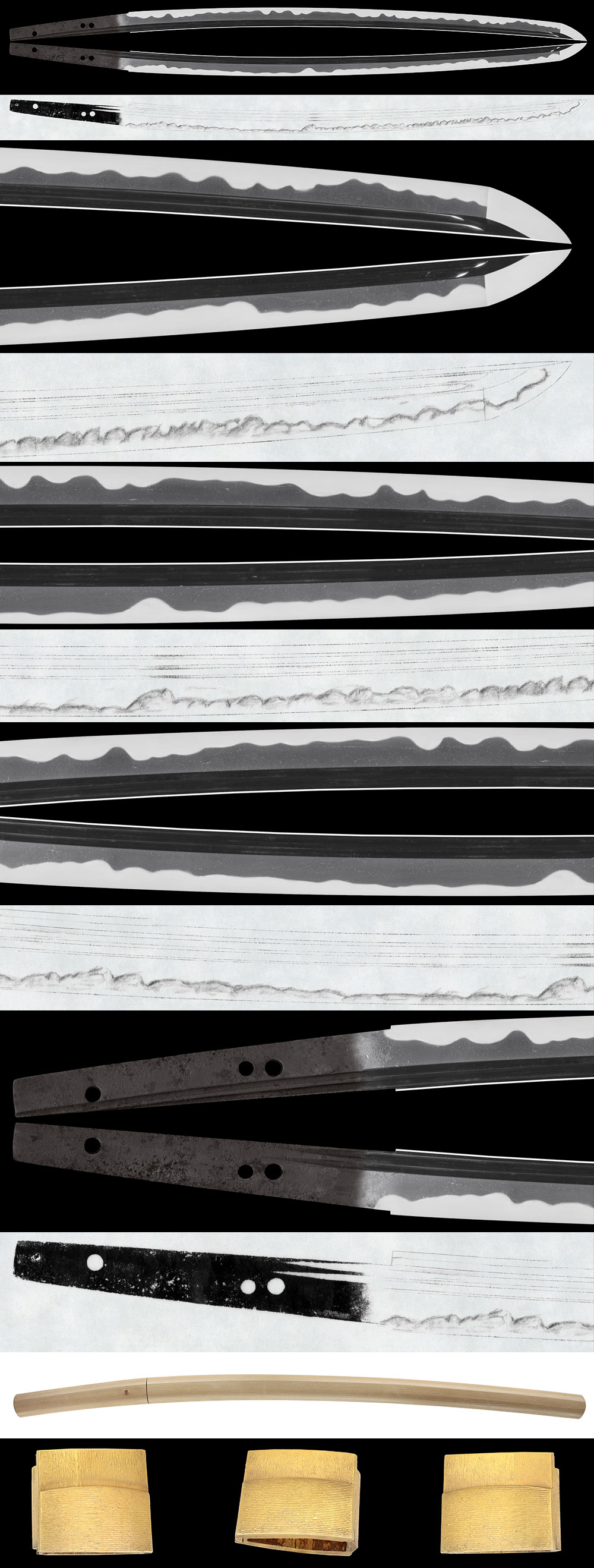
Habaki: Double-layer gold-covered.
Blade Length: 63.64 cm (25.06 in).
Curvature: 1.36 cm (0.54 in).
Mekugi Hole: 3.
Width at Base (Motohaba): 3.00 cm (1.18 in).
Width at Yokote (Sakihaba): 2.21 cm (0.87 in).
Thickness (Kasane): 0.54 cm (0.21 in).
Sword Weight: 630 g.
Era: Nanbokucho period.
Shape: Suriage with machi-okuri.
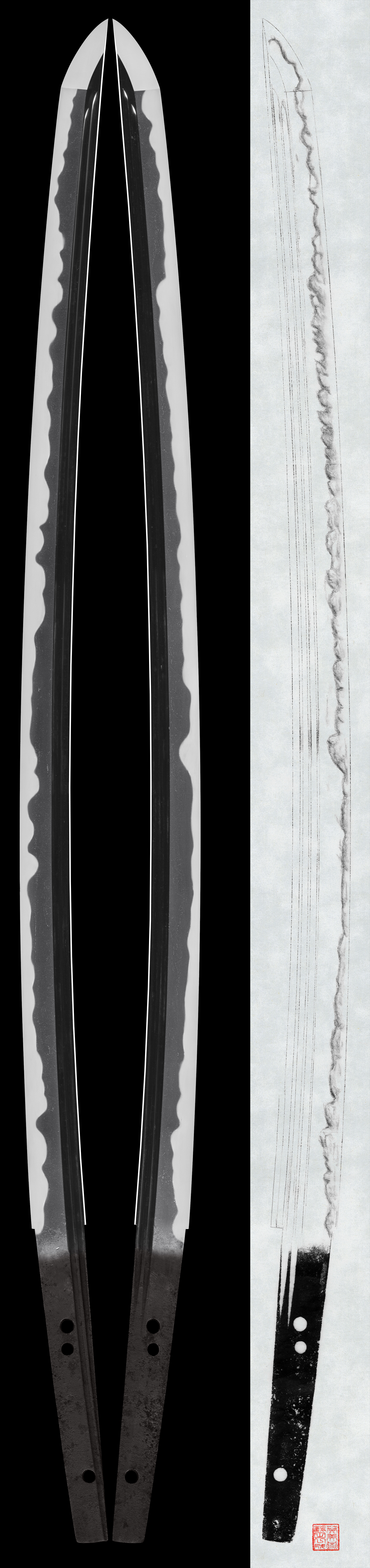
The blade has substantial width and thickness, with double grooves carved on the shinogi-ji, and a slightly elongated kissaki.
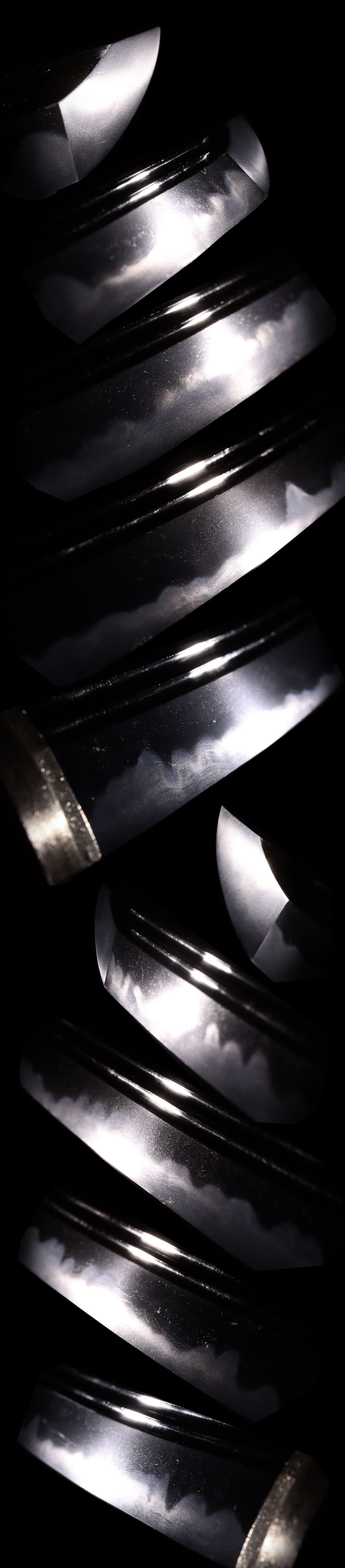
Jigane: Well-forged and finely packed ko-itame hada, producing a superior jigane.
Hamon: Nie-deki, gunome midare.
There are variations in height, with a soft nioiguchi, and the boshi shows a midarekomi with lively activity.
Features: The Shizu school is divided into Naoe Shizu and Yamato Shizu.
Generally, Naoe Shizu features larger hamon, while calmer hamon are attributed to Yamato Shizu.
Naoe Shizu flourished when Kaneuji, one of the Masamune Juttetsu, settled in the Shizu area of Mino Province.
Later, his students such as Kanetomo, Kanetsugu, Kaneshige, and Kanenobu moved to Naoe and continued swordsmithing, and their group is collectively referred to as Naoe Shizu.
This work displays the dynamic activity of the Soshu tradition and is highly आकर्ष力的 and recommended.
NBTHK Tokubetsu Hozon Token.
AoiArt estimation paper: Whole Oshigata.
Please note: The price does not include the international shipping fees.
Auction Starting Price:1,200,000JPY
Place Bid


Related Items:
 Katana: Hoki Kami Ason Masayuki
 Katana: Iga no Kami Fujiwara Kinmichi (26th NBTHK Tokubetsu Juyo Token)
 Katana:Mumei (attributed to Den Ayakoji)(NBTHK Tokubetsu Hozon Token)(Koshirae: NBTHK Tokubetsu Kicho Tosogu)
 Katana:Mumei (Unsigned), attributed to Chikakage.(The 41st NBTHK Juyo Token)
 Katana:Doi Shinryo(NBTHK Tokubetsu Hozon Token)
 Katana: Hachiman Daibosatsu Ikkansai Shigetsugu Saku(Tokubetsu Hozon Token) (NBTHK Tokubetsu Kicho Token)