
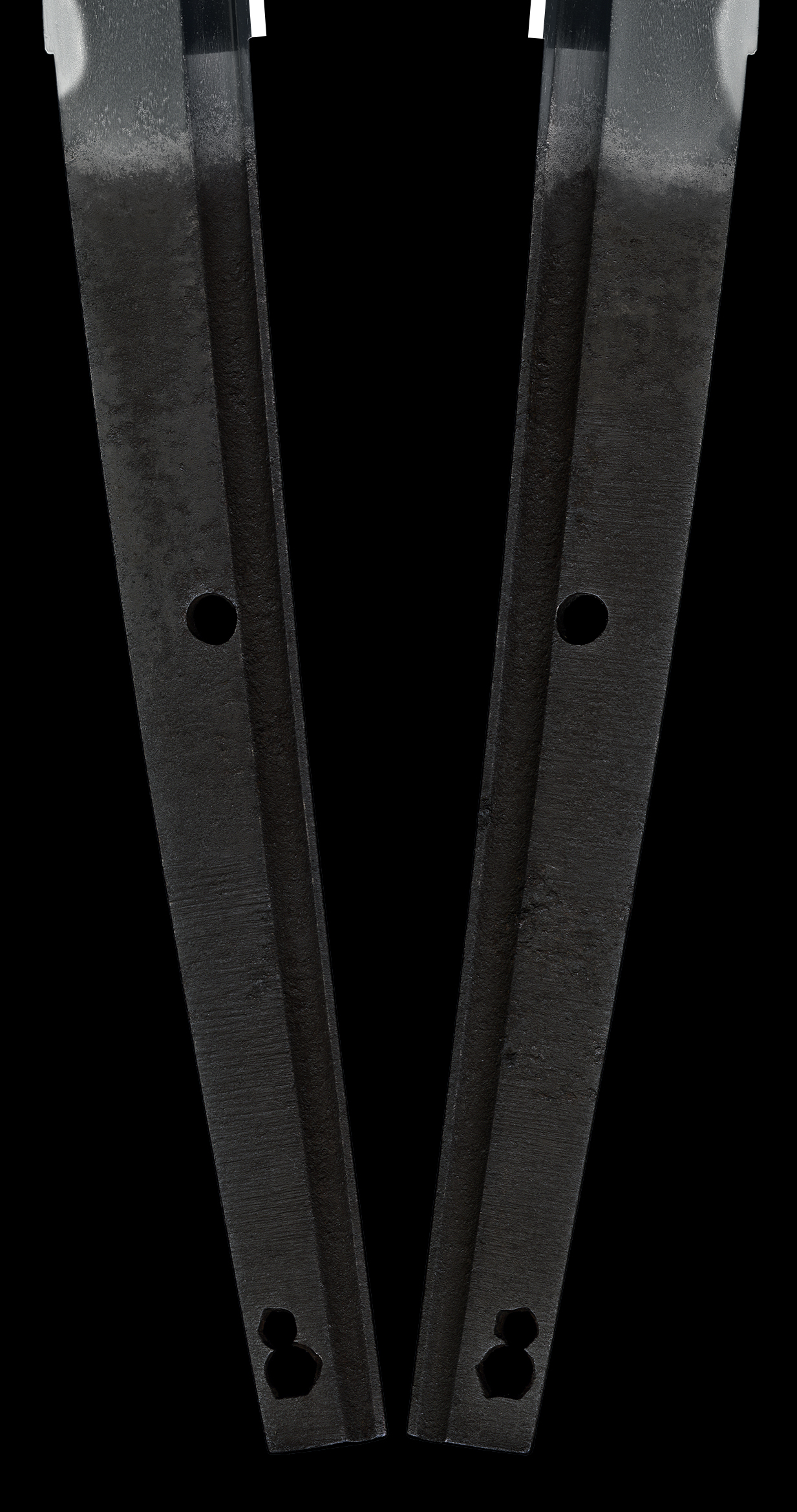
Previous answer is
Mumei(Unsigned) (Sa Yoshisada 左吉貞)
Features: The most striking aspect is the excellent jigane, densely forged with visible chikei.
The nioiguchi is deep, with soft yet clearly defined ko-ashi.
This combination of jigane and hamon shows a depth of nioiguchi not seen in Shinto works.
It is a superb piece with a misty, refined appearance.
Sa Yoshisada is one of the Sa school lineage following Samonji, said to be either a son or a disciple of Samonji.
A wakizashi dated Shohei 13 (1358) exists, indicating his activity during that time.
Extant works are few, including tanto, wakizashi, and tachi, and it is said that the hamon often shows small patterns.
Many works are attributed as mumei.
With abundant sunagashi and yubashiri, and a strong yet elegant nie, it should be regarded as a Sa work.
Overall, it shows a calm and refined workmanship.
This is an excellent example by the smith, with both jigane and hamon in healthy condition, making it a superior work of Sa Yoshisada.
=====================================
Appraisal Quiz #893 (April 19th, 2026)
Who made this sword do you think ?
=====================================
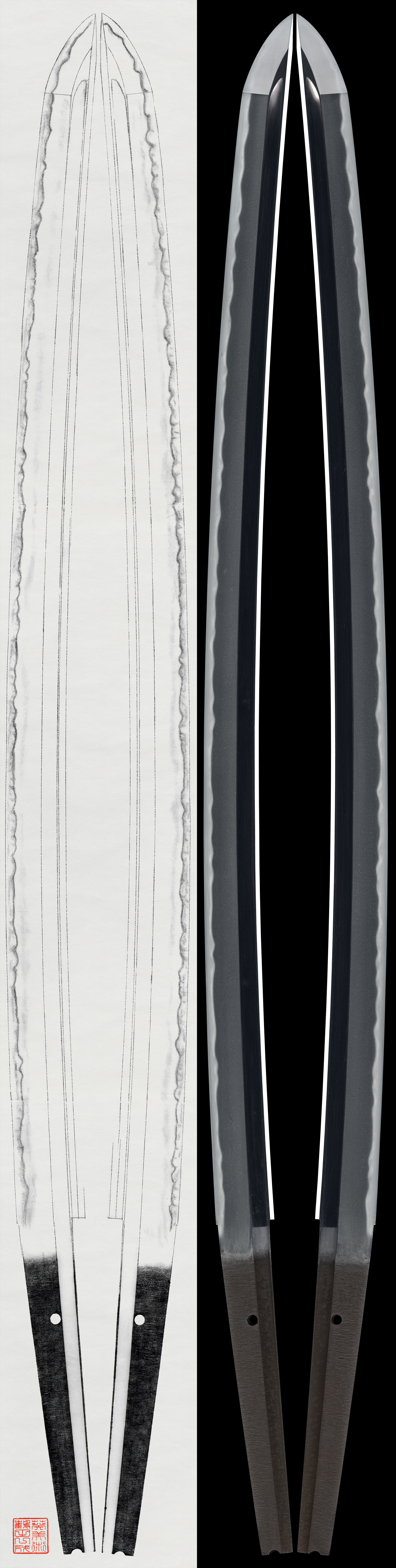

Blade Length: 71.4 cm (28.11 in)
Curvature: 1.4 cm (0.55 in)
Mekugi-ana: 1 hole
Motohaba: 3.43 cm (1.35 in)
Sakihaba: 2.56 cm (1.01 in)
Kasane: 0.96 cm (0.38 in)
Sword Weight: 810 g
Shape: wide, thick, O-suriage(largely shortened)blade with Koshizori and big Kissaki. Boshi is carved on the blade.
Jigane: Itame mixed with Masa and flawing Jigane patterns with much Jinie and Chikei.
Hamon: Ko-nie deki Notare and Gunome. Boshi is Midare-komi with Kinsuji and ends in Yakizume style.
=====================================
Answer will be posted at next Appraisal Quiz.
=====================================
(Please acknowledge not replying to mail about Appraisal Quiz by our convenience.)