
Previous answer is
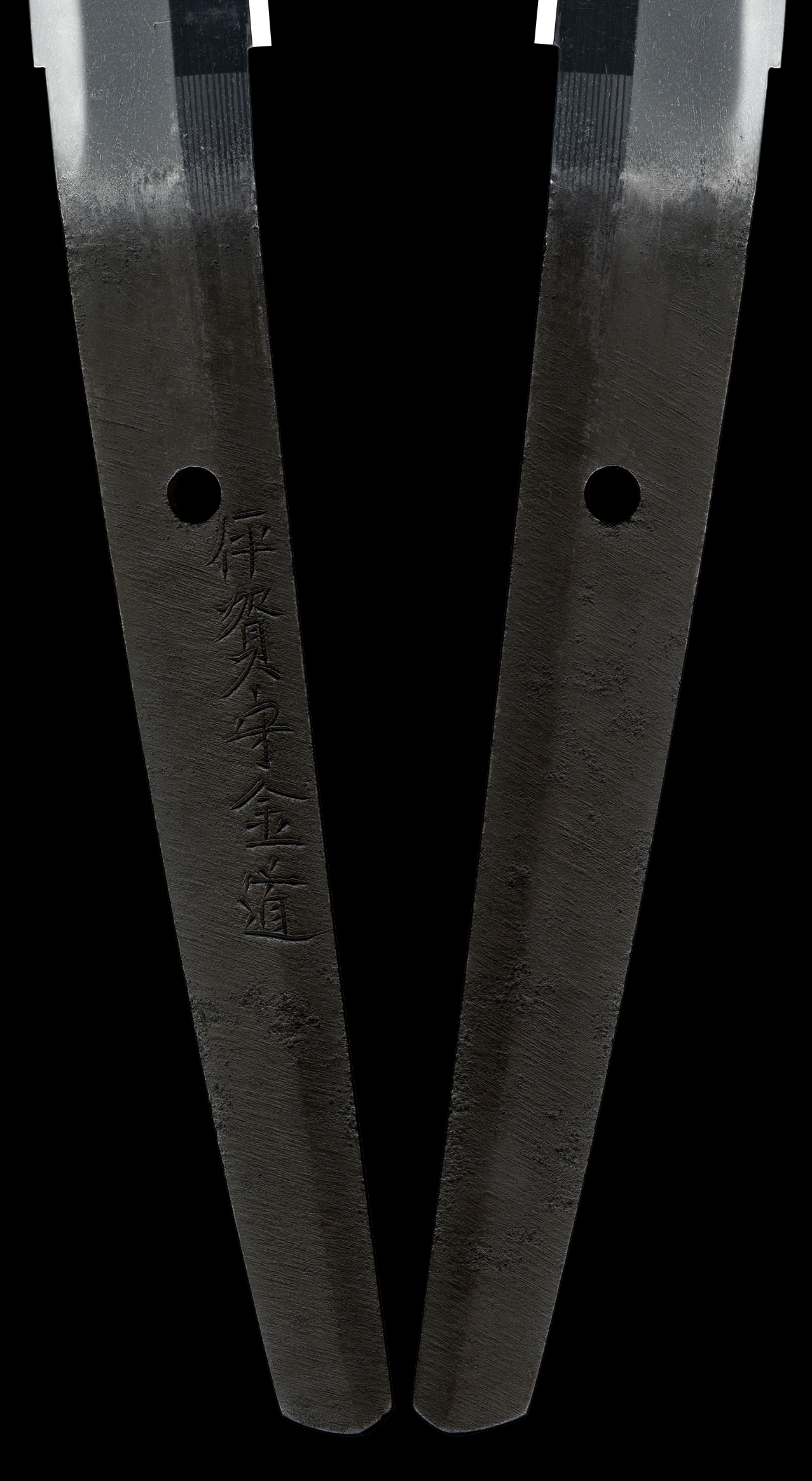
Signature: Iga no Kami Fujiwara Kanemichi 伊賀守藤原金道
Features: The 1st-generation Iga no Kami Kinmichi was the son of Kanemichi (later known as Daidō). In 1559, he moved from Mino to Kyoto together with his father and his brothers — Rai Kinmichi, Tanba no Kami Yoshimichi, and Etchū no Kami Masatoshi. He began his activity around the Tenshō era and was granted the title "Iga no Kami" in 1594.
Before receiving the official title, his works exhibited typical late-Seki's works with tight-nioikuchi hamon.
After receiving the official title, his style became more Shizu-like, featuring stronger nie, with midareba incorporating kinsuji and sunagashi, and he began tempering the distinctive Mishina style Boshi characteristic of his school.
This blade exhibits complex activity in both jigane and hamon, and stands as a valuable example of Kinmichi’s refined craftsmanship after receiving the title.
=====================================
Appraisal Quiz #856 (July 19th, 2025)
Who made this sword do you think ?
=====================================
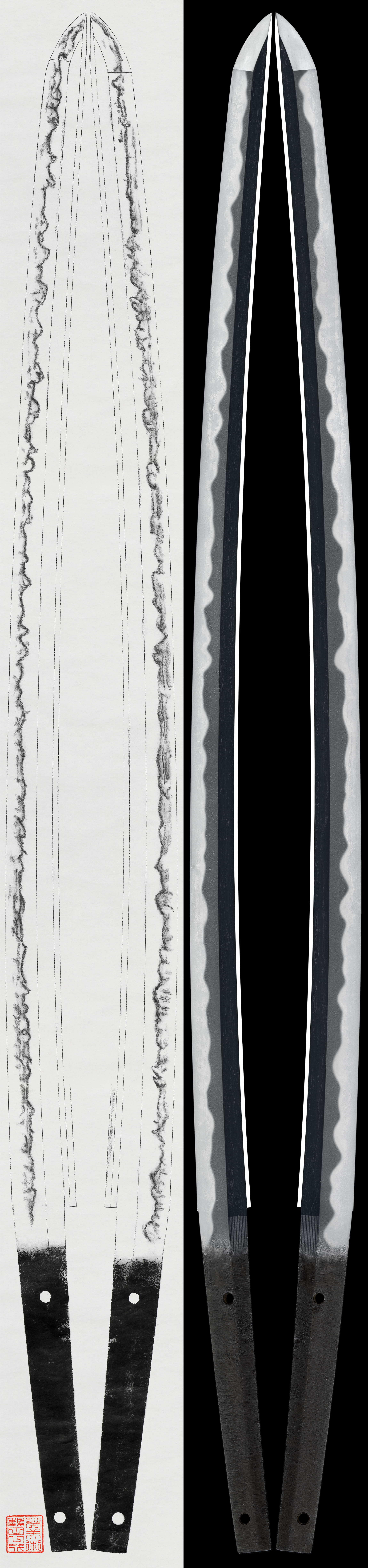

Blade Length: 67.4 cm (26.54 in)
Curvature: 1.2 cm (0.47 in)
Mekugi Hole: 2
Width at Base (Motohaba): 3.02 cm (1.19 in)
Width at Yokote (Sakihaba): 2.01 cm (0.79 in)
Thickness of rim (Kasane): 0.63 cm (0.25 in)
Sword Weight: 830 grams
Shape: A wide blade with high shinogi and relatively shallow curvature.
Jigane: Finely forged ko-itame hada with ji-nie and faint utsuri appearing.
Hamon: Nie-based gunome-midare, appearing with striking intensity.
It is in the Soshu-den style with well-applied nie and vibrant gunome-midare.
The bōshi is midarekomi.
=====================================
Answer will be posted at next Appraisal Quiz.
=====================================
(Please acknowledge not replying to mail about Appraisal Quiz by our convenience.)