
Ordering Number: 26361
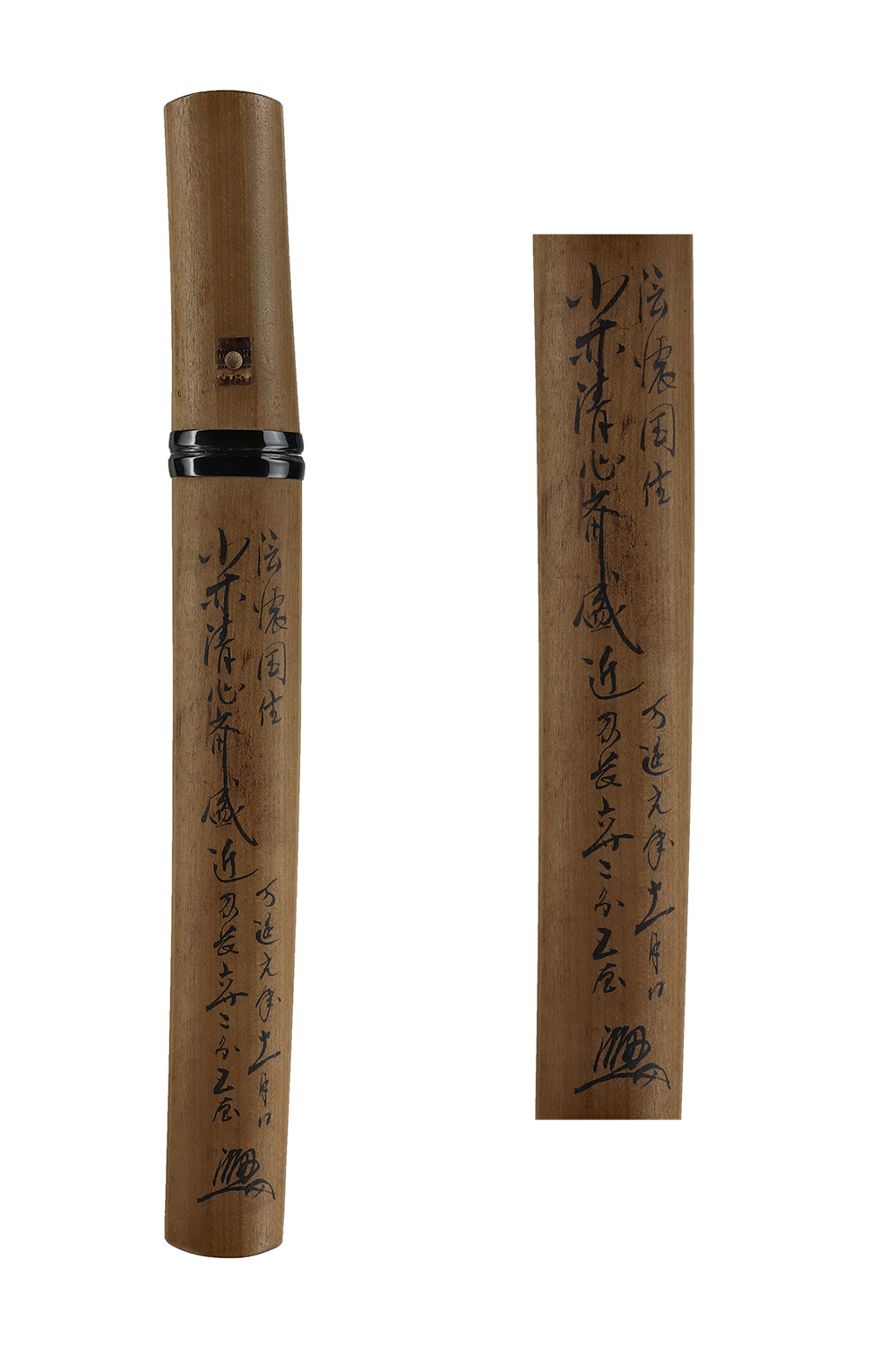
Tanto in Shirasaya (NBTHK Hozon Token) (NTHK Certificate)
Signature: Seishinsai Morichika
Sakura-Hana
Made on request for Hayashi Dōtoku
(On the mune) A day in the 11th month of Man'en 1 (1860)
清心斎盛近
さくら花
応需林道得
(棟に)万延元年十一月日
Sayagaki:
Shinano no Kuni-jū Ko〇 Seishinsai Morichika
A day in the 11th month of Man'en 1 (1860)
Blade Length: 6 sun 2 bu 5 rin
(kao)
Shinshinto: Chujo-saku: Musashi.
(We divide 4 sections for each sword as Saijyo Saku, Jyojyo Saku, Jyo Saku and Regular Saku).
This blade is ranked as Jyojyo Saku among the works of Seishinsai Morichika.
Habaki: Double gold-foiled habaki.
Blade Length: 18.9 cm (7.44 in).
Curvature: 0.0 cm (0.00 in).
Mekugi Hole: 1.
Width at Base (Motohaba): 2.01 cm (0.79 in).
Thickness of rim (Kasane): 0.89 cm (0.35 in).
Sword Weight: 140 g.
Era: Edo period, Man'en 1 (1860).
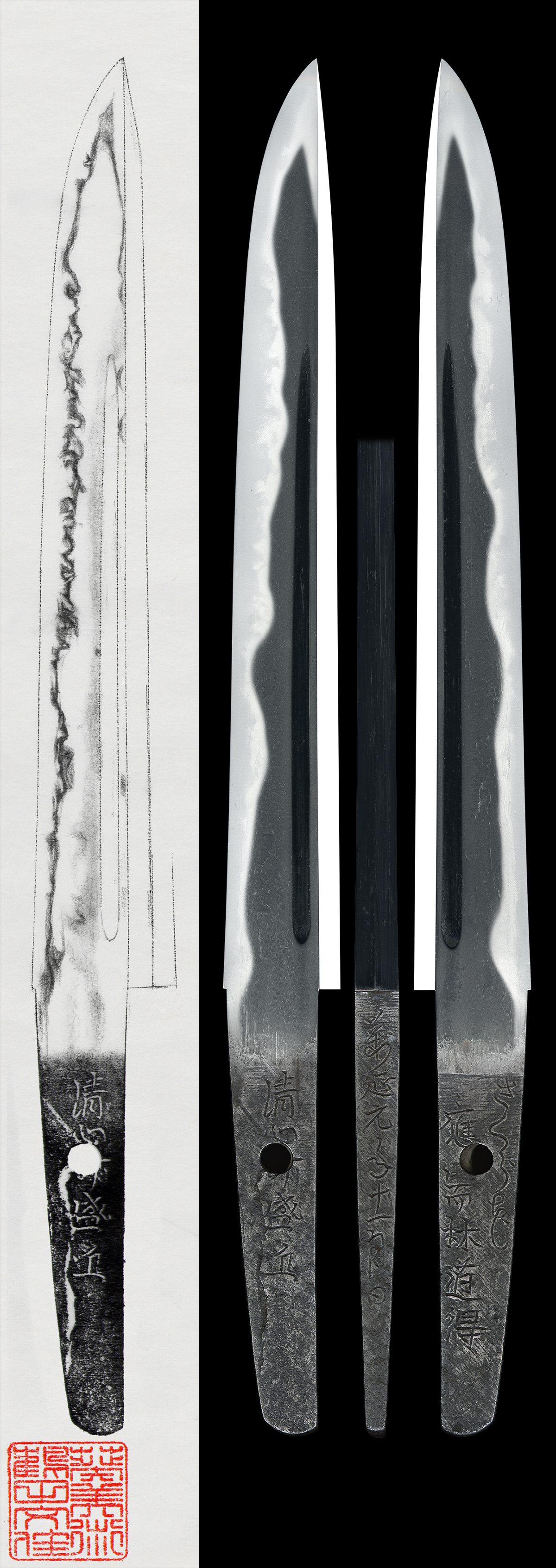
Shape: A stout tanto with bohi carved on both sides of the blade. The date is engraved on the mune of the tang.
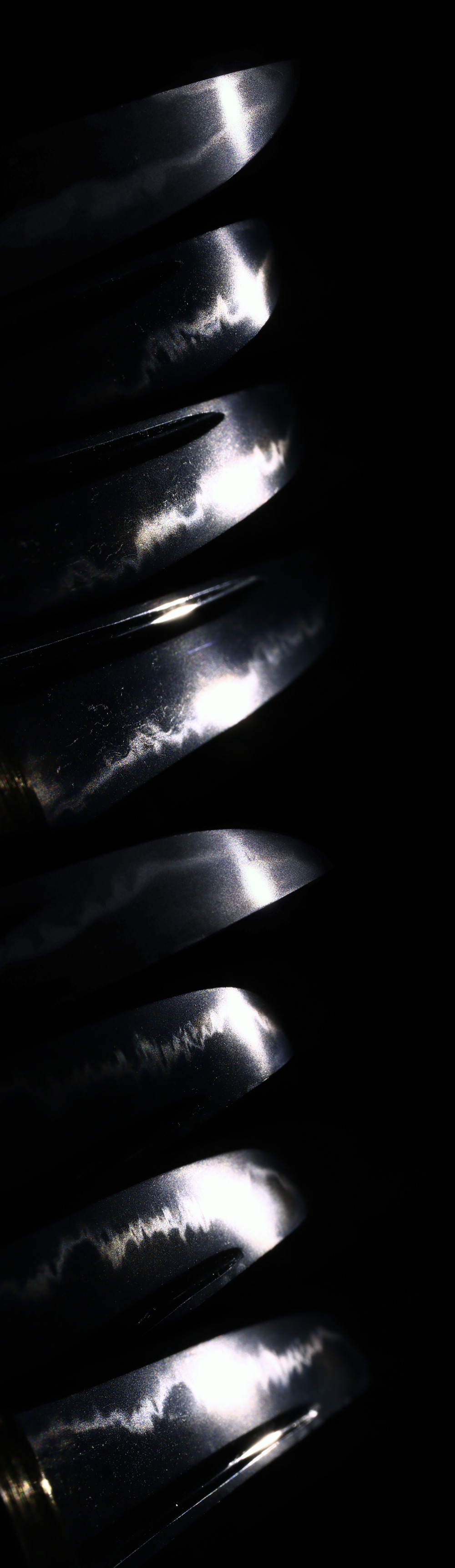
Jigane: Well-forged steel of fine quality.
Hamon: Nie-deki gunome-midare with active ko-ashi. The boshi is slightly pointed and returns deeply.
Features: The date, A day in the 11th month of Man'en 1 (1860), is carefully engraved on the mune of the tang. This is a thick and robust tanto. Because the workmanship is of such high quality, it is possible that Seishinsai Morichika inscribed the words Sakura-bana ("Cherry Blossoms") out of particular inspiration. Seishinsai Morichika was a swordsmith who worked in Edo and is also recorded as having resided in Shinano Province. This blade exhibits workmanship very similar to that of Kawai Hisayuki and is an excellent example of his craft.
Historical Background: Man'en 1 (1860) fell during the turbulent final years of the Edo period. In the years leading up to it, Commodore Matthew Perry arrived at Uraga with his Black Ships in 1853, returned in 1854 with an even larger fleet, and the Treaty of Peace and Amity between Japan and the United States was concluded, opening the ports of Shimoda and Hakodate. These events marked the beginning of Japan's opening to the West. In the same year, 1860, political unrest intensified in Japan, while abroad the American Civil War began in 1861, ushering in another period of great upheaval.
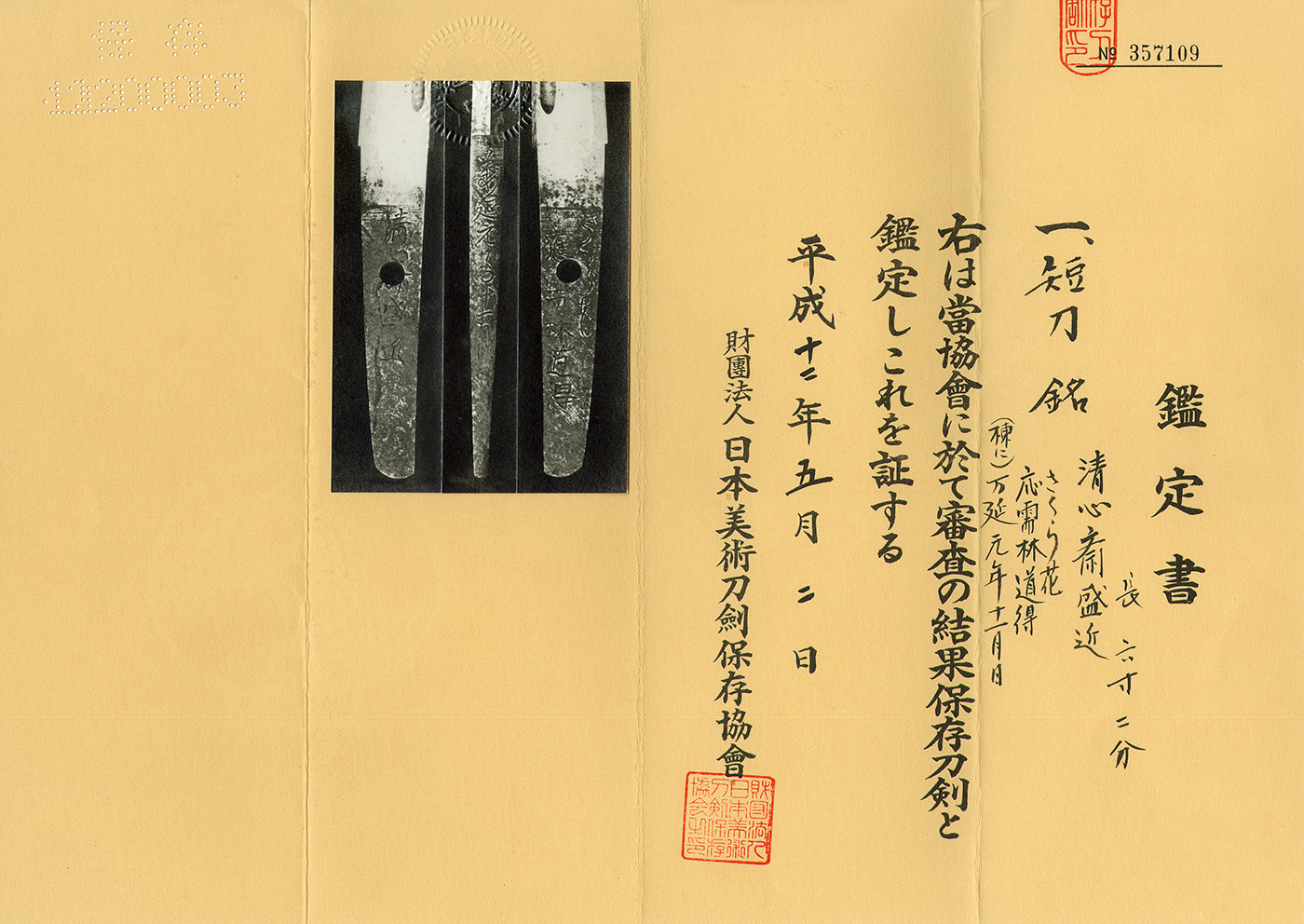
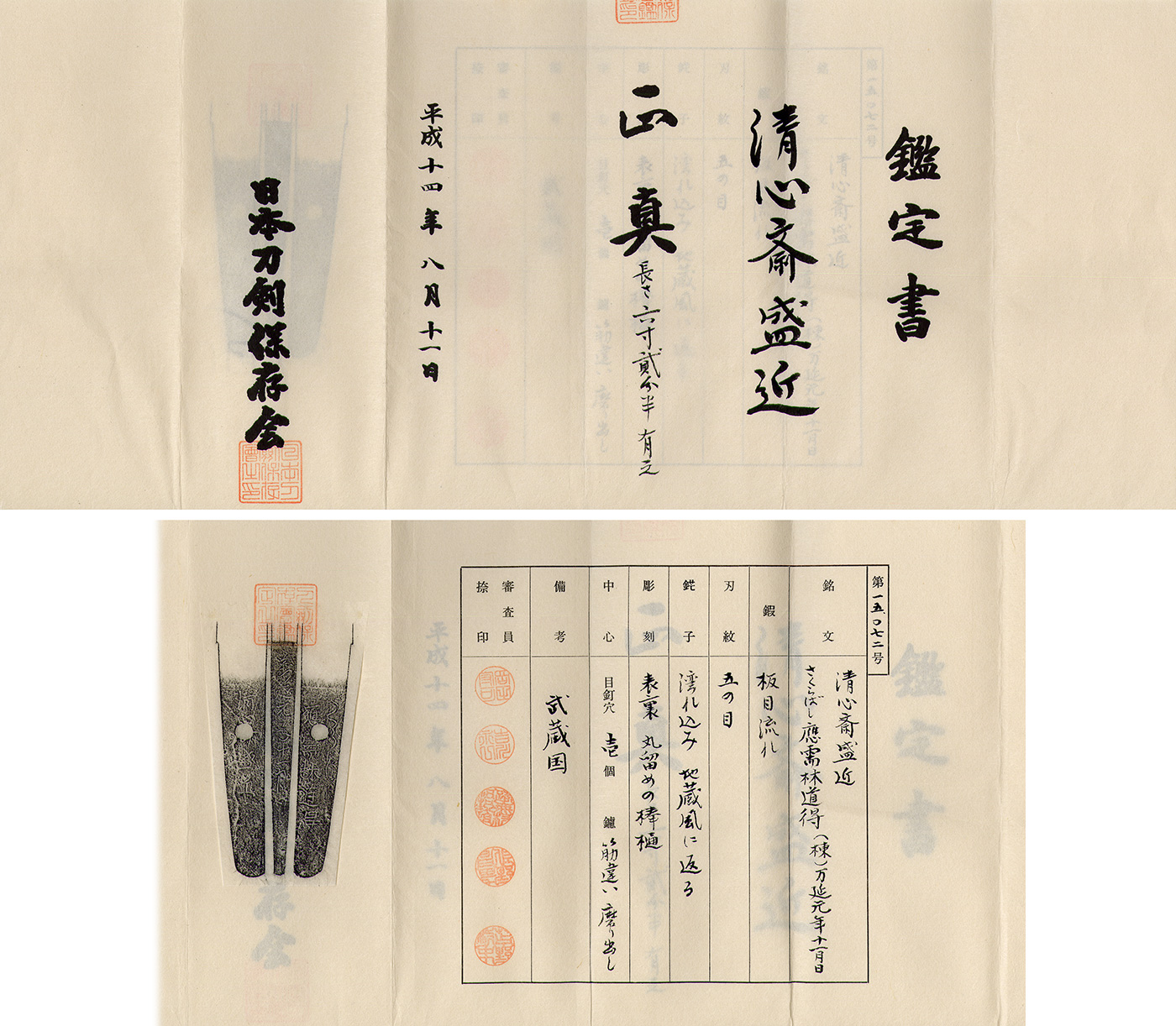
NBTHK Hozon Token Certificate.
NTHK Certificate.
AoiArt estimation paper: Whole Oshigata.
Please note: the price does not include the shipping fees.
Please note: The price does not include the international shipping fees.
Price:250,000JPY
Order Form


Related Items:
 Tanto: Sa-no-Yukihide (NBTHK Tokubetsu Hozon Token)
 Tanto:Muramasa 村正
 Tanto: Remaining steel from the sacred treasure sword of the Imperial Grand Shrine Made by Matsuyama ju Ryusen Nyudo Sadatsugu (Living National Treasure)(NBTHK Tokubetsu Hozon)
 Tanto:Minase Jingu Hiromae Magara Ryukichi Saijin Kore, Sadatsugu Tanto Kore(NBTHK Hozon Token)
 Tanto:: Kiyondo 清人 (NBTHK Tokubetsu Hozon Token)
 Tanto: Osaka ju Gassan Sadakatsu Kinsaku (kao) A lucky day in May, Showa 9 (1934). (NBTHK Tokubetsu Hozon Token), accompanied by a maki-e lacquer box.