
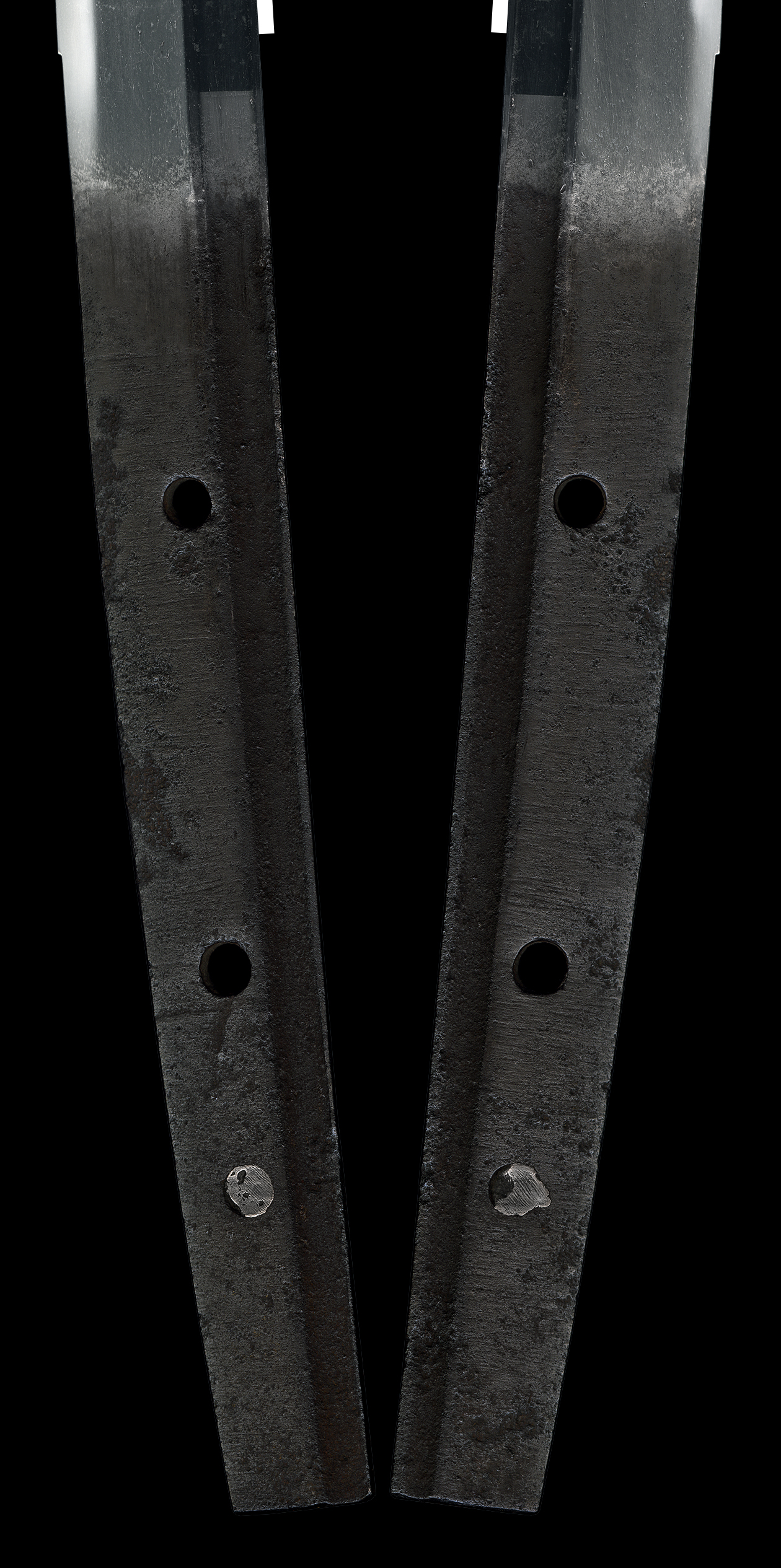
Previous answer is
Mumei(Unsigned) (attributed to Den Taima)
無銘(伝 当麻)
Features: The suguha shows hotsure, uchinoke, sunagashi, and kinsuji activities, with abundant nie, clearly expressing the characteristic style of Taima.
Taima swordsmiths belonged to the Yamato tradition, and their works are known for strong masame tendencies in the jigane and a deep nioiguchi.
Such activities are not seen in Shinto or Shinshinto works, and Taima pieces in particular display a highly complex atmosphere.
It is also unusual that an additional note by Dr. Kanzan was added after the sayagaki by Dr. Kunzan.
=====================================
Appraisal Quiz #900 (June 6th, 2026)
Who made this sword do you think ?
=====================================
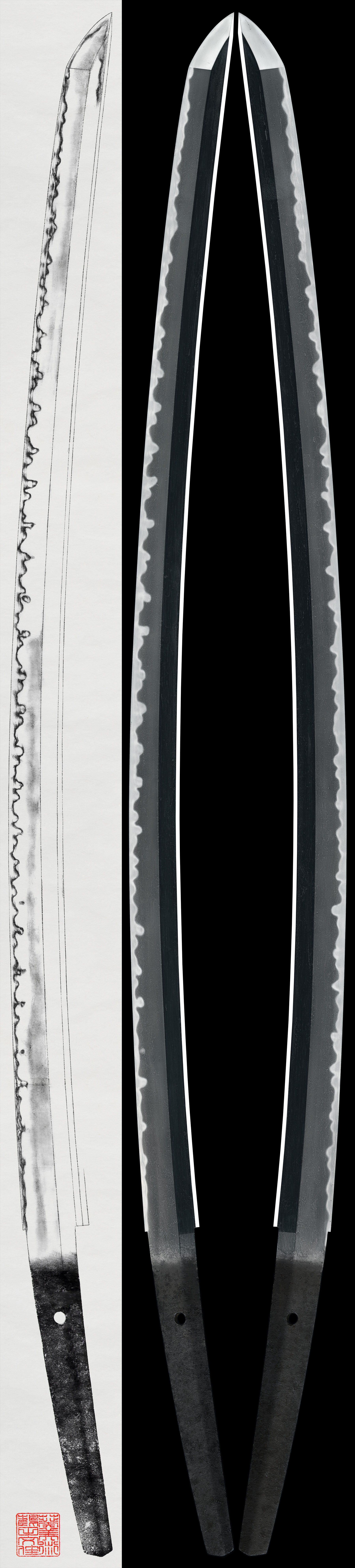

Blade Length: 66.9 cm (26.34 in).
Curvature: 2.0 cm (0.79 in).
Mekugi Hole: 1.
Width at Base (Motohaba): 3.04 cm (1.20 in).
Width at Tip (Sakihaba): 2.21 cm (0.87 in).
Thickness of rim (Kasane): 0.68 cm (0.27 in).
Sword Weight: 675 grams.
Shape: Ubu Nakago with 1 Mekugi Hole, possessing a graceful curvature and an extended Kissaki, making it an excellent example of the finest workmanship.
Jigane: Ko-itame hada, extremely well forged and tightly forged, with prominent shirake-utsuri appearing throughout.
Hamon: Nie-deki, featuring a slightly rounded temper pattern mixed with pointed elements, continuing from the Hamachi to the Kissaki.
The Boshi becomes midare-komi.
Restrained kinsuji are actively present within the temper line.
=====================================
Answer will be posted at next Appraisal Quiz.
=====================================
(Please acknowledge not replying to mail about Appraisal Quiz by our convenience.)