
Ordering Number: 26172
Katana in Shirasaya (NBTHK Tokubetsu Hozon Token)
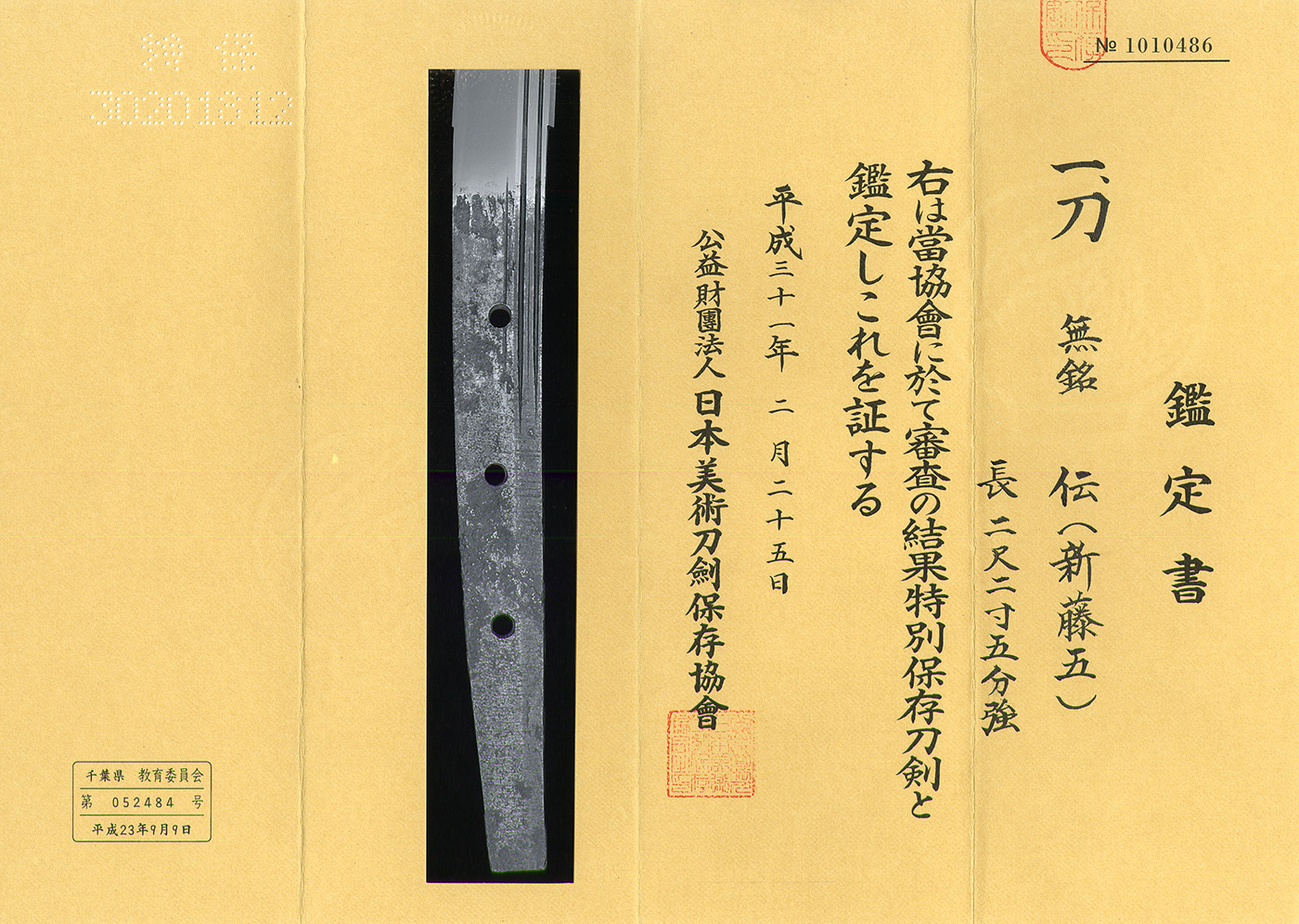
Signature: Mumei(Unsigned) (Den Shintogo 新藤五)
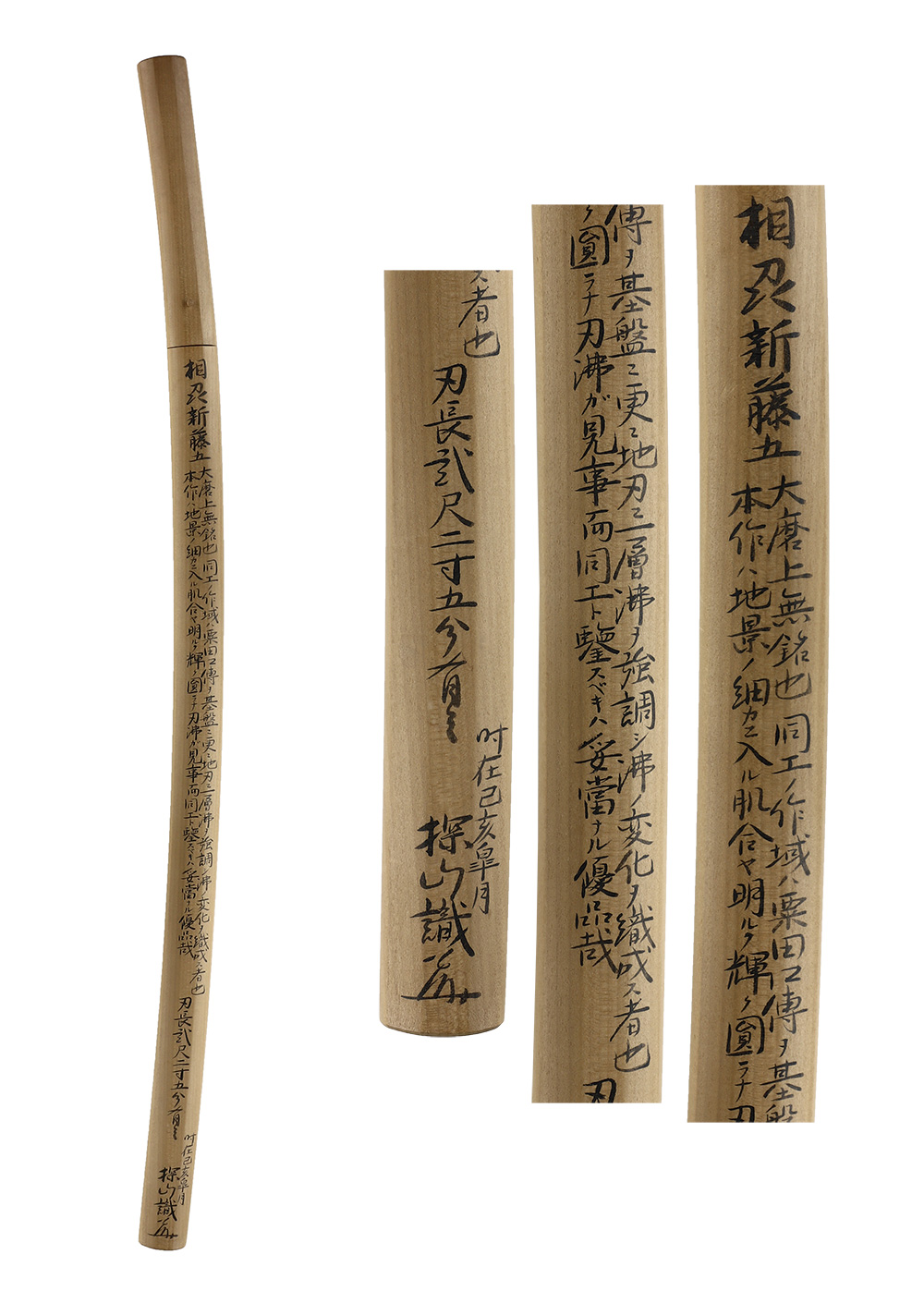
Sayagaki(translation): by Mr. Tanobe
Soshu Shintogo
This piece is O-suriage Mumei. The workmanship of this smith is based on the style of the Awataguchi school, with more pronounced nie displaying a greater variety of activities and variations throughout the blade.
This blade exhibits finely developed chikei throughout the jigane, and its bright, lustrous nie along the hamon are particularly impressive. Judging from its workmanship and overall quality, it is a fine example that can reasonably be attributed to Shintogo.
(We divide 4 sections for each sword as Saijyo Saku, Jyojyo Saku, Jyo Saku and Regular Saku).
This sword is ranked as Jyojyo Saku among works attributed to Mumei(Unsigned) (Den Shintogo).
Habaki: Double-layer gold-plated habaki
Blade Length: 68.2cm (26.85in)
Curvature: 1.2cm (0.47in)
Mekugi-ana: 33
Motohaba: 1.76cm (0.69in)
Sakihaba: 2.80cm (1.10in)
Kasane: 0.68cm (0.27in)
Sword Weight: 650 g
Era: late Kamakura period, 14th century
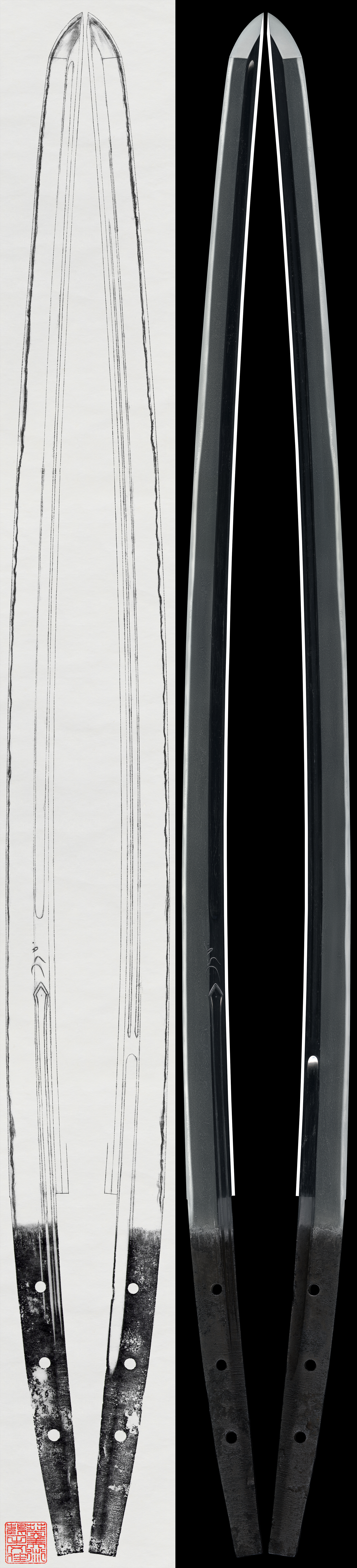
Shape: O-suriage mumei. Slightly narrow with noticeable tapering and carveture concentrated near the base. Finely engraved with a bonji, suken, and hi.
Hamon: Itame-hada mixed with mokume and flowing grain patterns with fine chikei.
Hamon: Ko-nie base thin Suguha with nie consisting Sunagashi and Kinsuji.
Features: Koto: Saijo Saku: Sagami
The Shintogo school, founded by Shintogo Kunimitsu, was active in Kamakura, Sagami Province. Among his successors were Kunihiro, Kuniyasu, and Kunishige, though distinguishing individual generations is difficult. Regarded as the effective founder of the Soshu tradition, he is said to have been the teacher of Masamune and Yukimitsu. His dated works are known from the Einin era, and he remained active through the late Kamakura period.
While most surviving works by Shintogo are tanto, this blade is a rare tachi. The finely forged and tightly compacted jigane is exceptionally beautiful.
NBTHK Tokubetsu Hozon Certificate
AoiArt estimation paper: Whole Oshigata
Please note: The price does not include the international shipping fees.
rice:7,800,000JPY
Order Form


 <
<
Related Items:
 Katana:Osaka Gassan Sadakazu Saku(stamped) Meiji 30 Nen 8 Gatsu Hi Motte Soushu Kamakura Masamune Den(NBTHK Tokubetsu Hozon Token)
 Dai Sho : Katana:(Important Art Object):Mumei (Unsigned) (Den Nagamitsu)/ Wakizashi:Mumei (Unsigned) (Den Nagamitsu)/Mumei (Unsigned) (Sekishu Naotsuna)(NBTHK Tokubetsu Hozon)
 Katana:: Mumei(Unsigned) (attributed to Den Taima) (17th NBTHK Juyo Token)
 Katana: Mumei (Unsigned) (Hatakeda Sanemori) (12th Session Juyo Token)
 Tachi:Sueyuki (Den Bungo, Late Kamakura period)(NBTHK Tokubetsu Hozon Token)
 Katana :Mumei (Unsigned)(Den Go Yoshihiro)(NBTHK Tokubetsu Hozon Token)