
Ordering number:AS26069
Wakizashi in Shirasaya with Koshirae (NBTHK Tokubetsu Hozon Token).
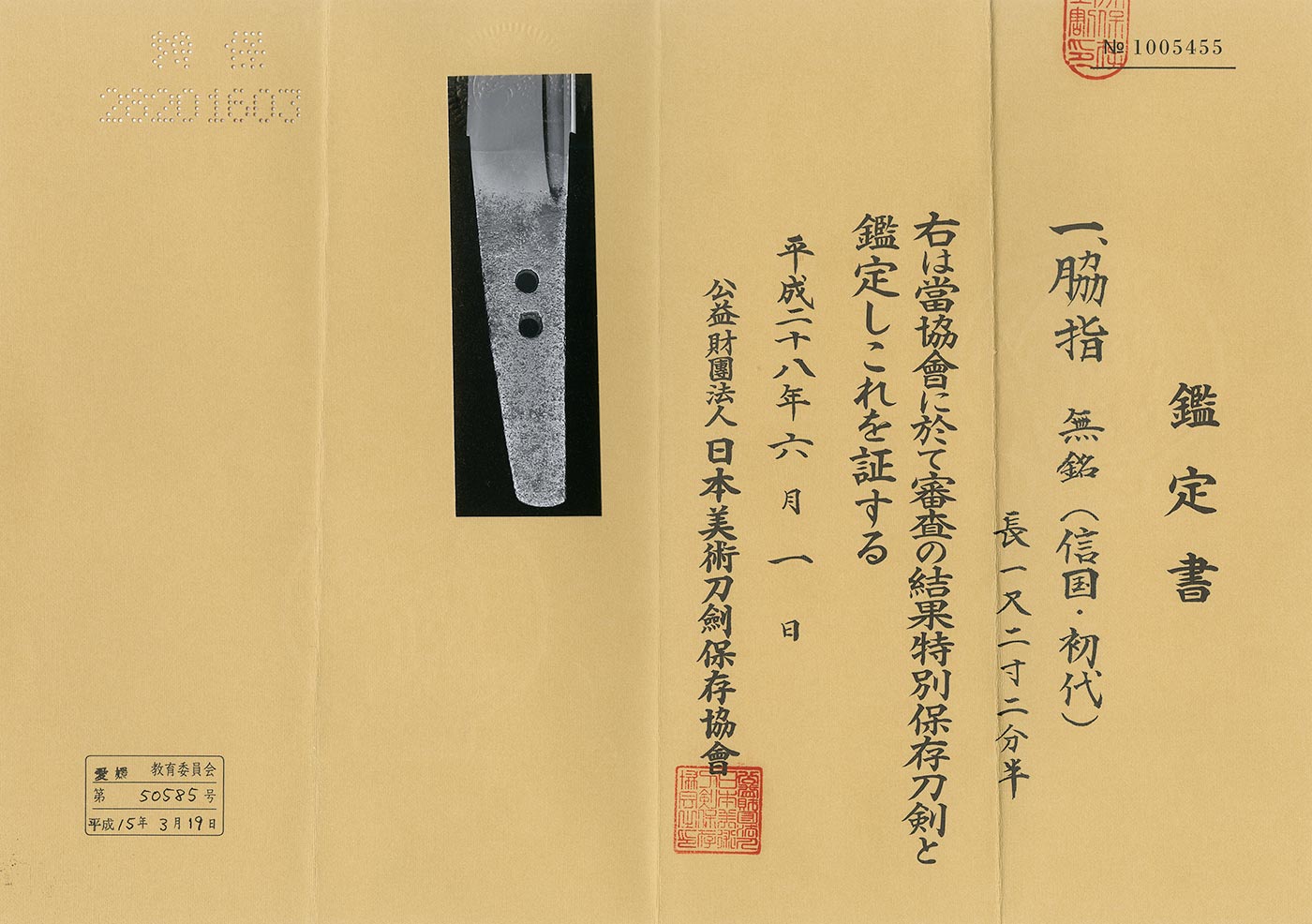
Signature: Mumei (Unsigned) (Nobukuni, First Generation).
Koto; Jyojyo Saku: Yamashiro.
(We divide 4 sections for each sword as Saijyo Saku, Jyojyo Saku, Jyo Saku and Regular Saku).
This work is ranked as Jyojyo Saku for Mumei (Nobukuni, First Generation).
Habaki: Solid copper, single layer.
Blade Length: 37.2 cm (14.65 in).
Curvature: 0.8 cm (0.31 in).
Mekugi Hole: 2.
Width at Base (Motohaba): 3.0 cm (1.18 in).
Width at Tip: Not listed.
Thickness of rim (Kasane): 0.43 cm (0.17 in).
Sword Weight: 250 g.
Era: Mid Nanbokucho period, around 1356 (Jōji 1).
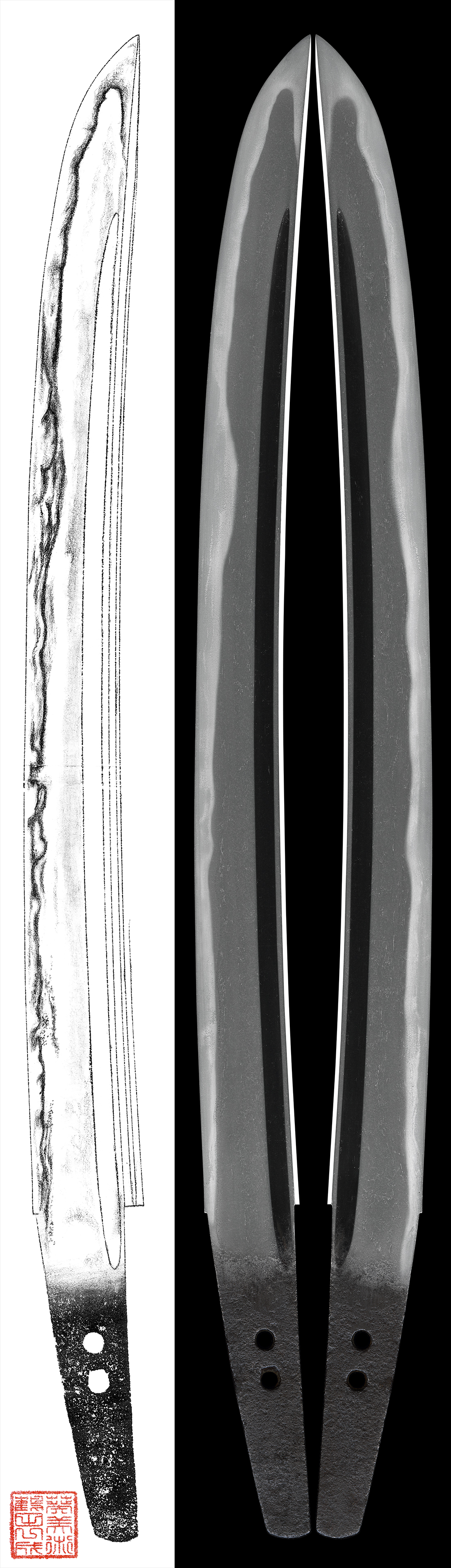
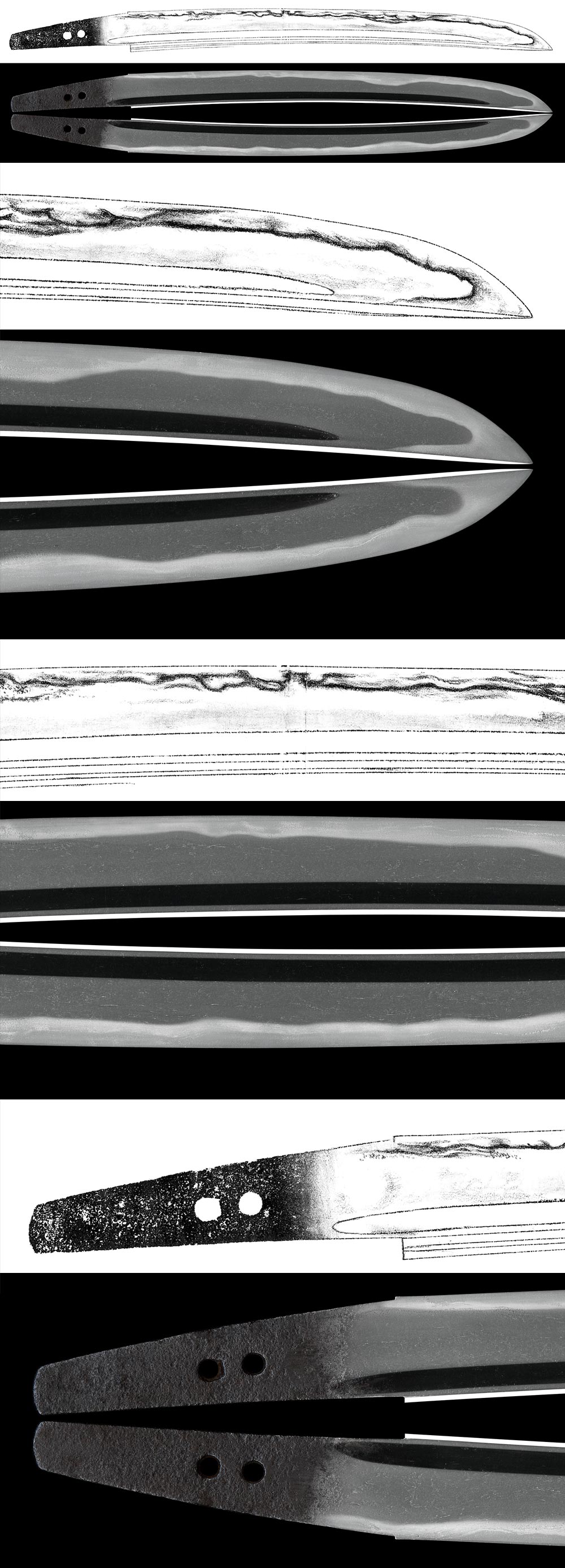
Shape: Hirauchi wakizashi with wide mihaba, slightly thin kasane, mitsu-mune, slight sakizori, and bohi carved on both sides, showing a সুন্দর and well-balanced shape.
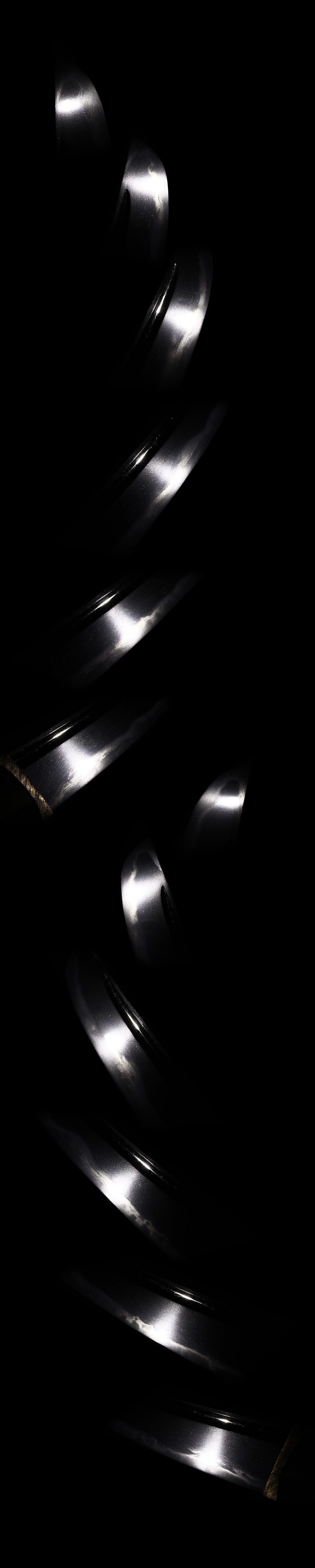
Jigane: Fine ko-itame hada tightly forged, with masame flowing near the edge, and ji-nie attached.
Hamon: Nie-deki with a deep nioiguchi, mixed with gunome-midare and notare, soft ha-fuchi, with sunagashi and kinsuji active within the hamon.
Features: The first-generation Nobukuni followed the Rai school tradition and was active around the Jōji era (1356) in the Nanbokucho period, continuing through the Ōei, Eikyō, and Bunmei eras.
This work is attributed to the first-generation Nobukuni as mumei, and unlike typical suguha, it features a deep nioiguchi, soft ha-fuchi, gunome-midare, abundant internal activity, and a boshi with hakikake and deep nioiguchi.
Koshirae:
Tsuba: Mokkozuke-shaped shakudo nanako ground with peony flowers and figures in high relief, with gold iroe.
Fuchikashira: Shakudo nanako ground with floral design in high relief, with gold iroe.
Saya (Scabbard): Black roiro lacquered saya.
Menuki: Shakudo with floral design in high relief, with gold iroe.
Kozuka: Shakudo nanako ground with a fighting figure in high relief, with gold iroe.
Kogatana: Signed “Tanba no Kami Yoshimichi”.
Aoi Art’s Comment: Kyō Nobukuni began in the Nanbokucho period, and this piece is a rare work of the first generation, featuring a wide mihaba, mitsu-mune, and a dignified shape with slight sakizori, differing from later Nobukuni works by the presence of masame in the jigane.
The hamon displays active sunagashi and kinsuji, with a soft ha-fuchi and strong Soshu-den influence, and a deep nioiguchi, making it highly आकर्षक.
The koshirae is unified with floral motifs, evoking the elegance of Kyoto.
The blade is in relatively good condition, and the hamon is both brilliant and rich in natural expression, making it highly recommended.
It is an excellent.
NBTHK Tokubetsu Hozon Token Certificate.
Aoi Art estimation paper
Whole Oshigata
Please note: the price does not include the shipping fees.
Auction Starting Price:750,000JPY
Place Bid



Related Items:
 Wakizashi: Higashiyama ju Yoshihira (NBTHK Tokubetsu Hozon Token)
 Wakizashi:Awataguchi Omi no Kami Tadatuna (2nd generation)(NBTHK Hozon Token)
 Wakizashi:: Chikuzen Daijo Fujiwara NaoTane (Kao) (Engraved with “Oshiteru”) Date: February, Koka 4 (1847) (NBTHK Tokubetsu Hozon Token)
 Wakizashi:Oshu Aizu Ju Masanaga (3rd generation) (NBTHK Hozon Token)
 Wakizashi: Mumei (attributed to Hatakeda Sanemori)e (43rd NBTHK Juyo Token)
 Wakizashi :Mumei (Sue-Sa / O-Sa school). (NBTHK Tokubetsu Hozon Token)