
Previous answer is
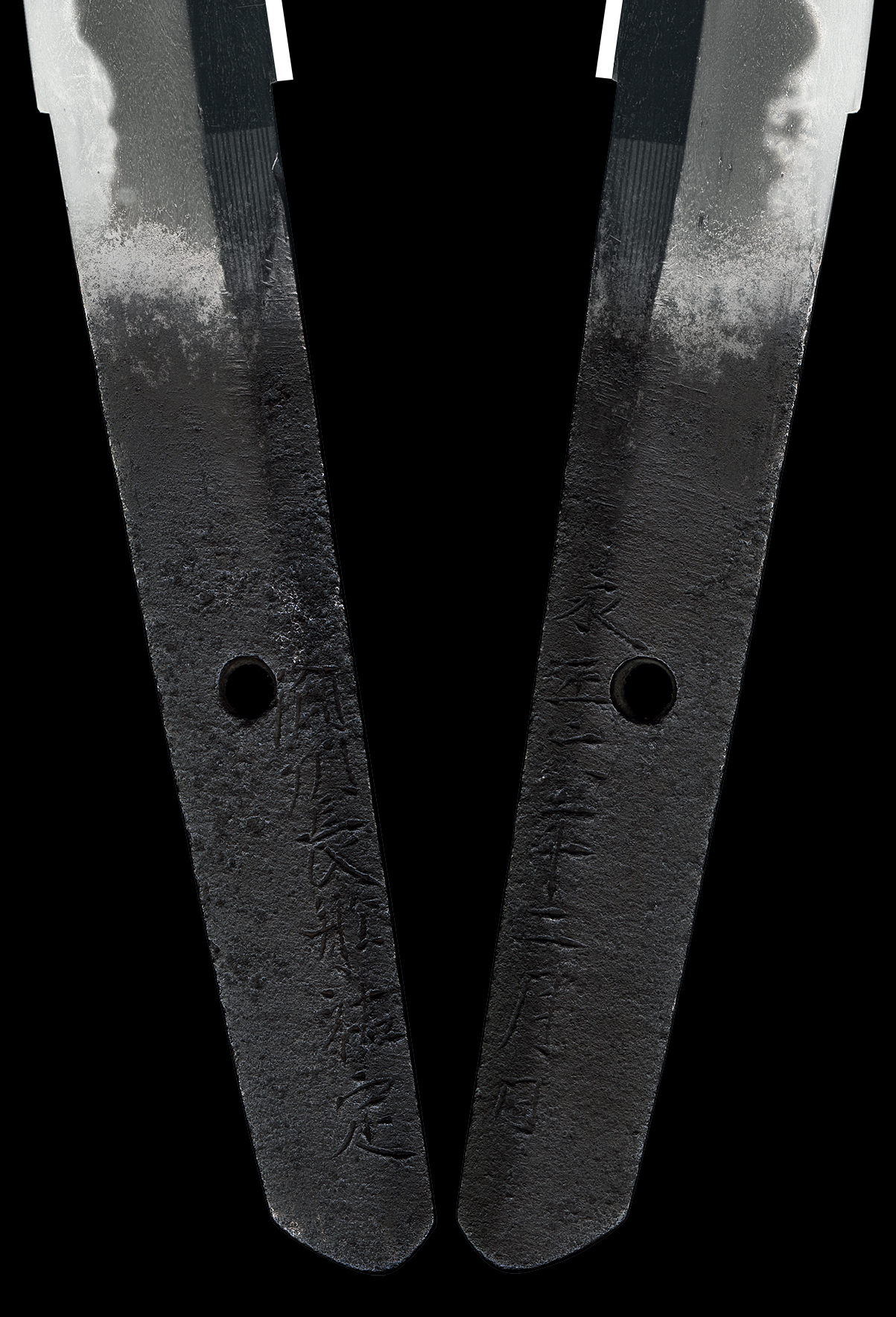
Bishu Osafune Sukesada (Hikobei no Jo Sukesada)
A day in February, Eisho 6 (1509)
備州長船祐定(彦兵衛尉祐定)
永正六年二月日
Features: As you may know, inscriptions including a secular name began from the period of Hikobei Sukesada onward, and it is believed that such names did not exist before this time.
Please particularly note these carvings.
Furthermore, the finely detailed midare hamon, the utsuri, and the dynamic midare-komi boshi together form a truly remarkable temper pattern.
These points are described in detail by Tanobe Sensei on both sides of the sayagaki.
Tanobe Sensei identifies the smith in the sayagaki as Hikobei Sukesada, the father of Yosaemon Sukesada.
=====================================
Appraisal Quiz #888 (March 14th, 2026)
Who made this sword do you think ?
=====================================
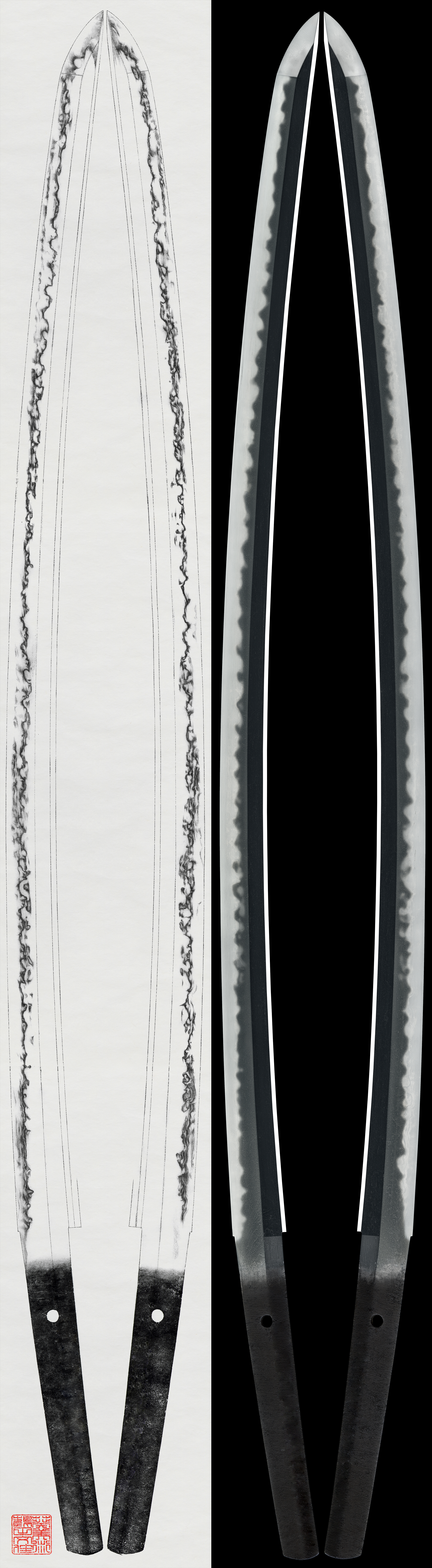

Blade Length: 2 shaku 4 sun 3 bu.73.6 cm (28.98 in)
Curvature: 6 bu 6 rin. 1.95 cm or 0.76 inches.
Mekugi Hole: 1.
Width at Base (Motohaba): 3.20 cm (1.26 in).
Width at Yokote: 2.19 cm (0.86 in).
Thickness of rim (Kasane): 0.70 cm (0.28 in).
Sword Weight: 825 g.
Shape: The blade has a wide mihaba and substantial thickness.
It bears a long signature carved.
Jigane: The jigane is a well-forged ko-itame hada, forming a fine and refined steel surface with utsuri appearing.
Hamon: Nioi-deki with gunome midare, with vigorous gunome appearing toward the upper part.
The boshi is intensely midare.
On close inspection, sunagashi and kinsuji activities can be seen working within the hamon.
=====================================
Answer will be posted at next Appraisal Quiz.
=====================================
(Please acknowledge not replying to mail about Appraisal Quiz by our convenience.)