
Ordering number:AS25628
Wakizashi: in Shirasaya (NBTHK Tokubetsu Hozon Token) (Consignment Sale)
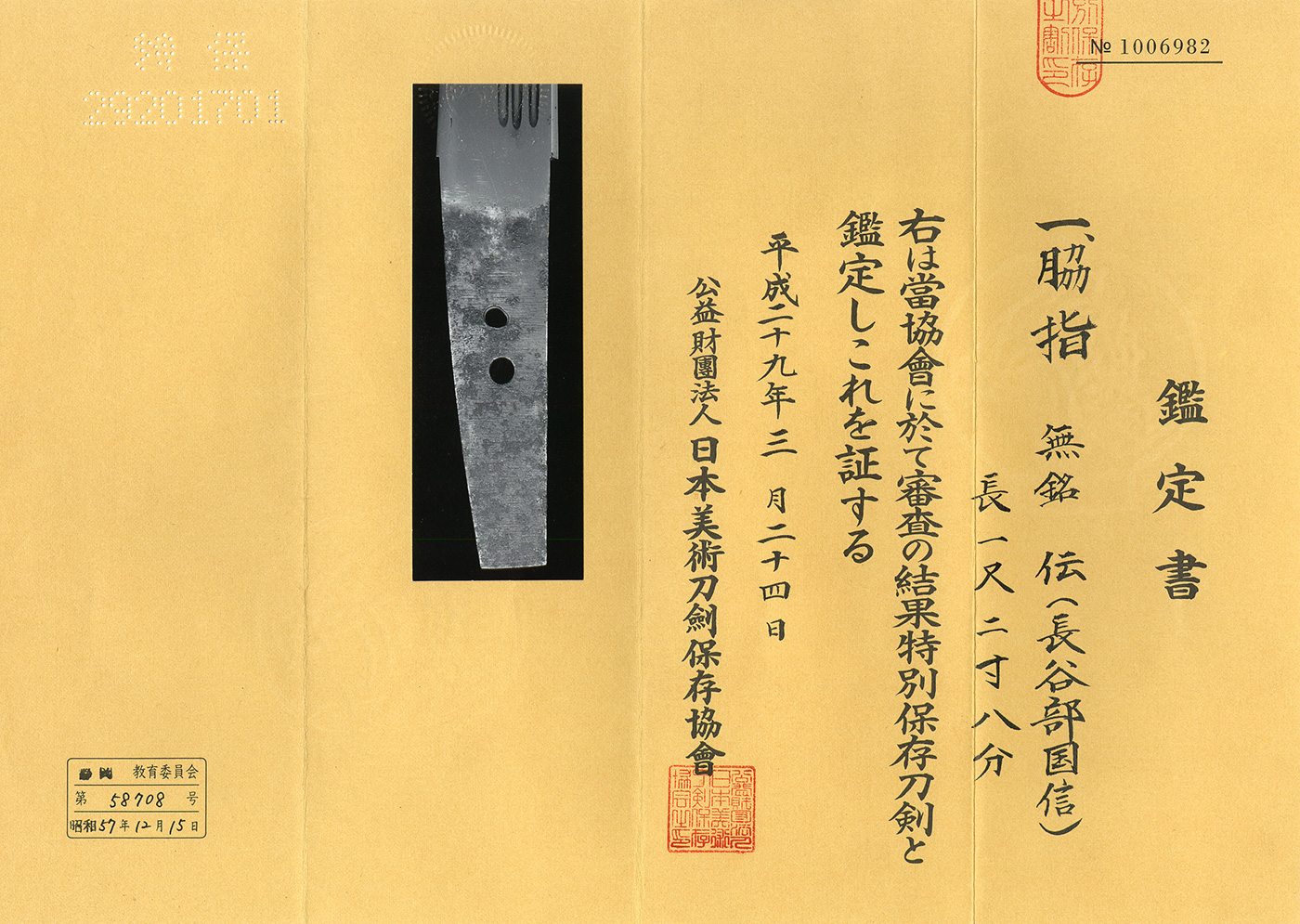
Signature: Mumei (attributed to Hasebe Kunishige)
Chuko-to: Jyo Saku: Yamashiro
We divide 4 sections for each sword as Saijyo Saku, Jyojyo Saku, Jyo Saku and Regular Saku.
This piece is ranked as Jyojyo Saku among works attributed to Mumei (Hasebe Kunishige).
Habaki: Double-layered gold-covered habaki
Blade Length: 38.8 cm (15.27 in)
Curvature: 0.9 cm (0.35 in)
Mekugi Hole: 2
Width at Base (Motohaba): 3.33 cm (1.31 in)
Thickness of rim (Kasane): 0.52 cm (0.20 in)
Sword Weight: 325 g
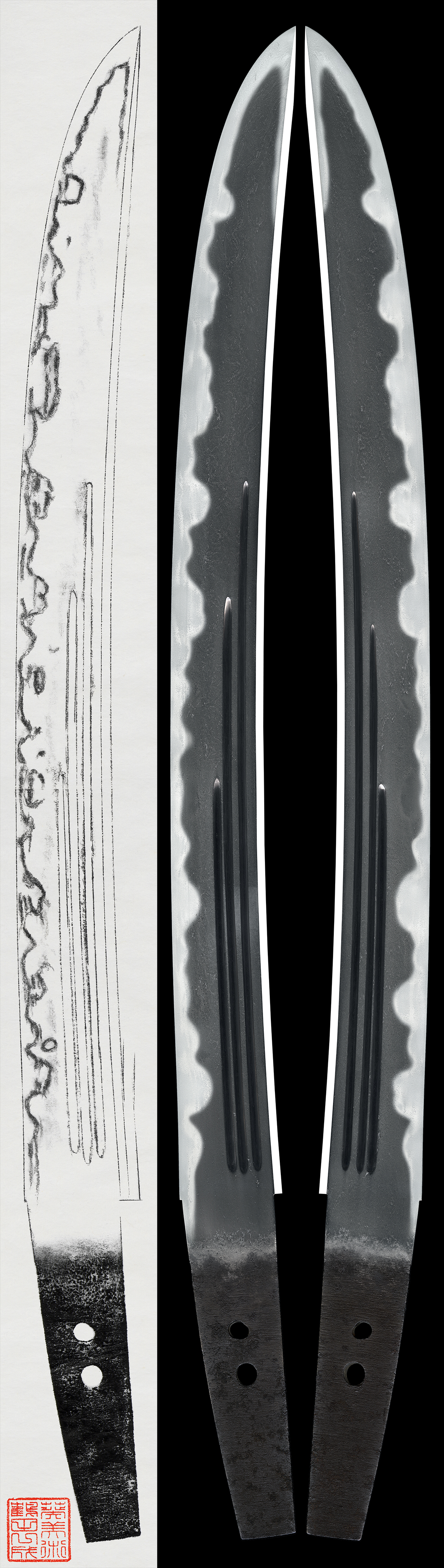
Shape: This piece has a wide body with deep curvature and features three lines in the blade, creating a sturdy and slightly extended form.
Jigane: Finely forged ko-itame hada, producing a refined texture.
Hamon: Ko-nie deki with gunome-midare pattern, the boshi is round and turns back long.
Features: This slightly extended tanto is longer than usual examples, with curvature and a healthy condition.
Aoi Art’s Comment:
While traditional tanto with no curvature were made for thrusting, forward-curved tanto were believed to be effective for decapitation.
Works in hitatsura style are rare and relatively popular among swords from the Nanbokucho and Muromachi periods.
Era Background: Nanbokucho Period, Eiwa era, 1375
AoiArt estimation paper: Whole Oshigata
NBTHK Tokubetsu Hozon certificate
Please note: the price does not include the shipping fees.
Auction Starting Price:1,600,000JPY
Place Bid





Related Items:
 Wakizashi: Yamashiro Daijyo Minamoto Kunishige
 Wakizashi: Bichu Kuni Mizuta Ju Kunishige
 Wakizashi: Yamashiro Daijo Minamoto Kunishige(NBTHK Hozon Token)
 Wakizashi: Mumei (attributed to Hatakeda Sanemori)e (43rd NBTHK Juyo Token)
 Wakizashi:Mutsu no Kami Toshinaga (NBTHK Tokubetsu Hozon Token)
 Wakizashi: Mumei(Unsigned) (attributed to Den Yoshioka Ichimonji)