
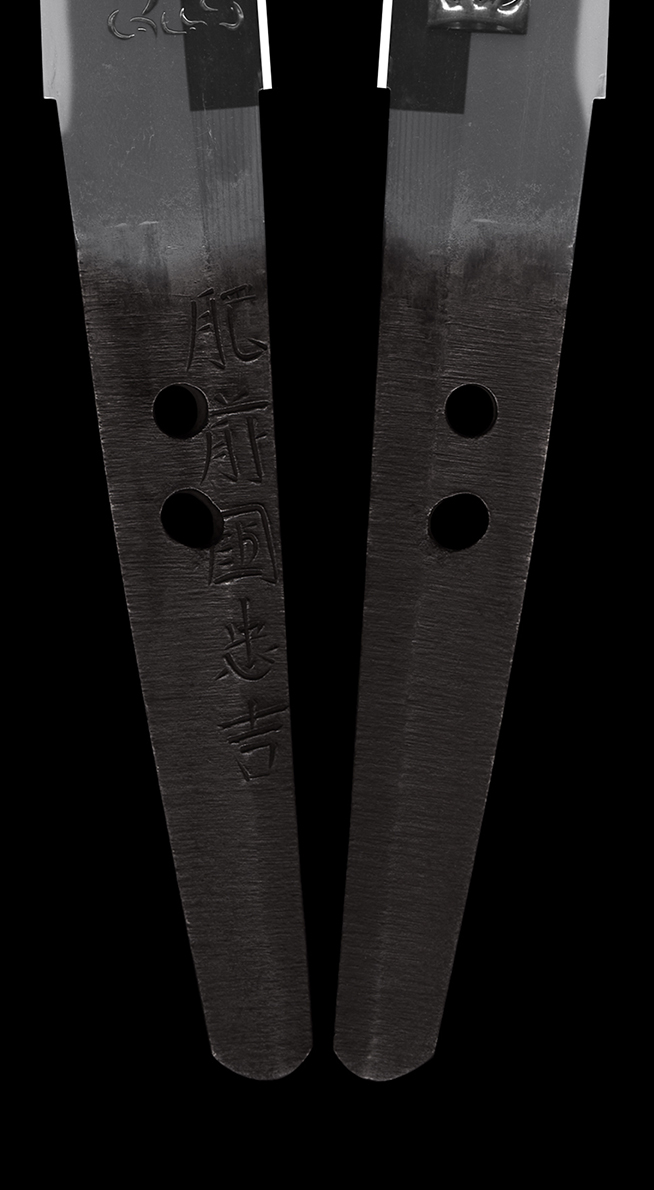
Previous answer is
Hizen no Kuni Tadayoshi (First Generation)
肥前国忠吉(初代)
Features: This work bears horimono on both sides of the blade.
On the omote, a kaen Fudo Myo-o and a bonji are carved; on the ura, a kenmakiryū is carved.
Hizen no Kuni Tadayoshi, also known as Hashimoto Shinzaemon no Jō Tadayoshi, lived in Nagase, Hizen.
In Keicho 1 (1596), he went to Kyoto and entered the school of Umetada Myoju.
In Keicho 3 (1598), he returned to Saga Castle town.
In Kanei 1 (1624), he was granted the title Musashi Daijō and changed his name to Tadahiro.
He died on August 15, Kanei 9 (1632) at the age of 61.
His works span about 30 years, from around Keicho 5 (1600) until his death.
It is believed he employed horimono specialists such as Munenaga, Myoju, and Yoshinaga. According to the NBTHK Tokubetsu Hozon Token certificate issued by the Japanese Sword Museum, the horimono on this blade is attributed to Munenaga.
=====================================
Appraisal Quiz #860 (August 16th, 2025)
Who made this sword do you think ?
=====================================
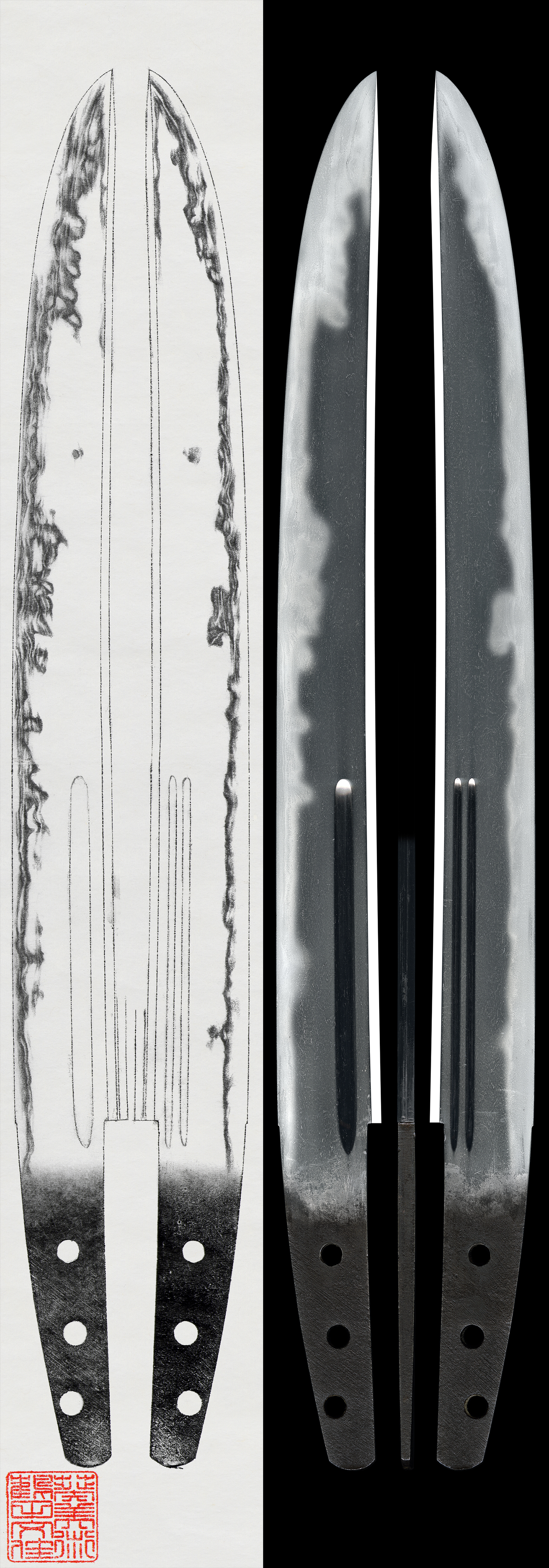
Blade Length: 27.8 cm (10.94 in)
Curvature: 0.2 cm (0.08 in)
Mekugi Hole: 3
Width at Base (Motohaba): 2.56 cm (1.01 in)
Thickness of rim (Kasane): 0.43 cm (0.17 in)
Sword Weight: 150 grams
Shape: Carved with a single groove (bo-hi) on one side, and two grooves (futasuji-hi) on the other.
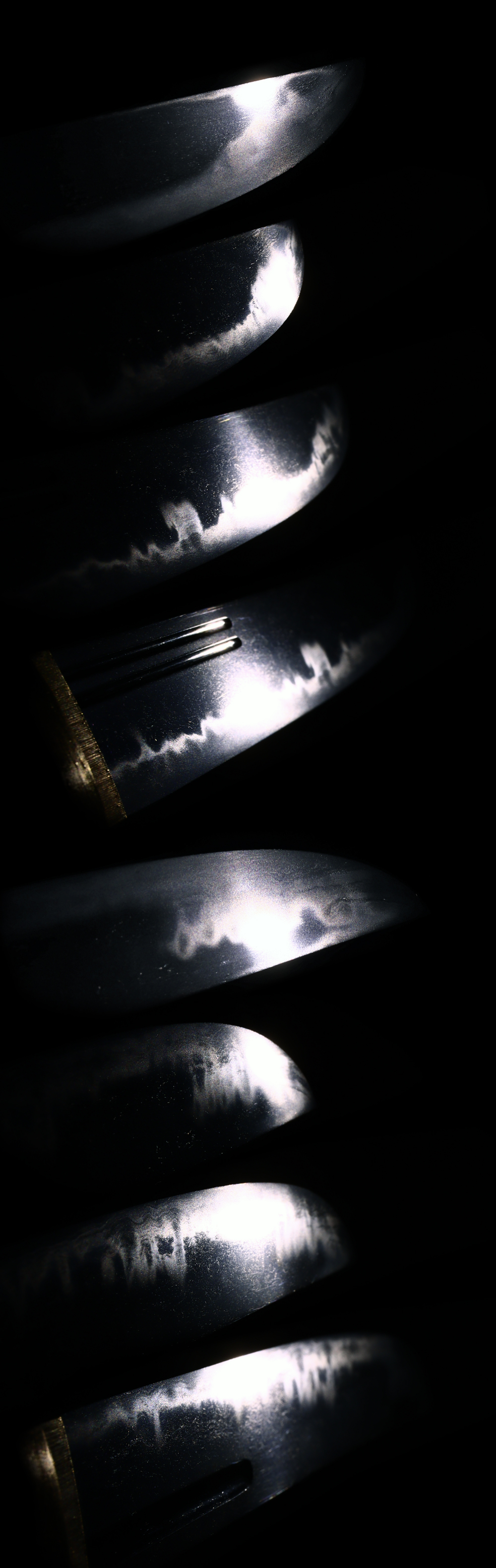
Jigane: Finely forged ko-itame hada, very dense and of excellent quality, with a faint utsuri appearing.
Hamon: Nie-deki with gunome-midare, featuring active kinsuji within the blade. The boshi shows a dynamic midare-komi with a pointed tip and deep return, also with kinsuji activity.
=====================================
Answer will be posted at next Appraisal Quiz.
=====================================
(Please acknowledge not replying to mail about Appraisal Quiz by our convenience.)