
Ordering Number: AS25005
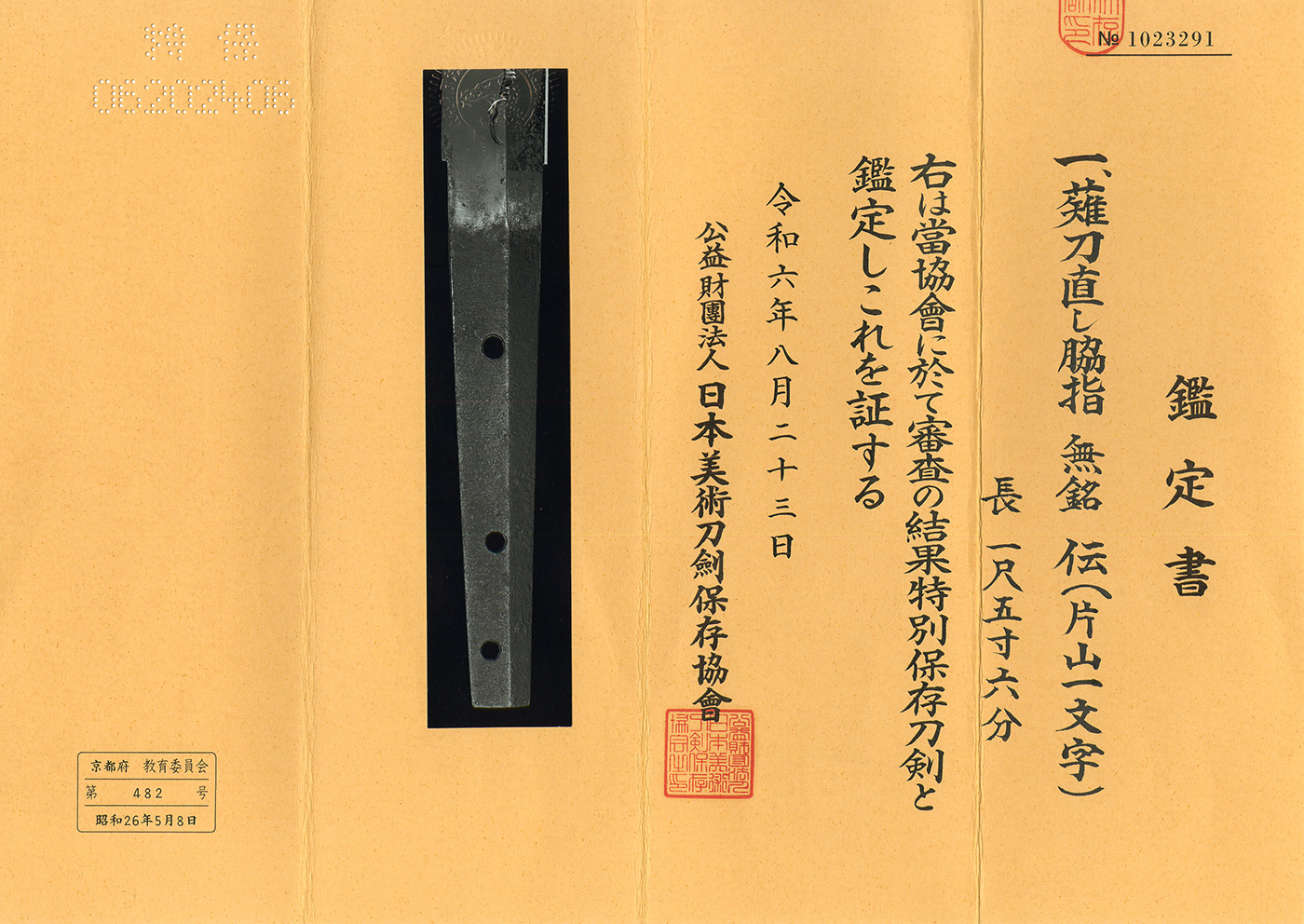
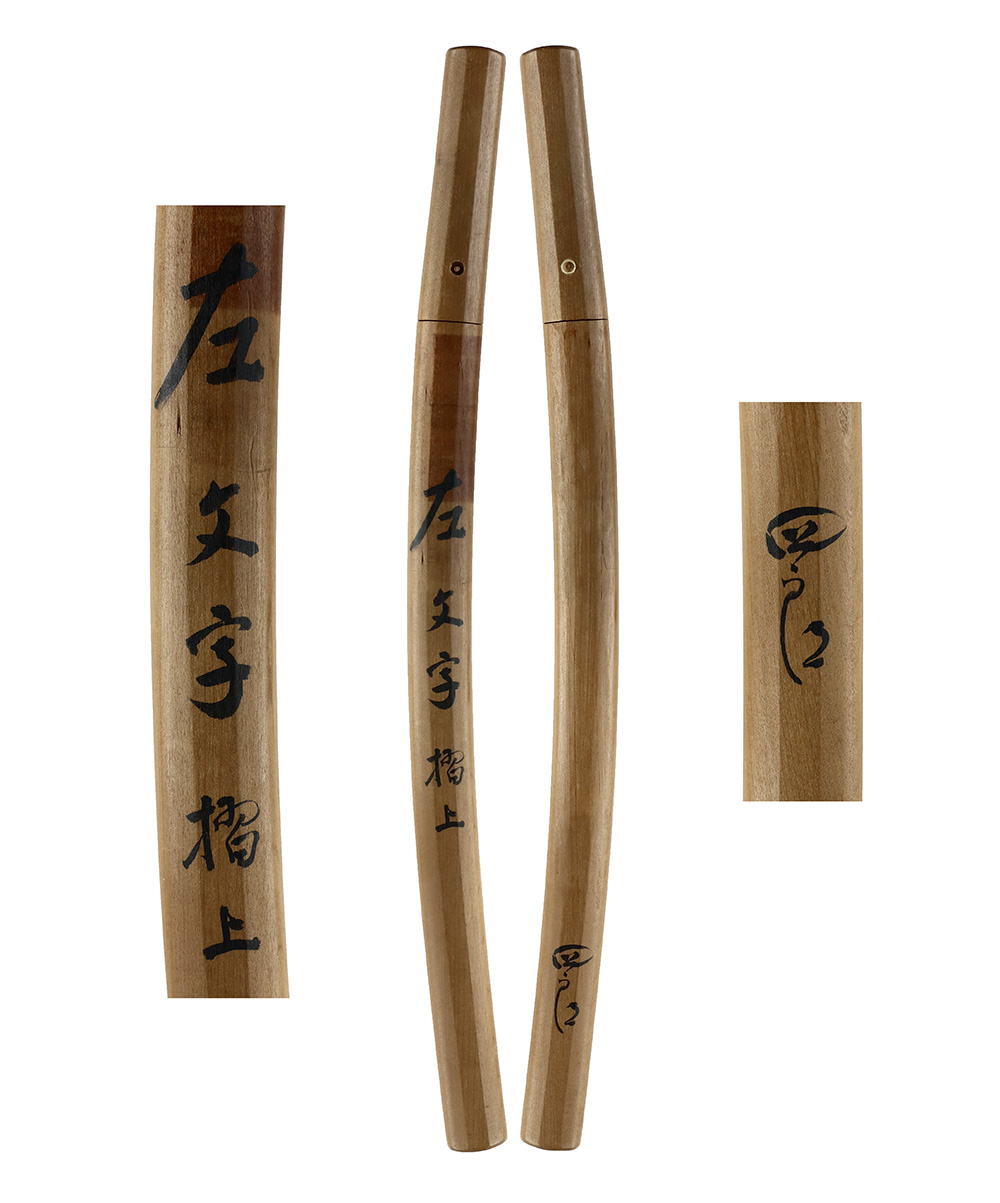
Wakizashi(Naginata Naoshi): in Shirasaya (NBTHK Tokubetsu Hozon Token)
Signature: Mumei (attributed to Katayama Ichimonji)
無銘(伝 片山一文字)
We divide 4 sections for each sword as Saijyo Saku, Jyojyo Saku, Jyo Saku and Regular Saku.
This work is ranked as Jyojyo Saku among the Mumei (attributed to Katayama Ichimonji) blades.
Habaki: Wooden habaki
Blade Length: 1 shaku 5 sun 6 bu – 47.27 cm (18.61 in)
Curvature: 4 bu – 1.21 cm (0.48 in)
Mekugi Hole: 3
Width at Base (Motohaba): 2.84 cm (1.12 in)
Thickness of Rim (Kasane): 0.72 cm (0.28 in)
Sword Weight: 495 g
Era: Kamakura 〜Nambokucho period
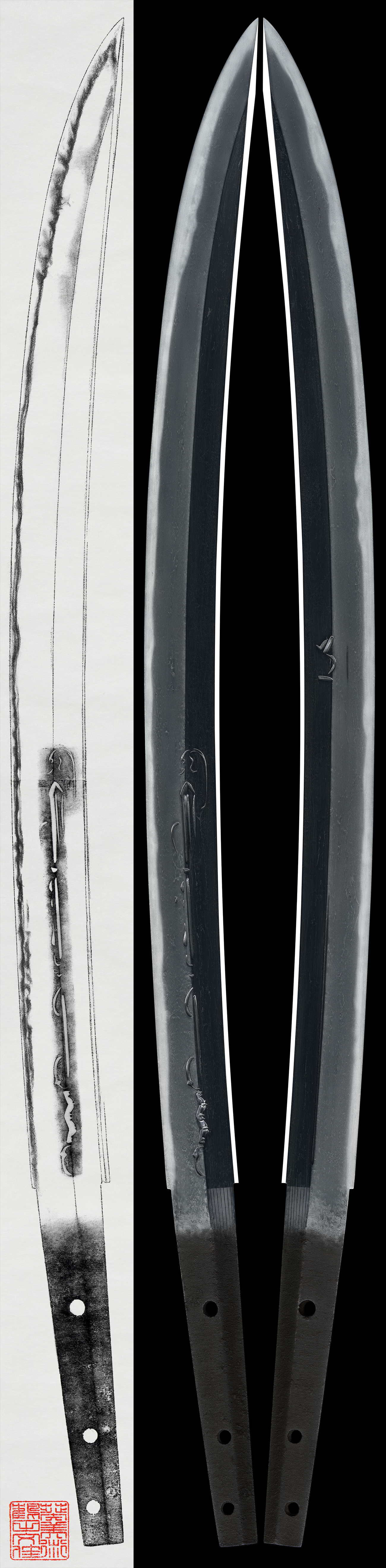
Shape: A reshaped naginata with thick shinogi-ji and typical curvature.
Carvings of a Sanskrit character (Bonji) and a Sankosho-ken (three-pronged Vajra sword).
Jigane: Ko-itame hada with midare utsuri appearing.
Hamon: Nie-based sakasa-choji mixed with waves, with sunagashi and kinsuji.
The boshi returns sharply like a candle flame.
Features:
The Katayama Ichimonji school is a flourishing branch of the Fukuoka Ichimonji line, founded by Norifusa, who moved from Fukuoka to Katayama.
There are differing opinions as to whether Katayama is in Bizen or Bicchu province.
A distinctive feature of Katayama Ichimonji is the reversed choji midare (sakasa-choji).
A naginata blade with carved Bonji and Sankosho-ken is rare.
Highly recommended.
Tokubetsu Hozon Token
Aoi Art estimation paper
Whole Oshigata
Please note: The price does not include the international shipping fees.
Auction Starting Price:1,350,000JPY
Place Bid



Related Items:
 Wakizashi: Mumei (Yoshioka Ichimonji)(NBTHK Tokubetsu Hozon Token)
 Wakizashi: Mumei(Unsigned) (attributed to Den Yoshioka Ichimonji)
 Wakizashi: Hamabe Minono kami Fujiwara Jukaku Kansei 2 Kanoe-Inu 2 Gatsu Hi(February 1790)(NBTHK Tokubetsu Hozon Token)
 Wakizashi:Chikuzen Jyu Minamoto Nobukuni Yoshimasa.(NBTHK Hozon Token)
 Wakizashi: Mumei (attributed to Hatakeda Sanemori)e (43rd NBTHK Juyo Token)
 Wakizashi:Mumei (Unsigned)(attributed to Yamashiro no Kami Kunikane)(NBTHK Hozon Token)