
Ordering Number: AS25681 (Consignment Sale)
Wakizashi(Long Tanto)in Shirasaya (NBTHK Tokubetsu Hozon Token) (Kantei Kozuka Paper) (Consignment Sale)
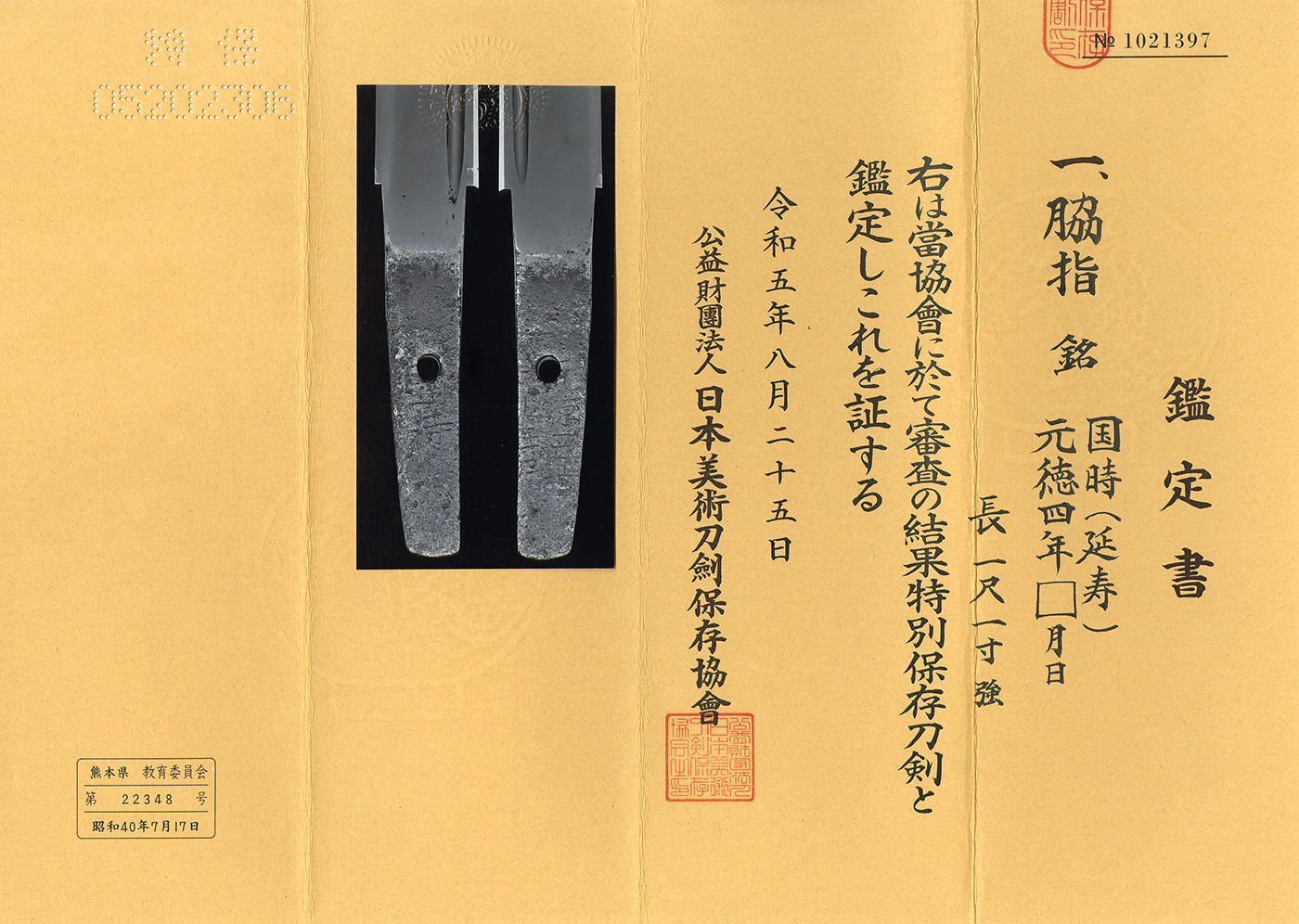
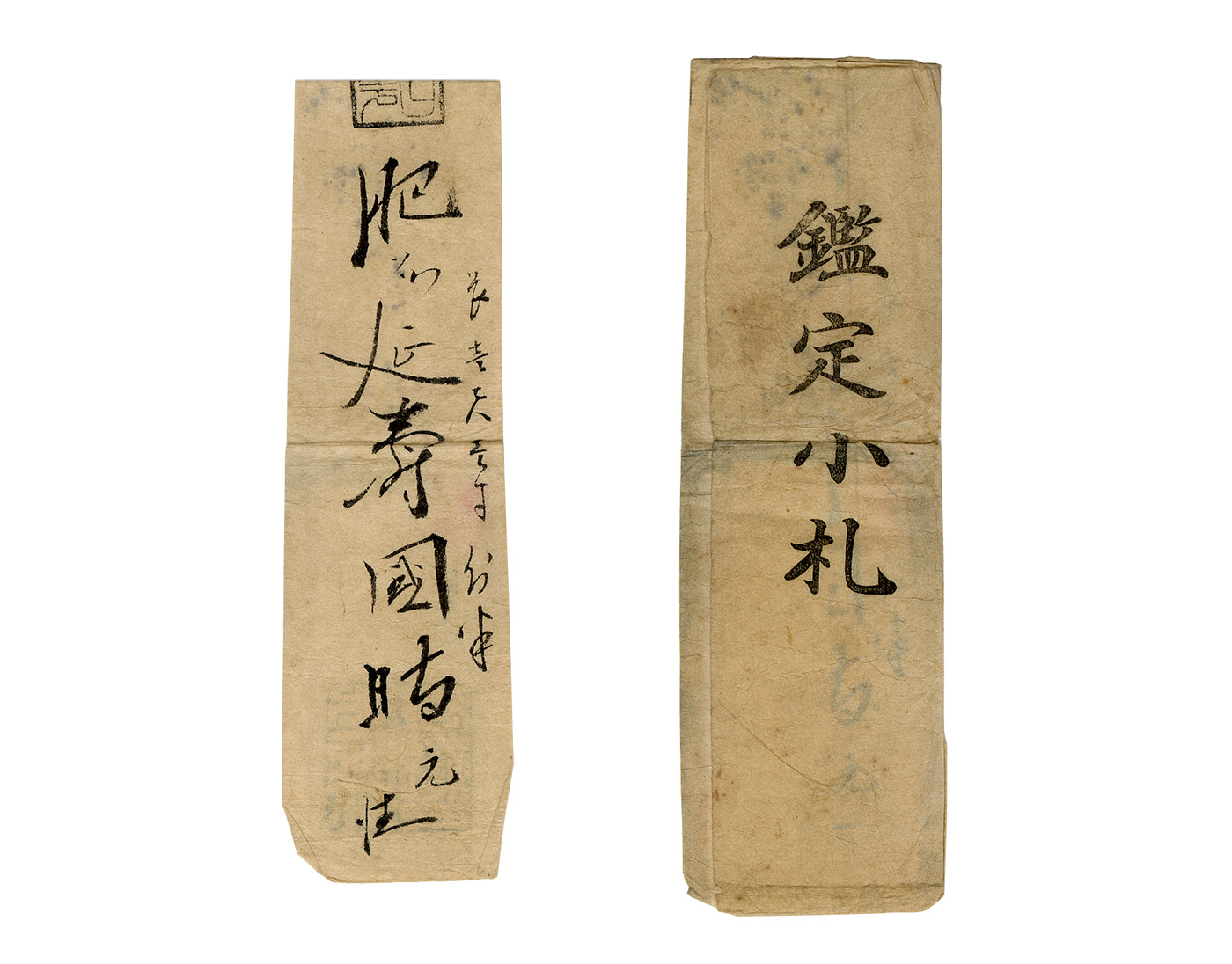
Signature: Kunitoki 國時 (Enju school, 延寿)
Gentoku 4 Nen ■(illegible) Gatsu Hi (1332)
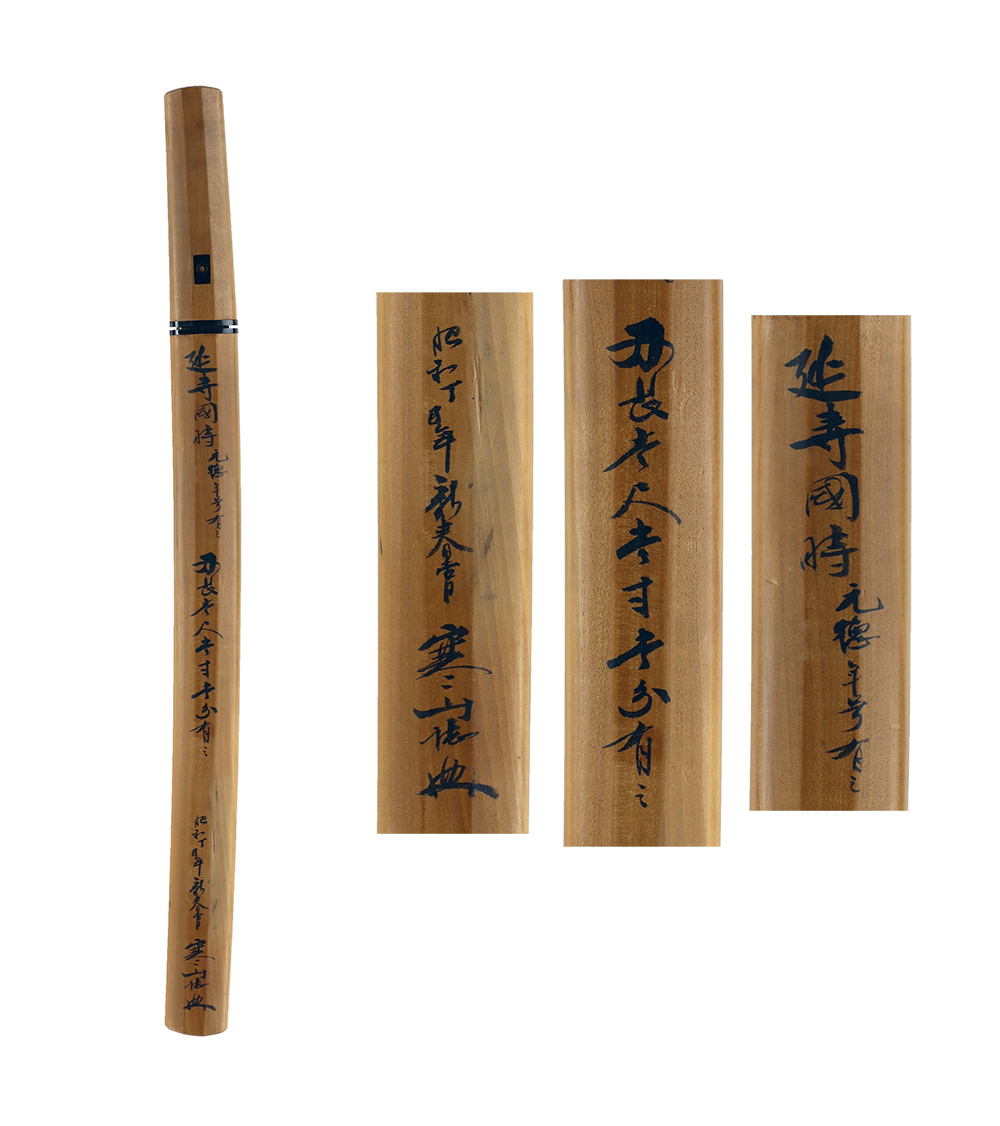
Sayagaki: Written by Dr. Kanzan
Enju Kunitoki – Inscription with the Gentoku era name present.
Blade length: 1 shaku 1 sun 1 bu (33.6 cm / 13.23 in)
A fortunate day in early spring, Showa Hinoto-Mi year (1977)
Written by Kansan (with Kaō)
Ōwazamono: Chuko-to: Jyo Saku: Higo
We divide 4 sections for each sword as Saijyo Saku, Jyojyo Saku, Jyo Saku and Regular Saku.
This sword is ranked as Jyojyo Saku for the smith Enju Kunitoki.
Habaki: Gold foil single-layered
Blade Length: 33.4 cm (13.15 in)
Curvature: None
Mekugi Hole: 1
Width at Base (Motohaba): 2.78 cm (1.09 in)
Thickness of rim (Kasane): 0.56 cm (0.22 in)
Sword Weight: 220g
Era: the end of Kamakura period 1332
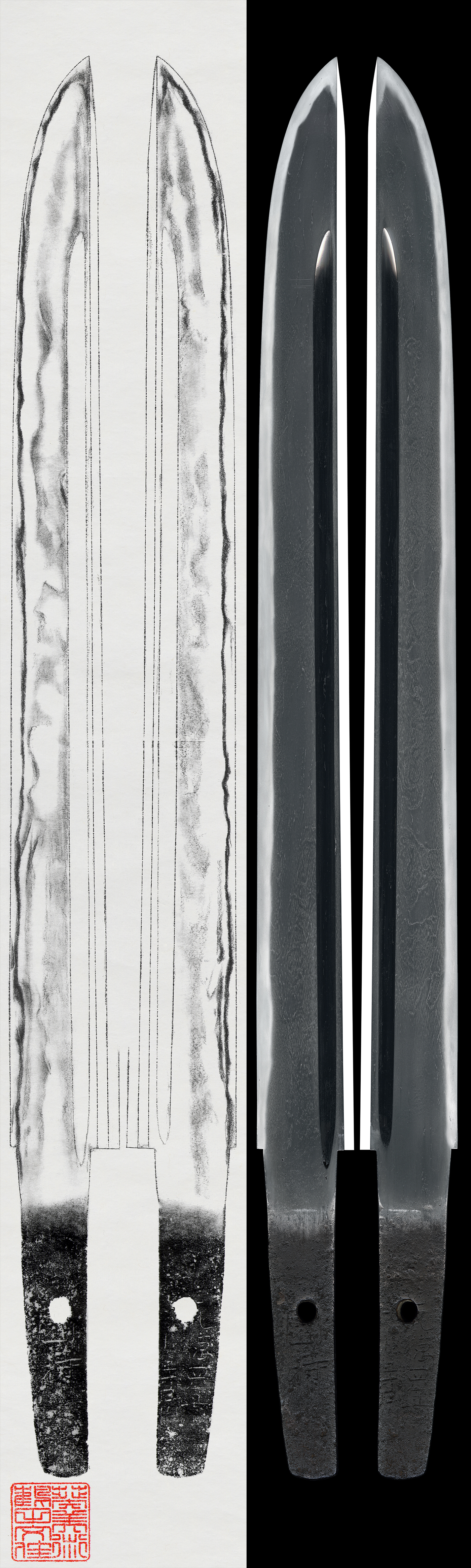
Shape: slighly wide Sunnobi-Tanto. (long Tanto)
Jigane: Itame and Mokume with intense grain pattern with Jinie and intense Utsuri.
Hamon: Nioi-deki Suguha and Notare with thick Nioikuchi.
Features: The Higo Province Enju school traces its origins to Tarō Kunimura, who is traditionally said to have been a grandson of Rai Kuniyuki of Yamashiro.
From the late Kamakura period through the Nanbokuchō period, the school flourished greatly in Higo Province.
The workmanship of the Enju school generally resembles that of the Yamashiro Rai tradition; however, it is characterized by the appearance of whitish utsuri, and Hamon to appear slightly subdued.
Aoi Art’s Comment: This piece is an extremely rare example, featuring a single mekugi-ana and retaining signature and dates.
Historical Background:
Longer tantō such as this piece were commonly produced in the Nanbokuchō period.
From the mid-Nanbokuchō period onward, there is a tendency for the blade width to become even broader.
This work was made in Gentoku 4 (1332), a time of intense conflict between the Kamakura shogunate and Emperor Go-Daigo, and in the following year, 1333, the Kamakura shogunate fell.
NBTHK Tokubetsu Hozon Certificate
Kantei Kozuka Paper
Aoi Art estimation paper
Whole Oshigata
Please note: The price does not include the international shipping fees.
Auction Starting Price:1,350,000JPY
Place Bid



Related Items:
 Tanto: Kuni_(Sue Enju)(NBTHK Hozon Token)
 Katana:: Mumei (Ichimonji) (NBTHK Tokubetsu Hozon Token) (Consignment Sale)
 Katana: Mumei (Aoe school)(the 25th Juyo Token)
 Katana: Bitchu Koku ju Saemon no Jo Hidetugu (Aoe school)(1327)(The 68th NBTHK Juyo Token)
 Wakizashi:Oite Bushu Efu Enju Taro Muneyoshi(judged as Tamba)(NBTHK Tokubetsu Hozon Token)(NBTHK Tokubetsu Kicho Token)
 Katana: Mumei(Unsigned)(Aoe school)(54th NBTHK Juyo Token)