
rdering Number: 25451
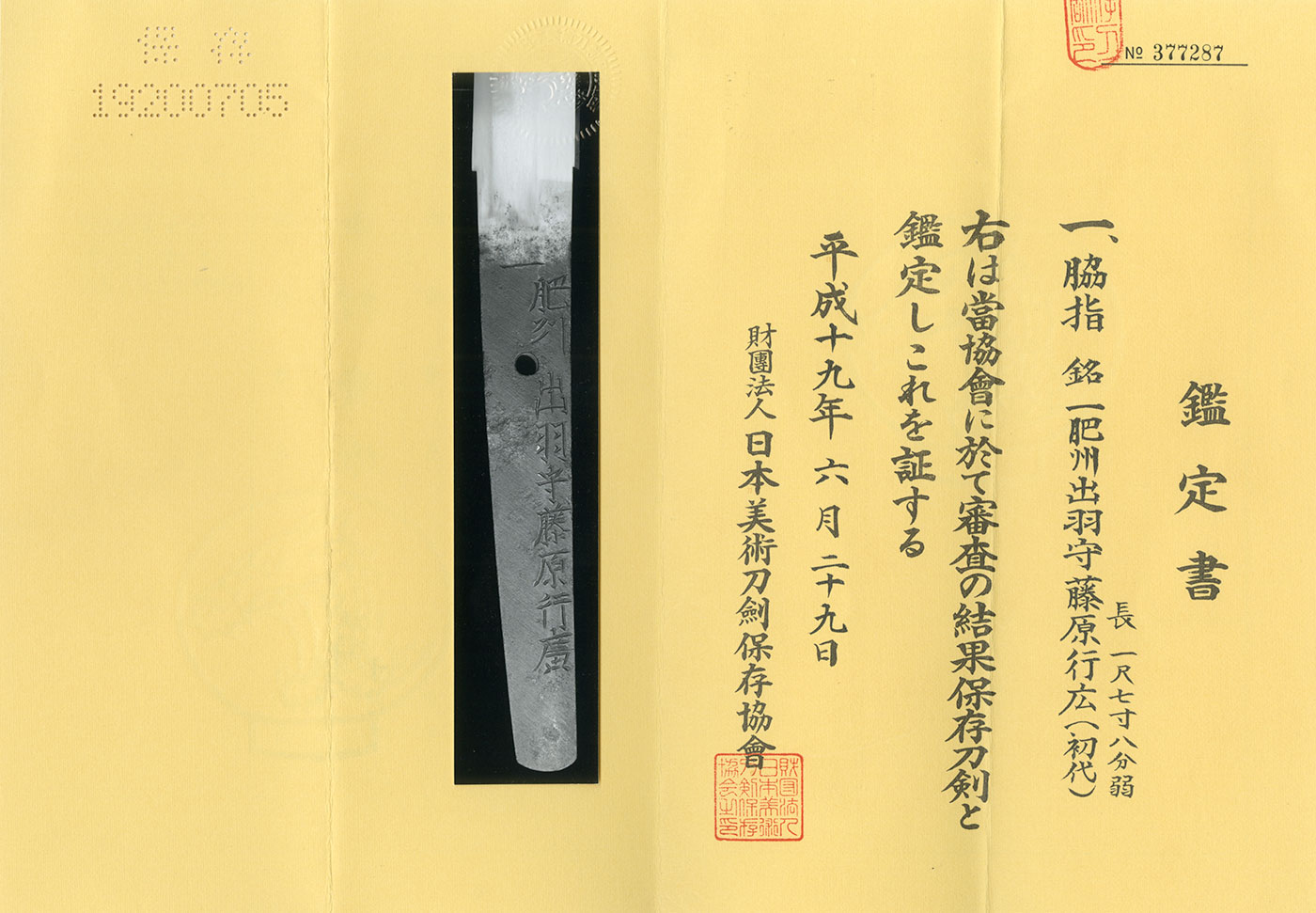
Wakizashi in Shirasaya with Koshirae (NBTHK Hozon Token)
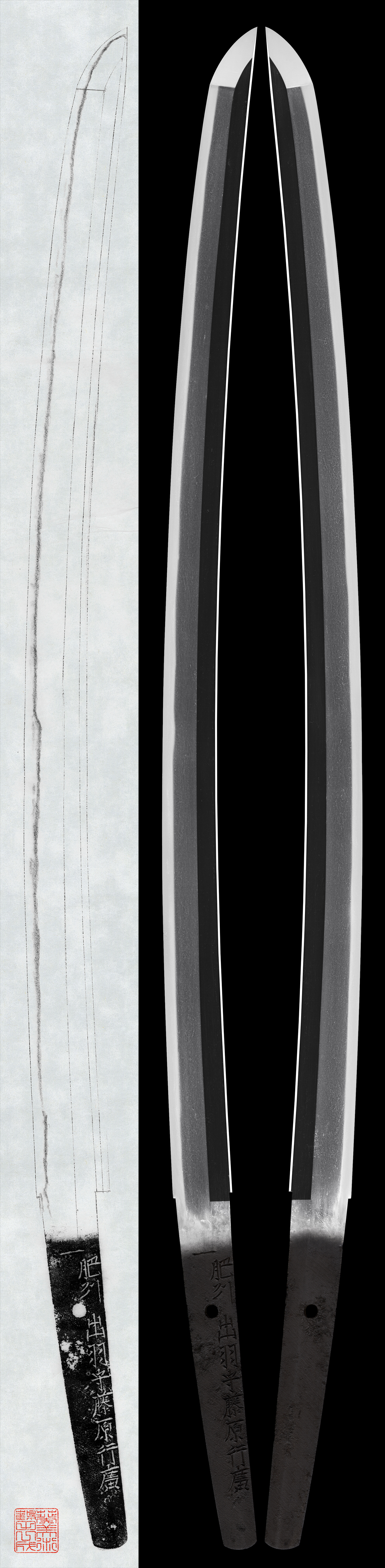
Signature: Hizen Dewa no Kami Fujiwara Yukihiro (First Generation)
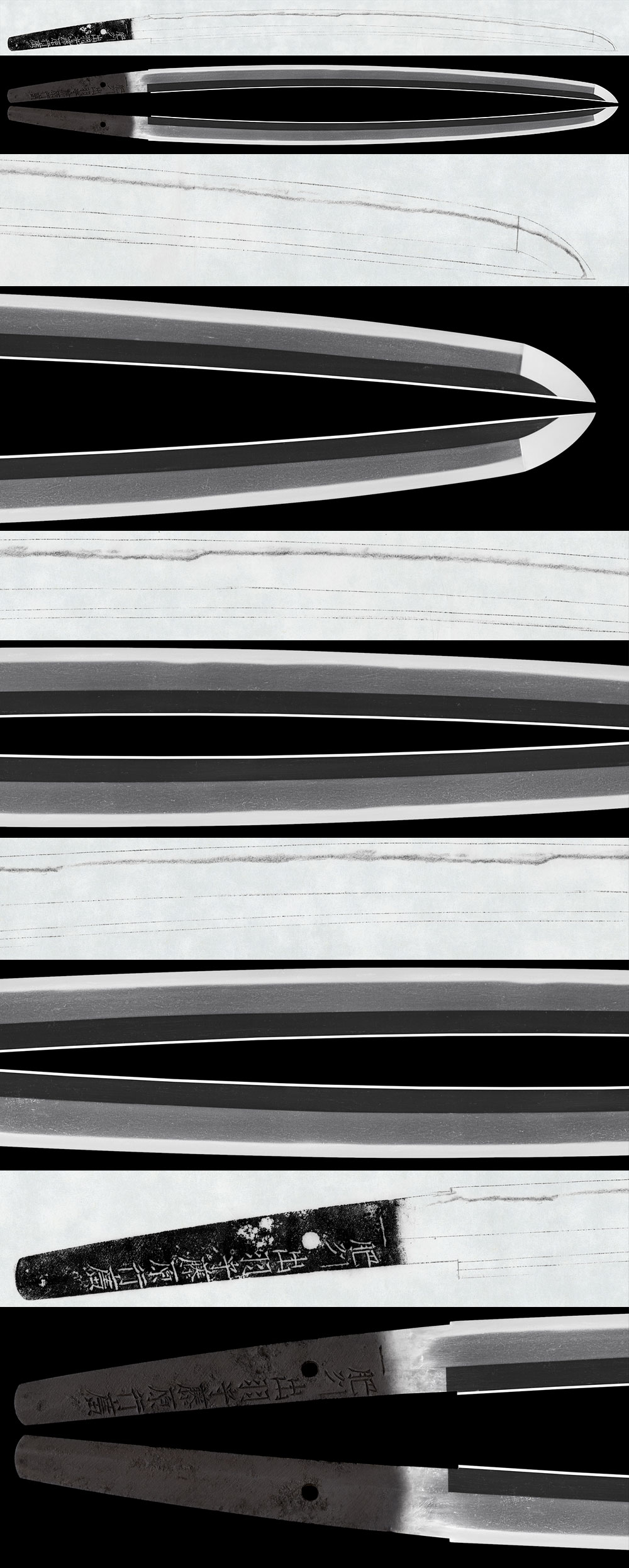
一肥前出羽守藤原行広(初代)
Shinto: Jyo Saku: Hizen: Kanbun
(We divide 4 sections for each sword as Saijyo Saku, Jyojyo Saku, Jyo Saku and Regular Saku).
This blade is ranked as Jyojyo Saku among the works of Hizen Dewa no Kami Fujiwara Yukihiro (First Generation).
Habaki: Double habaki with gold iroe.
Blade Length: 54.0 cm (21.26 in).
Curvature: 1.2 cm (0.47 in).
Mekugi Hole: 1.
Width at Base (Motohaba): 2.80 cm (1.10 in).
Width at Yokote: 2.10 cm (0.83 in).
Thickness of rim (Kasane): 0.70 cm (0.28 in).
Sword Weight: 540 g.
Era: Edo period, around the Kanbun era (1661–1673).
Shape: A long wakizashi with standard mihaba and kasane.
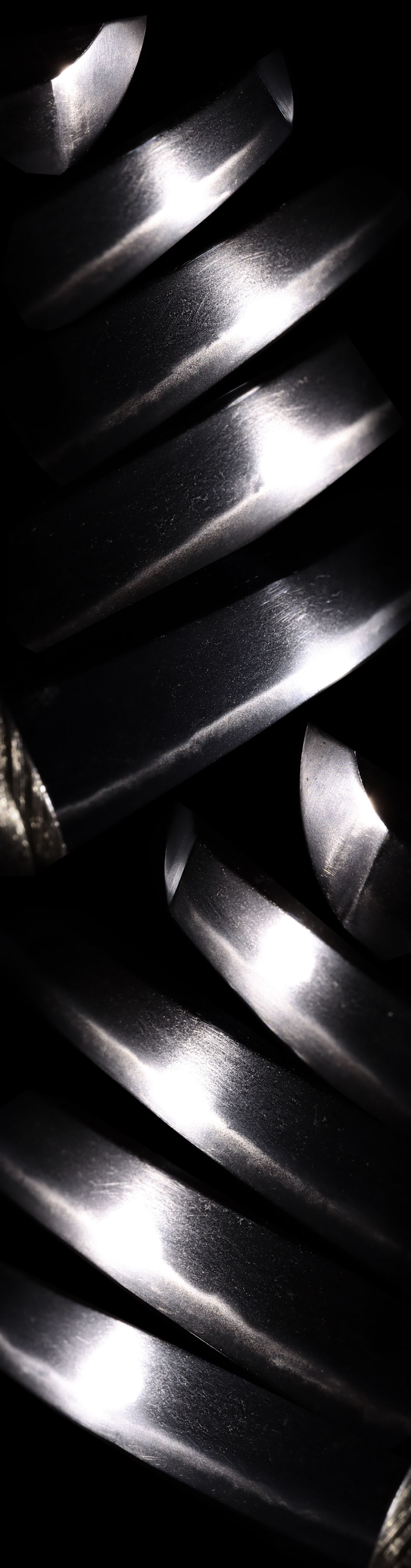
Jigane: Fine jigane consisting of ko-mokume mixed with the characteristic Hizen hada.
Hamon: Suguha in nioi-deki with a deep nioiguchi and fine ko-nie within the hamon. The boshi turns back in a rounded form.
Features: Hizen Dewa no Kami Fujiwara Yukihiro (First Generation) was the younger brother of the first-generation Masahiro and was known by the name Kurobei. In 1650, he studied the use of Dutch iron (Oranda-tetsu). He received the title Dewa Daijo in 1648, and in 1663 was promoted to Dewa no Kami. He passed away in May 1683.
Koshirae:
Tsuba: Round shakudo tsuba carved with a warrior and architectural motif, highlighted with gold iroe.
Fuchikashira: Shakudo nanako ground carved with cranes, decorated with gold iroe.
Saya (Scabbard): Black ishimeji lacquered saya with carved decoration on the upper section.
Menuki: Warrior motif decorated with gold iroe.
Aoi Art’s Comment: In 1650, when the first-generation Hizen Dewa no Kami Fujiwara Yukihiro studied the use of Dutch iron, he was 32 years old. His willingness to experiment with this imported material reflects his determination to produce even finer swords. Dutch iron, first introduced into Japanese swordmaking by Yasutsugu, was subsequently adopted by a number of prominent swordsmiths. Unlike traditional Japanese tamahagane, Dutch iron alone was relatively brittle, and successfully combining the two materials required exceptional skill.
Imported from the Netherlands during the Edo period, Dutch iron was a form of Nanban-tetsu (Southern Barbarian iron). Because Japan maintained a policy of national seclusion, it entered the country only through limited trade routes, making it both rare and highly valued. Some swordsmiths even inscribed "Oranda Kitae" (forged with Dutch iron) beneath the hilt to commemorate their technical achievement. However, Western iron often contained higher levels of impurities such as phosphorus, making it difficult to forge using traditional Japanese methods. Its unique response to heat also made it challenging to produce refined and complex hamon, and many craftsmen ultimately regarded domestically produced tamahagane as the superior material.
Historical Background: During the Kanbun era (1661–1673) of the Edo period, the Tokugawa Shogunate further promoted civil administration and Neo-Confucian scholarship. At the same time, advances in woodblock printing greatly contributed to the development of Japanese learning and culture.
NBTHK Hozon Token Certificate.
AoiArt estimation paper: Whole Oshigata.
Please note: The price does not include the international shipping fees.
Price:600,000JPY
HOLD



Related Items:
 Wakizashi:Dewa Daijo Fujiwara Kunimichi(NBTHK Tokubetsu Hozon Token)
 Wakizashi: Dewa Daijo KUnimichi (NBTHK Tokubetsu Hozon Token)
 Wakizashi:Dewa Kami Fujiwara Sukenobu (NBTHK Tokubetsu Hozon Token)
 Wakizashi (Long Tanto): Hizen Koku Kawachi Daijo Fujiwara Masahiro(NBTHK Tokubetsu Hozon Token)
 Wakizashi:Mishina Tango Kami Mago Naoyoshi (NBTHK Tokubetsu Hozon Token)
 Wakizashi:Omi Daijo Fujiwara Tadahiro (NBTHK Tokubetsu Hozon Token)