
Ordering Number: AS25397.
Tanto in Shirasaya with Koshirae (NBTHK Hozon Token).
Signature: Bizen Kuni Osafune Gengoro Kiyomitsu.
A lucky day in August, Tenbun 23rd year (1554 AD).
備前国長船源五郎清光
天文二十三年八月吉日
(We divide 4 sections for each sword as Saijyo Saku, Jyojyo Saku, Jyo Saku and Regular Saku).
This work by Bizen Kuni Osafune Gengoro Kiyomitsu is ranked as Jyo Saku.
Habaki: Double-layer gold-plated habaki.
Blade Length: 22.6 cm (8.90 in).
Curvature: 0.0 cm (0.00 in).
Mekugi Hole: 1.
Width at Base (Motohaba): 2.31 cm (0.91 in).
Thickness (Kasane): 0.67 cm (0.26 in).
Sword Weight: 165 g.
Era: Muromachi period, around the Tenbun era (1532-1555 AD).
Shape: A work with substantial width and thickness.
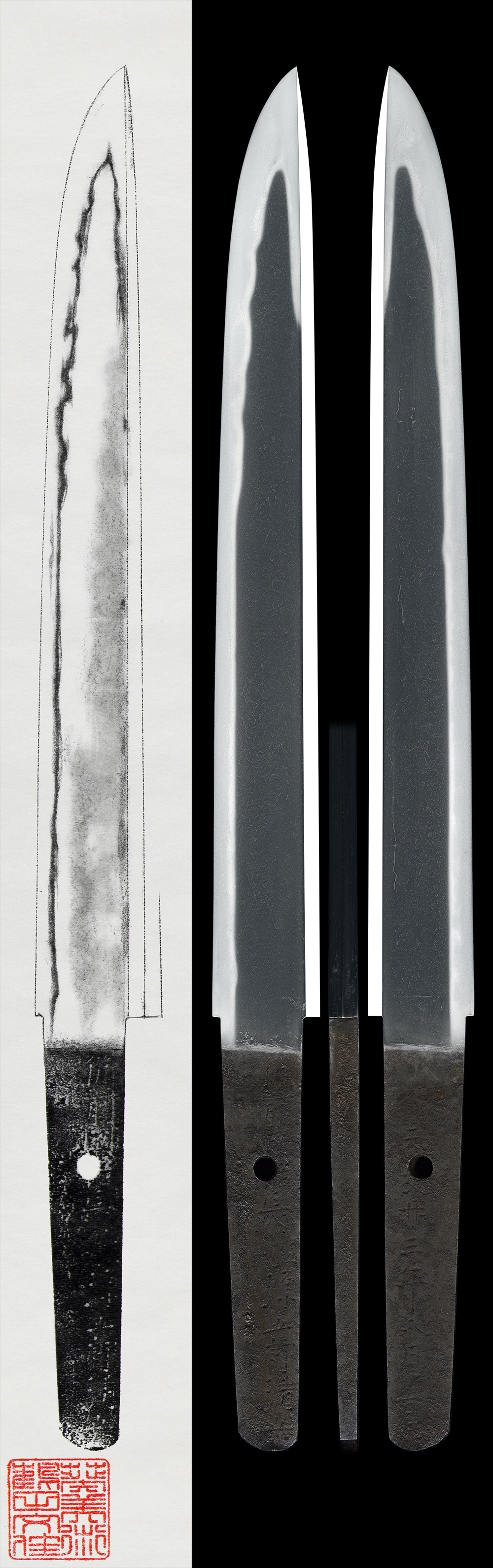
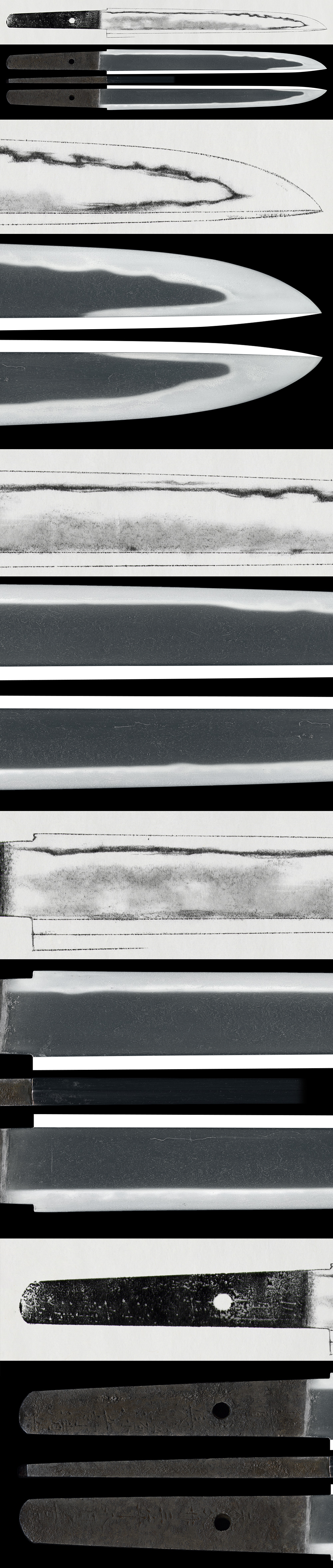
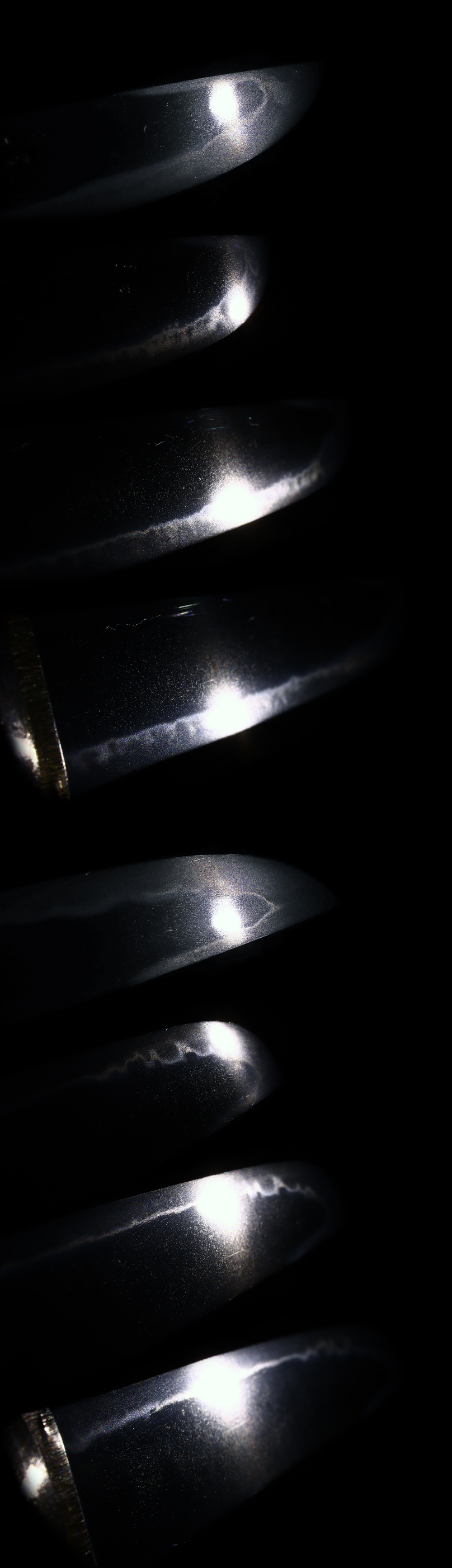
Jigane: Ko-itame hada mixed with mokume hada, with faint utsuri appearing.
Hamon: Suguha-deki, becoming pointed toward the upper area and extending long into the boshi.
Features: Bizen Kuni Osafune Gengoro Kiyomitsu was a swordsmith active in Osafune, Bizen Province during the late Muromachi period.
Swordsmiths using the name Kiyomitsu included those with common names such as Gorozayemon no Jo, Magouemon no Jo, Hikobee no Jo, Magobee no Jo, Gengoro, and Yosazaemon no Jo.
Koshirae:
Tsuba: Oval-shaped shakudo ground carved with radish and vines.
Fuchikashira: Kojiri: Kaerizuno: Shakudo ground carved with radish and vines.
Saya (Scabbard): Inro-koku style scabbard in the manner of an ebisaya.
Menuki: Carved depiction of a dragon turtle with gold-colored highlights.
Kozuka: Shakudo ground carved with a figure holding a folding fan.
Comes with kogatana.
Warikogai: Shakudo ground carved with a plum design.
Historical Background: Tenbun 23 (1554 AD) falls within the Sengoku period at the end of the Muromachi era, a time when major Sengoku daimyo in western and central Japan were making significant moves that would later contribute to the unification of Japan.
Major events include Motonari Mori’s expansion into Suo and Nagato Provinces and the prelude to the Battle of Itsukushima.
Motonari Mori expanded his power in Aki and Bingo Provinces, decisively moving toward independence from the Ouchi clan.
Conflicts such as the Battle of Sanbonmatsu Castle made confrontation with the Ouchi clan (Sue Harukata) inevitable, leading to the Battle of Itsukushima the following year.
Takeda Shingen’s conquest of southern Shinano: Takeda Shingen advanced into Shimoina (southern Shinano) and brought the region under his control.
During this year, Shingen secured his rule over Shinano by subjugating local lords such as Nishina Moriyoshi.
Movements of Oda Nobunaga: Around this time, Oda Nobunaga was expanding his influence in Owari Province, laying the groundwork for his future unification of Japan.
This year was particularly marked by the decline of the Ouchi clan (with the rise of Sue Harukata), the rapid advancement of the Mori clan, and the territorial expansion of Takeda Shingen.
Tanto were widely used during times of war, but after warfare subsided, they gradually fell out of practical use as samurai began wearing daisho when entering castles.
However, toward the end of the Edo period, tanto once again became more frequently used and were produced in greater numbers.
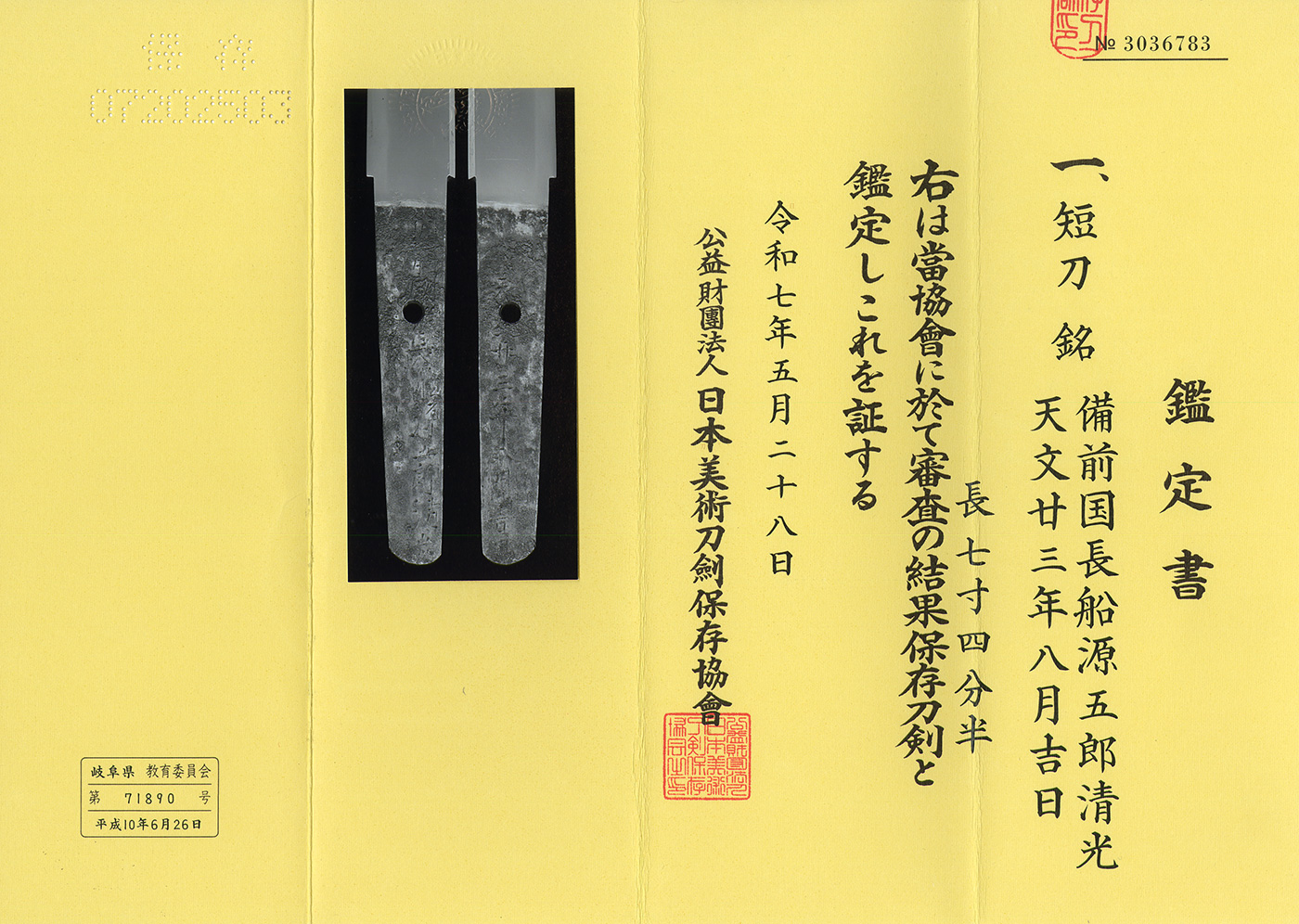
NBTHK Hozon Token.
Aoi Art estimation paper.
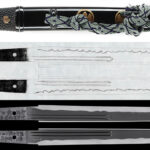
Whole Oshigata.
Please note: the price does not include the shipping fees.
Auction Starting Price:750,000JPY
Place Bid



Related Items:
 Tanto:Muramasa 村正
 Tanto:Nobukuni (Chikushi) (NBTHK Hozon Token)
 Tanto:Chikuzen no Kami Nobuhide Meiji 9 Nen 8 Gatsu Hi (August, 1876)(NBTHK Tokubetsu Hozon Token)
 Tanto:Gassan Sadakatsu Kinsaku(Kao)(NBTHK Tokubetsu Hozon Token)
 Tanto: Ichi Chounsai Tsunatoshi (2nd Generation)(NBTHK Tokubetsu Hozon Token)
 Tanto: Remaining steel from the sacred treasure sword of the Imperial Grand Shrine Made by Matsuyama ju Ryusen Nyudo Sadatsugu (Living National Treasure)(NBTHK Tokubetsu Hozon)