
Ordering Number: AS25159
Katana: Katana in Shirasaya with Koshirae (Tokubetsu Hozon Token)
Signature: Mumei (Attributed to Ichimonji)
無銘(伝 一文字)
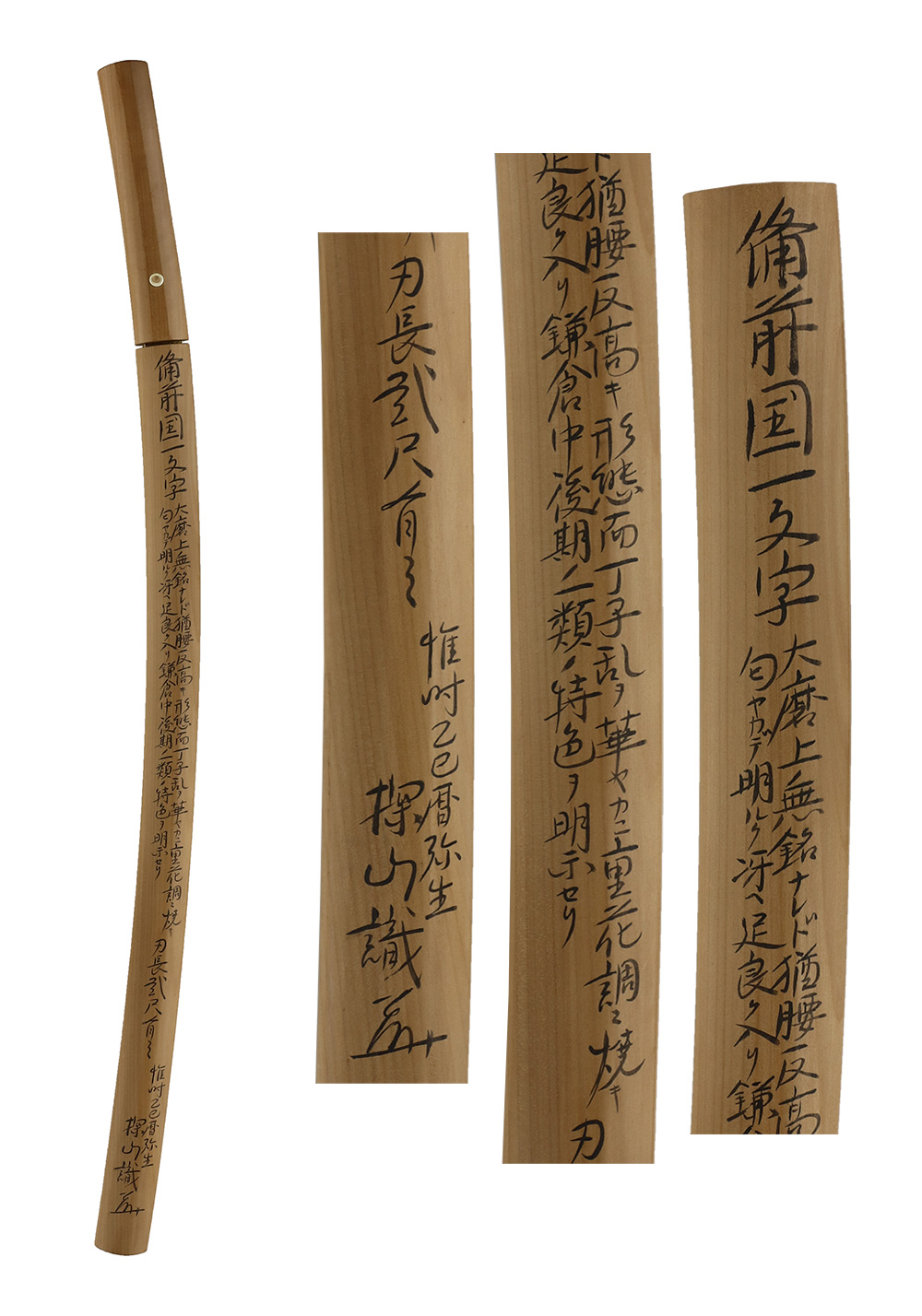
Sayagaki by Tananobe-sensei: Bizen no Kuni Ichimonji.
Though this is an o-suriage mumei piece, it retains a high koshi-zori curvature.
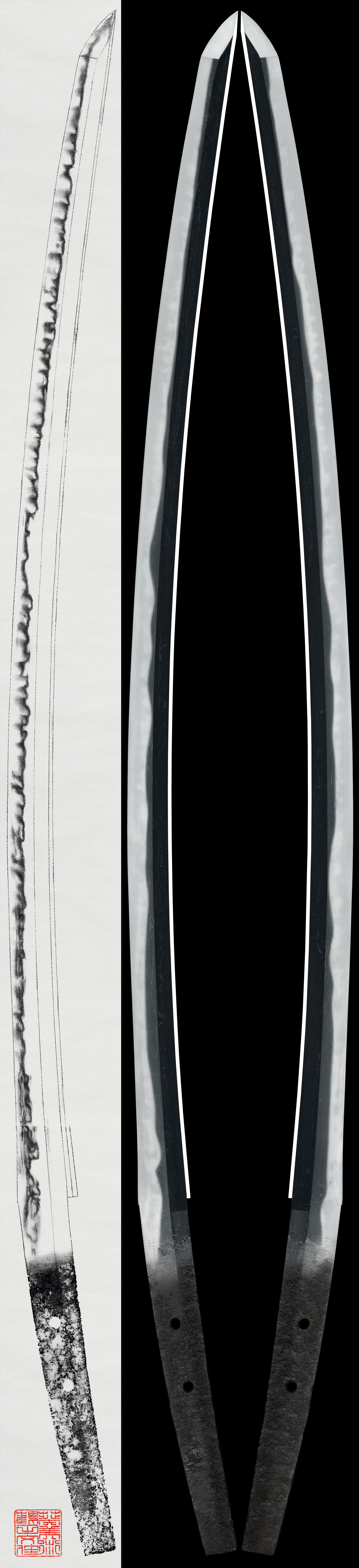
The flamboyant chōji-midare hamon is executed in a multi-petaled style, with a soft nioi, bright and clear appearance, and well-defined ashi.
It clearly exhibits the characteristics of works from the mid-to-late Kamakura period.
Blade length: 2 shaku (approx. 60.6 cm).
Written in the year of Kinoto-mi in Yayoi (March).
Inscribed by Tanzan (with kaō).
We divide 4 sections for each sword as Saijyo Saku, Jyojyo Saku, Jyo Saku and Regular Saku.
This work is ranked as Jyojyo Saku among Mumei (Attributed to Ichimonji) pieces.
Habaki: Gold-plated double-layered habaki
Blade Length: 60.6 cm (23.86 in)
Curvature: 2.0 cm (0.79 in)
Mekugi Hole: 2
Width at Base (Motohaba): 2.55 cm (1.00 in)
Width at Tip (Sakihaba): 1.55 cm (0.61 in)
Thickness of rim (Kasane): 0.45 cm (0.18 in)
Sword Weight: 390 g
Shape:This sword has a deep curvature, visible utsuri, and a wide mihaba.
The boshi extends slightly.
Jigane:Fine small itame-hada, well-forged and resulting in a high-quality jigane.
Hamon:A nioi-based gunome-midare pattern continues throughout, with prominent kinsuji and small ashi.
The nioiguchi is soft and mist-like, giving the blade an elegant mid-Kamakura period appearance.
Features:This blade, attributed to Ichimonji of the mid-Kamakura period, shows a flamboyant juka-chōji-midare hamon.
It is believed to be made around the Bun'ō era (circa 1260).
Although 766 years old, it remains in near-original condition, allowing a clear view of the curvature style of that era.
Koshirae: Han-tachi style mounting
Saya (Scabbard): Aogai-chirashi (blue shell inlay)
Tsuba: Tachi-style iron tsuba with gold-colored designs around the rim. Large and prominent hitsu-bane (pierced ears).
Fuchikashira / Kojiri / Metal fittings: Gold-colored with decorative patterns
Menuki: Crab motif carved and highlighted with gold
Aoi Art’s Comment:This piece is a magnificent example of the Fukuoka Ichimonji school, displaying a vibrant yakiba and well-defined kinsuji activity.
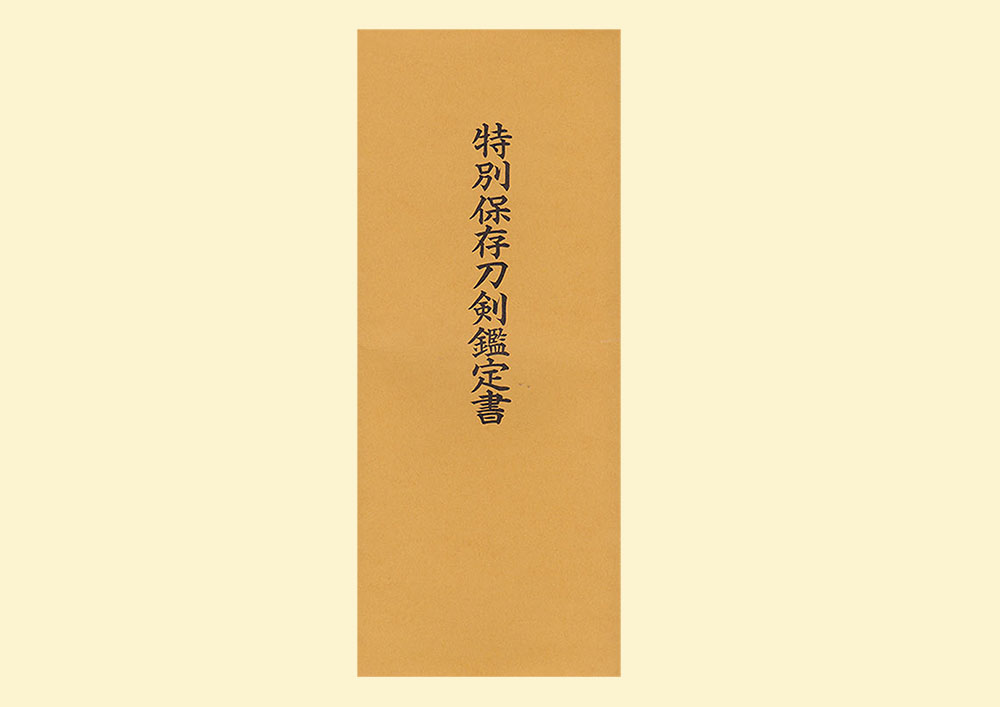
NBTHK Tokubetsu Hozon Token(Certificate to be issued soon)
Aoi Art Estimation Paper: Whole Oshigata
Please note: the price does not include the shipping fees.
Auction Starting Price:1,600,000JPY
Place Bid






Related Items:
 Katana:: Mumei (Ichimonji) (NBTHK Tokubetsu Hozon Token) (Consignment Sale)
 Katana:Mumei (attributed to Den Ichimonji)(NBTHK Tokubetsu Hozon Token)
 Tachi : Ichi(judged as Yoshioka Ichimonji)(NBTHK the 41st Juyo Token)
 Katana: Mumei (Iwato Ichimonji) (also known as Shochu Ichimonji)(NBTHK Tokubetsu Hozon Token)
 Katana:Mumei (Ichimonji) (NBTHK Tokubetsu Hozon Token)
 Tachi: Norinari (Ko-Ichimonji)(69th NBTHK Juyo Token)