
Ordering Number: AS26127
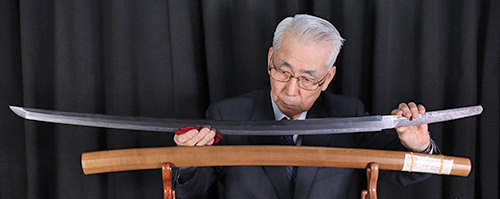
Katana in Shirasaya (NBTHK Tokubetsu Hozon Token)
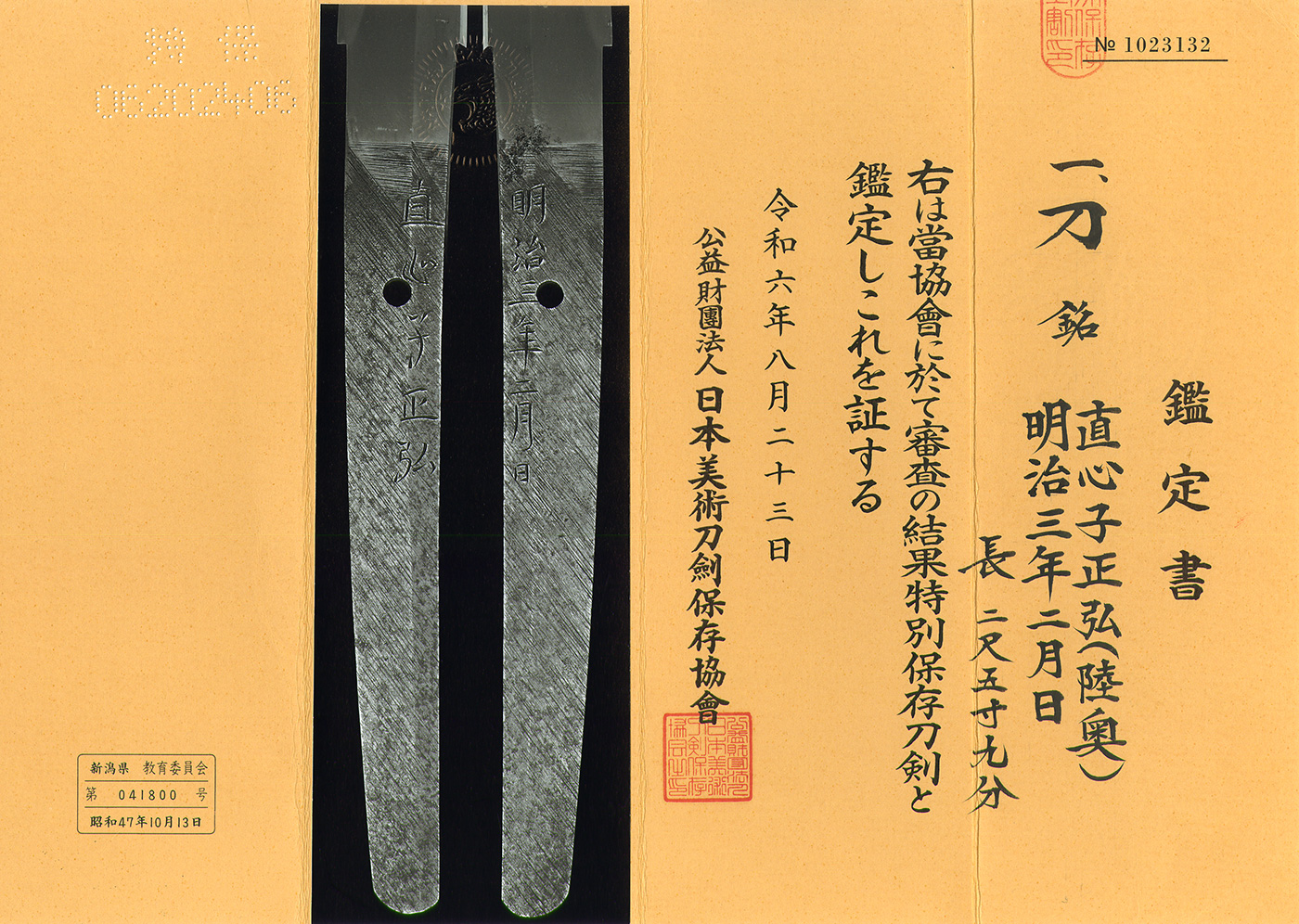
Signature: Jikishinsi Masahiro
March, Meiji 3rd year (1870)
直心子正弘
明治3年3月日
Shinshinto: Ryosaku: Mutsu
(We divide 4 sections for each sword as Saijyo Saku, Jyojyo Saku, Jyo Saku and Regular Saku).
This work ranks as Jyojyo Saku among the works of Naokokoro Masahiro.
Habaki: Single Silver Habaki.
Blade Length: 78.50 cm (30.91 in).
Curvature: 2.0 cm (0.79 in).
Mekugi Hole: 1.
Width at Base (Motohaba): 3.46 cm (1.36 in).
Width at Yokote: 2.24 cm (0.88 in).
Thickness (Kasane): 0.8 cm (0.31 in).
Sword Weight: 1045 g.
Era: Meiji 3rd year (1870).
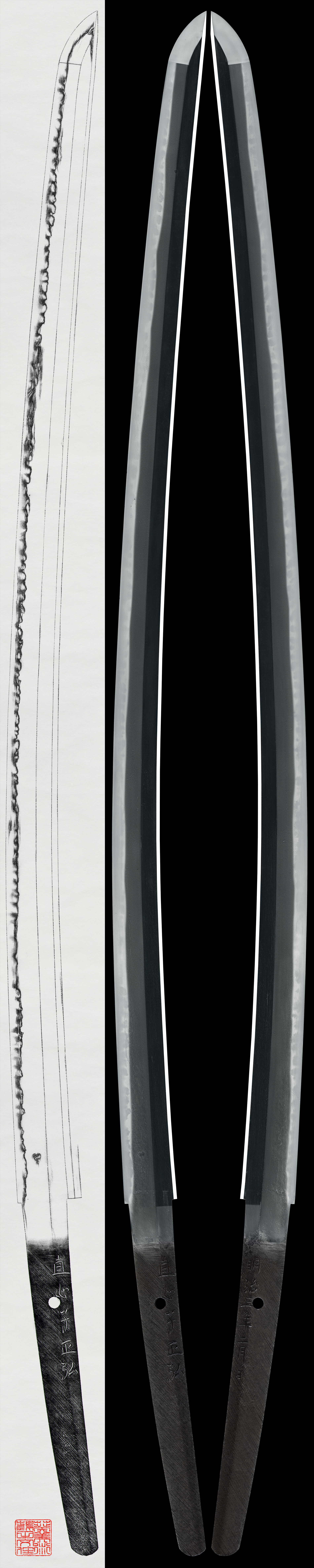
Shape: Thick kasane with a solid and powerful shape.
Jigane: Fine ko-itame hada well forged, producing a beautiful steel surface.
Hamon: Nie-deki gunome-midare, with small gunome-midare in nie-deki.
Kinsuji activities appear within the hamon, and the boshi turns back in hakikake style.
Features: In Meiji 4th year (1871), the production of Japanese swords was completely prohibited.
Aoi Art’s Comment: The era had finally reached the point where the Haitorei (Sword Abolishment Edict) was about to be issued, and Mutsu Naokokoro Masahiro was forced to cease sword production.
Works featuring small rounded gunome-midare had excellent shape and superior workmanship, but unfortunately production could no longer continue.
Like many other swordsmiths, he had no choice but to make a living through other occupations.
Aoi Art’s Comment: The sudden enforcement of the Haitorei must have been a shocking event for swordsmiths.
It was an age in which rifles and cannons became the main forces in warfare, and people said the era of fighting with Japanese swords had come to an end.
People must have worried deeply about what would become of the Japanese swords that had been treasured until then, as it was truly a difficult period.
Later, due to wars with China and Russia, sword production was once again permitted, and from the late Meiji period onward Japanese swords began to be produced again.
Historical Background: The Edo Shogunate collapsed, resulting in victory for the Imperial forces.
NBTHK Tokubetsu Hozon Token.
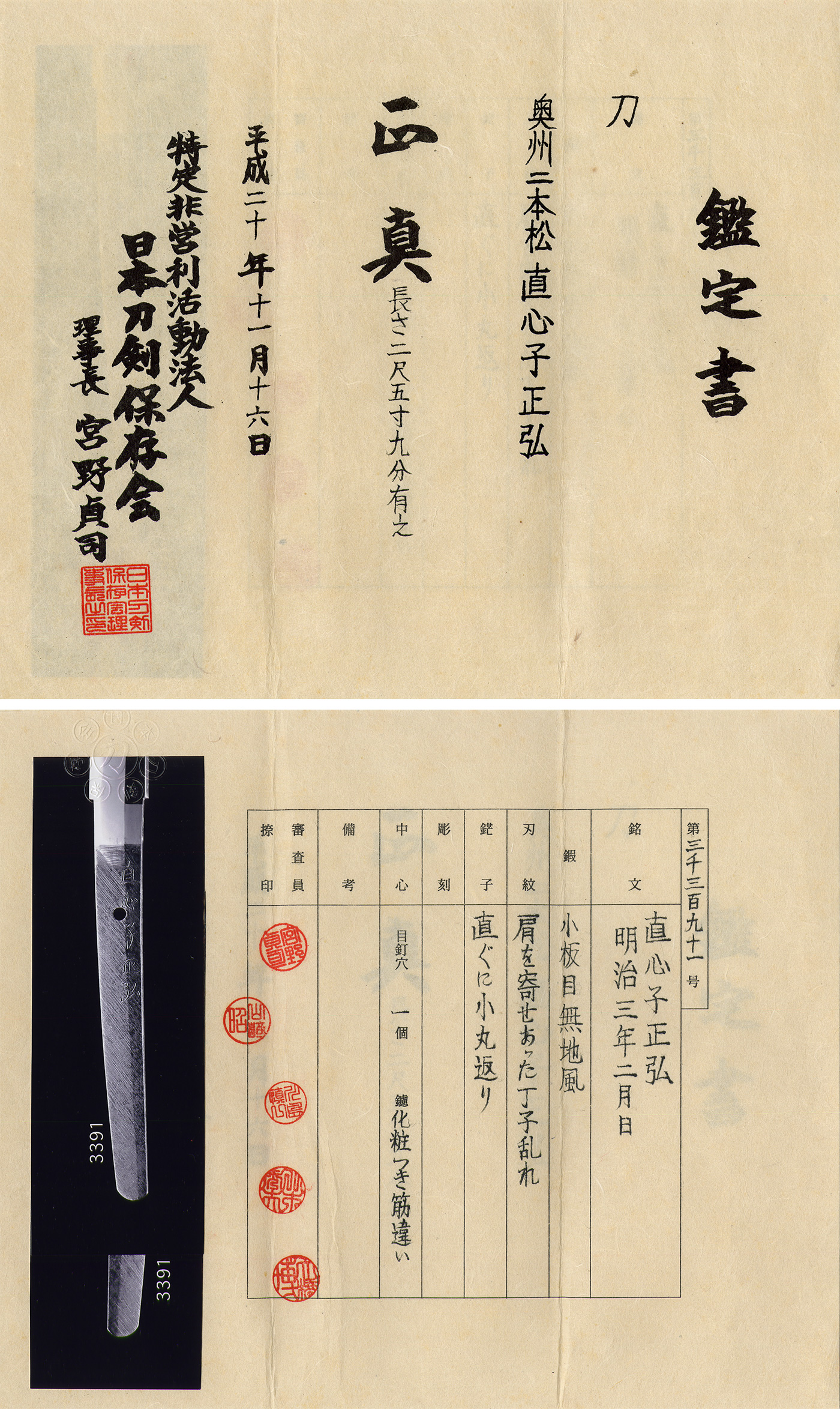
AoiArt estimation paper.
Whole Oshigata.
Please note: The price does not include the international shipping fees.
Auction Starting Price:600,000JPY
Place Bid



Related Items:
 Katana: Yamato Kami Hidekuni (February 1870)(NBTHK Tokubetsu Hozon Token)
 Katana: Osaka Ju Gassan Sadakatsu Kinsaku (Kao)(NBTHK Tokubetsu Hozon Token)
 Katana: Hizen Kuni Ju Mutsu no Kami Tadayoshi(NBTHK Tokubetsu Hozon Token)
 Katana : Tame Otsuka Kazunobu Kun Sekido Unju Korekazu Seitan saku kore (23th NBTHK Juyo Certificate)
 Katana: Naniwa ju Gassan Unryushi Sadakazu Kitae (Kokuin) (NBTHK Tokubetsu Hozon Token) (NBTHK Tokubetsu Kicho Token)
 Katana:Hizen Kuni Ju Oumi Daijo Fujiwara Tadahiro with Saidan mei(NBTHK Tokubetsu Hozon Token)