Ordering Number: AS26100
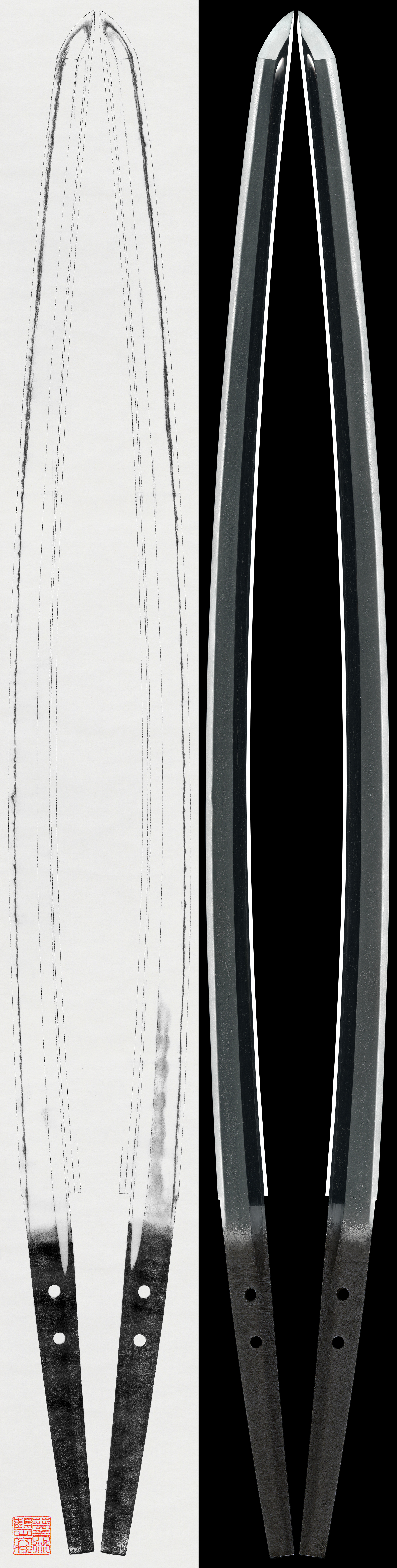
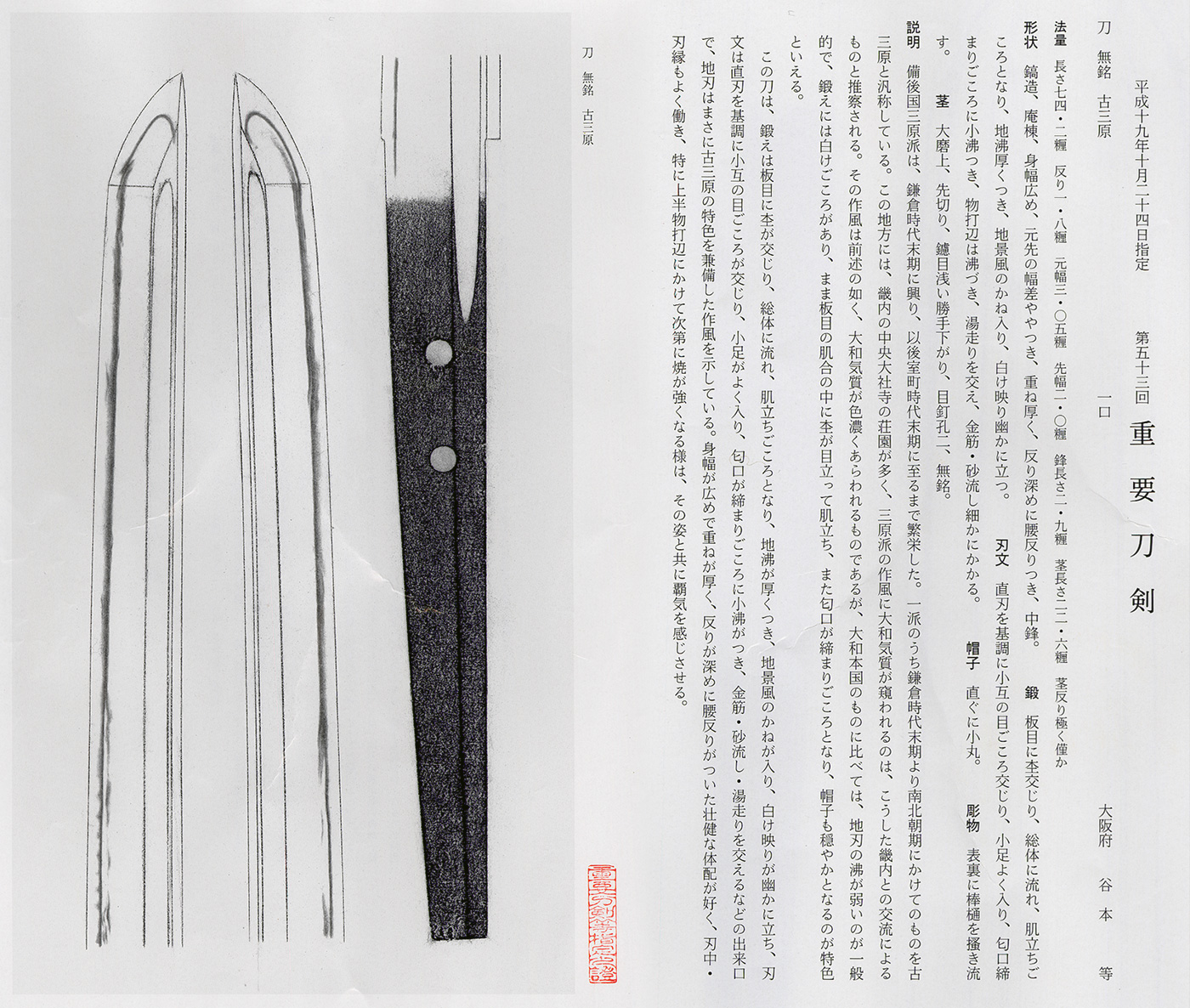
Katana in Shirasaya with Koshirae (53rd NBTHK Juyo Token)
Signature: Mumei (Attributed to Ko-Mihara 古三原)
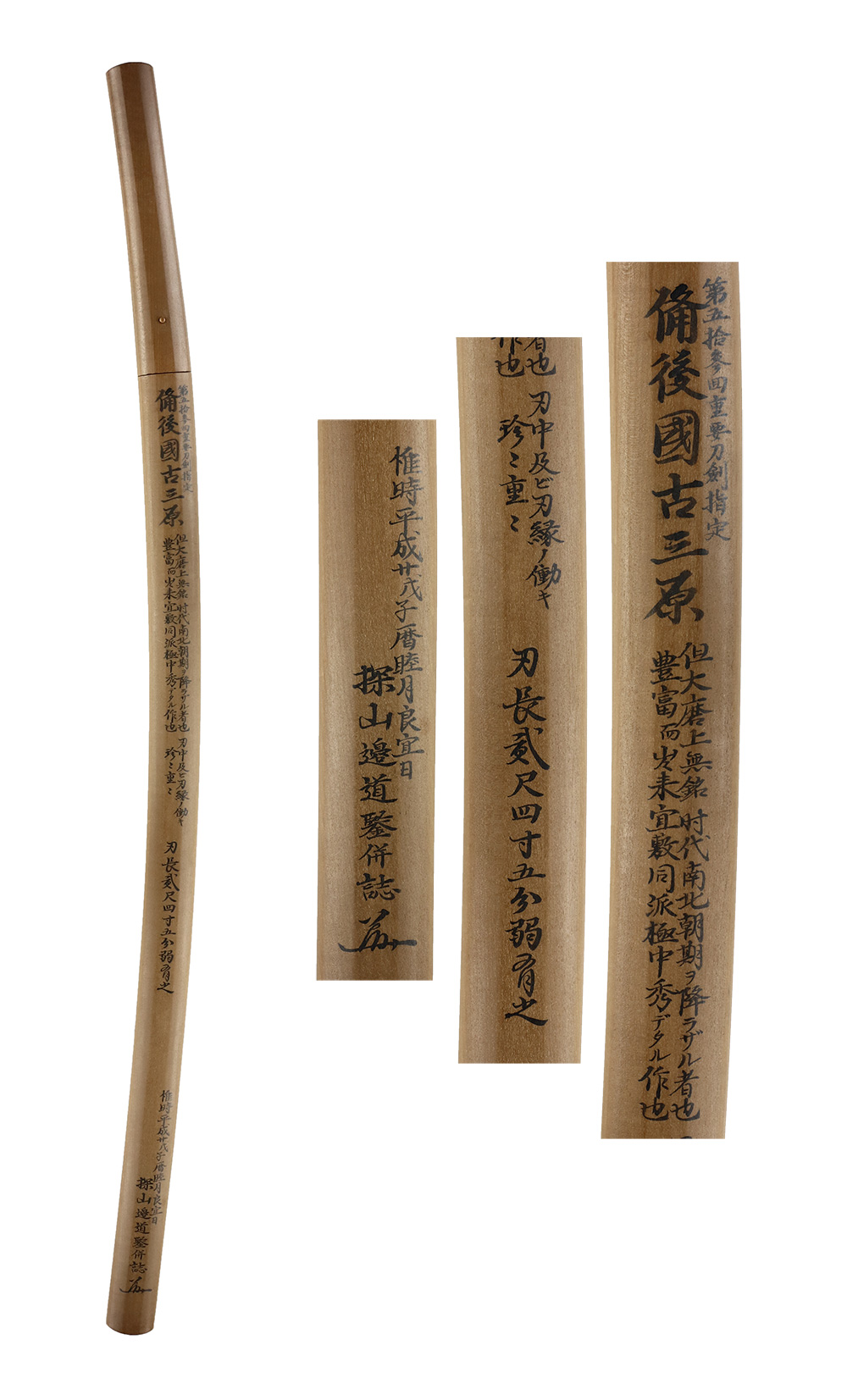
Sayagaki (Inscription on the Shirasaya) by Mr.Tanobe:
This blade is shortened and unsigned blade. It dates back to no later than the Nanbokucho period. The blade exhibits abundant activities in hamon. It is exceptionally well forged and stands out as a particularly fine example among works attributed to this school. A truly remarkable and highly treasured masterpiece.
written in 2008
(We divide 4 sections for each sword as Saijyo Saku, Jyojyo Saku, Jyo Saku and Regular Saku).
This blade is ranked as Saijyo Saku among the Juyo Token works attributed to the Ko-Mihara school.
Habaki: gold-plated double habaki
Blade Length: 74.4cm (29.29in)
Curvature: 1.8cm (0.71in)
Mekugi-ana: 2
Motohaba: 3.12cm (1.23in)
Sakihaba: 2.02cm (0.80in)
Kasane: 0.68cm (0.27in)
Weight: 750g
Era: Nanbokucho period, circa 14rh cenruty
Shape: The blade has a slightly wide mihaba, standard kasane, and koshi-zori curvature with a chu-kissaki.
Jigane: Itame hada mixed with mokume hada and flowing grain patterns, with ji-nie and chikei.
Hamon: Suguha mixed with small gunome with koashi. The nioikuchi is tight, with ko-nie, while sunagashi and kinsuji are active within the hamon.
Features:
The Mihara school originated in Bingo Province during the late Kamakura period. Works produced up to the Nanbokucho period are referred to as Ko-Mihara (Old Mihara). Bingo Province contained estates belonging to temples and shrines in and around the capital, and the influence of the Yamato tradition can also be observed in the workmanship of the Ko-Mihara school.
Koshirae:
Tsuba: circular tsuba carved with a old man.
Fuchikasira: motif of a dragon
Menuki: motif of a dragon
53rd NBTHK Juyo Certificate
AoiArt estimation paper: Whole Oshigata.
Please note: the price does not include the shipping fees.
Auction Starting Price:3,500,000JPY
Place Bid