
Ordering Number: AS25406
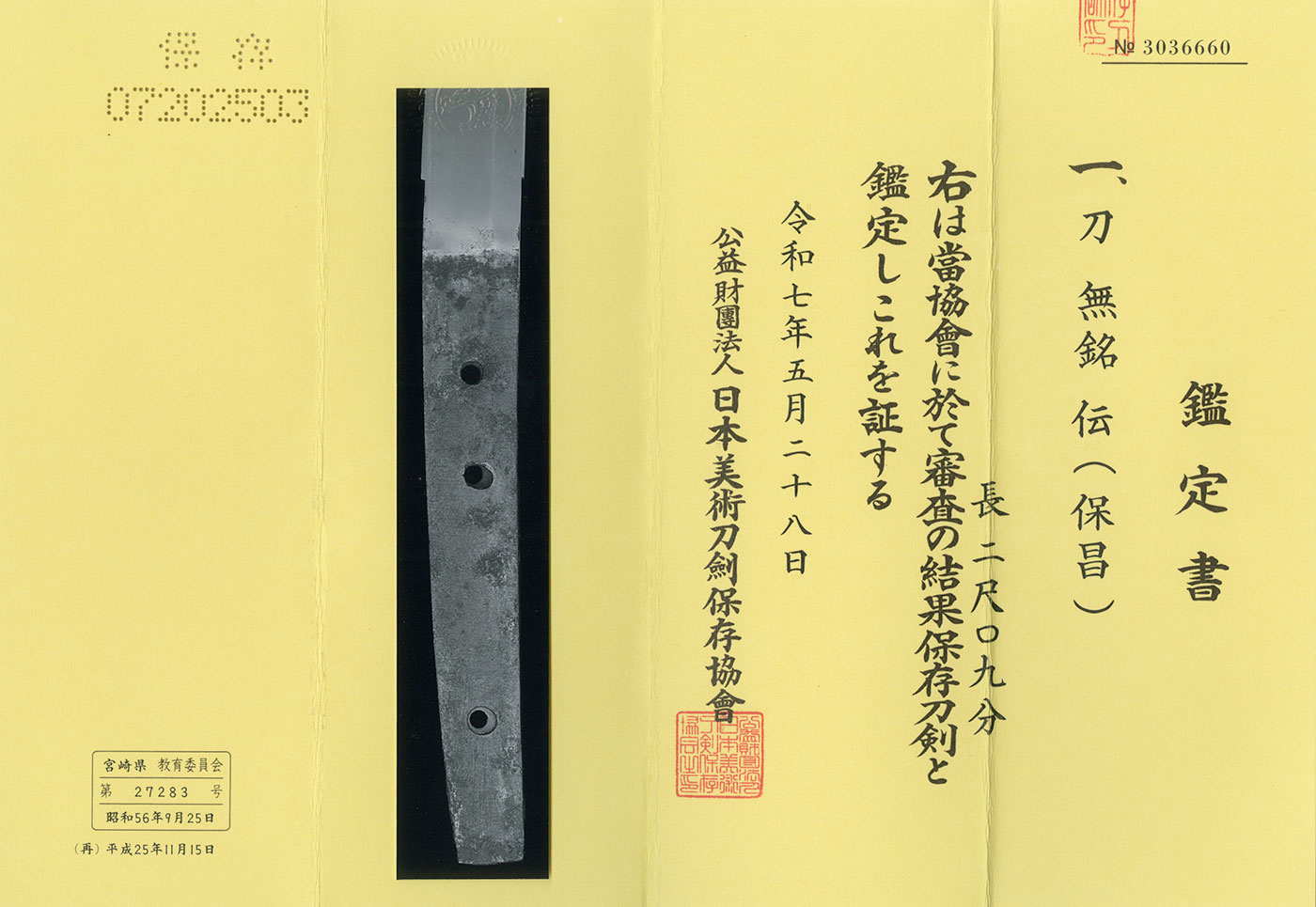
Katana in Shirasaya with Koshirae (NBTHK Hozon Token)
Signature: Mumei (Unsigned)(Den Hosho)
無銘(伝 保昌)
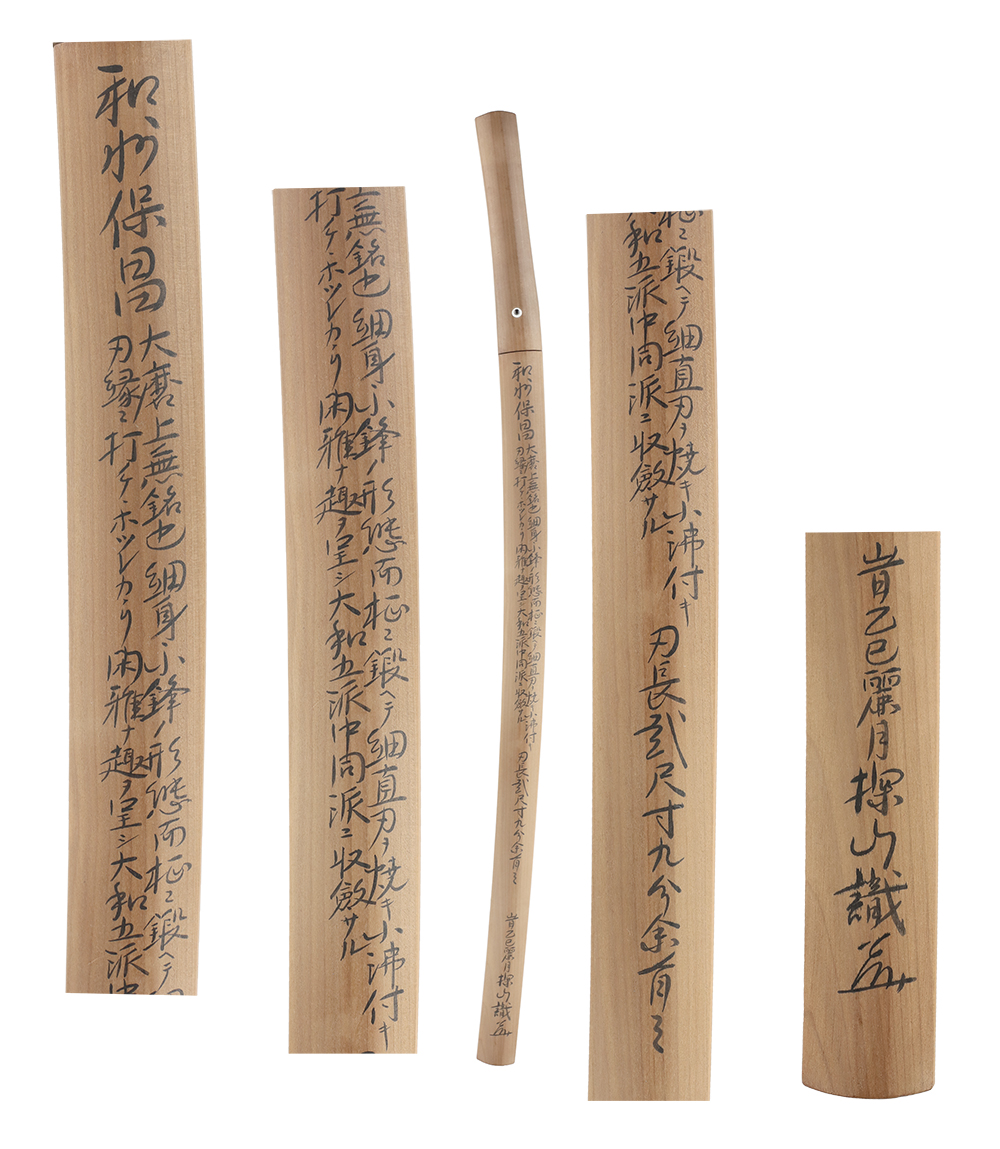
Sayagaki: Mr. Tanobe
Washu Hosho.
It is o-suriage (greatly shortened) and mumei (unsigned).
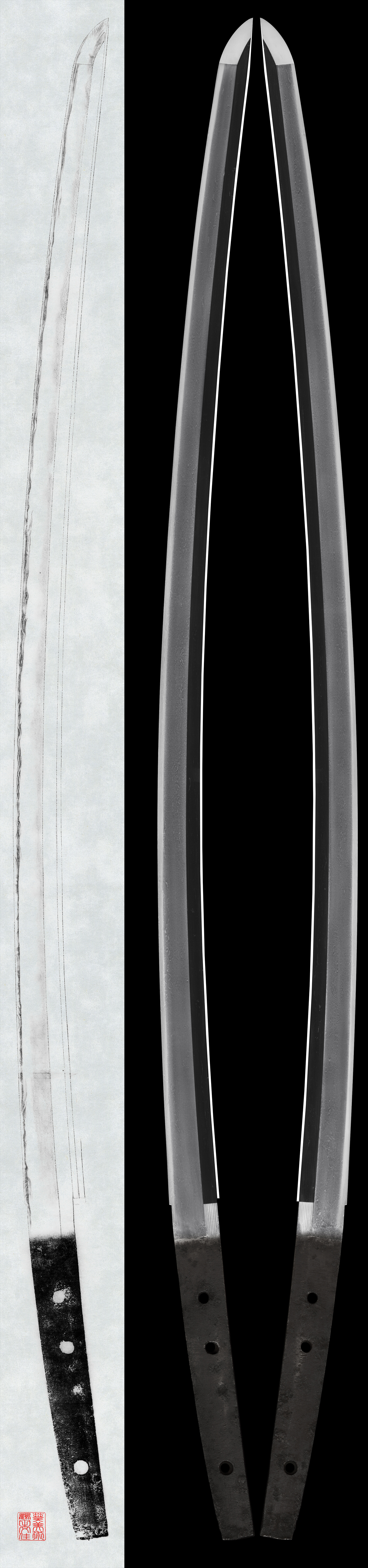
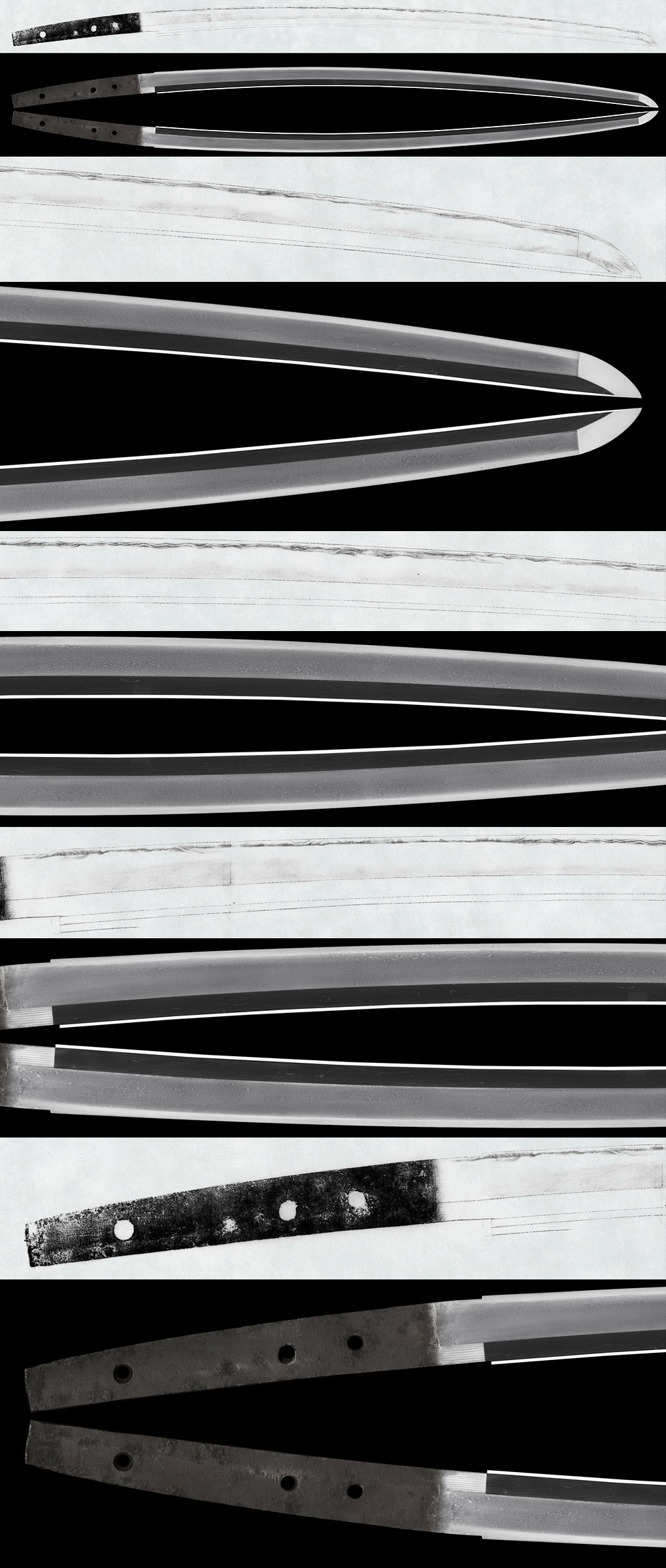
The form is slender with a small kissaki, forged in masame (straight grain), tempering a fine suguha (hoso-suguha) with ko-nie (small nie).
Along the edge of the hamon, uchinoke (crescent-shaped nie) and hotsure (fraying) appear, presenting an elegant and refined air.
Among the Yamato Gokaden (five schools), it is attributed to the same school (Hosho).
The blade length is slightly over 2 shaku 0 sun 9 bu.
Inscribed by Tanzan (Kao).
We classify swords into Saijyo Saku, Jyojyo Saku, Jyo Saku, and Regular Saku based on the swordsmith's skill.
This work is ranked as Jyojyo Saku for Mumei (Unsigned)(Den Hosho).
Habaki: Single-layer gold-plated.
Blade Length: 63.4 cm (24.96 in)
Curvature (Sori): 1.7 cm (0.67 in)
Mekugi-ana (peg hole): 3
Width at Base (Motohaba): 2.68 cm (1.06 in)
Width at Tip (Sakihaba): 1.58 cm (0.62 in)
Thickness (Kasane): 0.67 cm (0.26 in)
Sword Weight: 545 grams
Era: Around the mid Kamakura period, Koan era, 1278 (approx. 748 years ago).
Shape: The mihaba and kasane are somewhat slender, and the kissaki is also somewhat slender.
Jigane: Masame and ko-itame hada, well-compacted (tight).
Hamon: A nioi-deki suguha with hotsure (fraying); niju-ha (double temper line) appears, and kinsuji (bright diagonal lines) work within the ha, with abundant activity (hataraki).
Features: Hosho was a Yamato swordsmith active from the late Kamakura period.
Most koto-era masame (straight-grain) works are tanto.
In this Hosho piece, chikei (dark flowing lines) appear well in the jigane, ko-itame is prominent, and masame is also present.
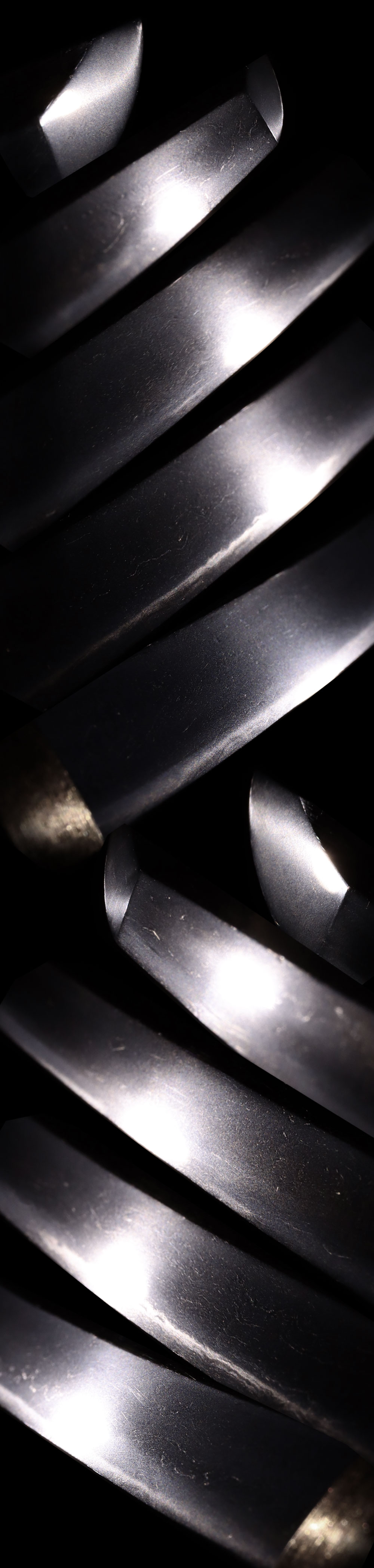
The boshi's temper is minimal, yet utsuri (misty reflection) is present, and the activity typical of koto (old swords) can be clearly seen.
Koshirae: Han-tachi koshirae (half-tachi style mounting).
Tsuba: Plum and moon carved on a shakudo base with gold iroe. Signed Mitsunaga.
Fuchikashira: A dragon in takabori (high relief) on a shakudo-nanako base, highlighted in gold.
Saya: A vermilion nashiji-style (pear-skin finish) saya with a butterfly design drawn in gold.
Menuki: A helmet (kabuto) and bow and arrows in takabori (high relief) with gold iroe applied.
Aoi Art's Comment: In the Koan era (1278), within a school of Yamato smiths, Kunimitsu was the first generation, and his child was Goro Sadamune.
This piece also has a very finely made koshirae.
The jigane is well-forged, and fine niju-ha (double temper line), kinsuji (bright lines), and kuichigai-ba (staggered temper line) are richly active.
Because the shinogi-ji is visible, the surface grain (hada) of that era can be observed.
For those who wish to have the tsuka-maki (handle wrapping) done, we can arrange it for an additional 30,000 yen.
NBTHK Hozon Token
Aoi Art estimation paper: Whole Oshigata
Please note: the price does not include the shipping fees.
Auction Starting Price:1,750,000JPY
Place Bid


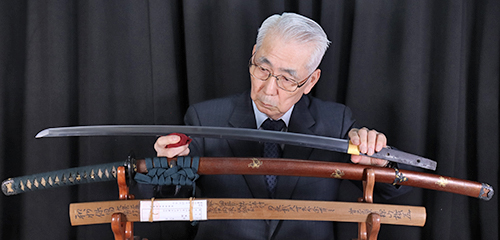
Related Items:
 Katana:Mumei (attributed to Den Hosho).(NBTHK Tokubetsu Hozon Token)
 Katana:Yamato Hosho Sadamune-den oshinoyama Nihon Gassan Seiten Saku (March, 1937) (NBTHK Tokubetsu Hozon Token)
 Katana: Oushu Aizu Ju Kanesada (August, 1856)(NBTHK Tokubetsu Hozon Token)
 Katana: Yamato Kami Hidekuni (February 1870)(NBTHK Tokubetsu Hozon Token)
 Katana: Naniwa ju Gassan Unryushi Sadakazu Kitae (Kokuin) (NBTHK Tokubetsu Hozon Token) (NBTHK Tokubetsu Kicho Token)
 Katana:Mumei(Unsigned)(Tegai school 手掻) (the 22th NBTHK Juyo Token)