
Ordering Number: AS26488
Ordering Number: AS26488
Katana in Shirasaya with Koshirae and Additional Shirasaya (15th NBTHK Juyo Token)
Signature: Mumei (Attributed to Bizen Chikakage)
無銘 (伝 備前近景)
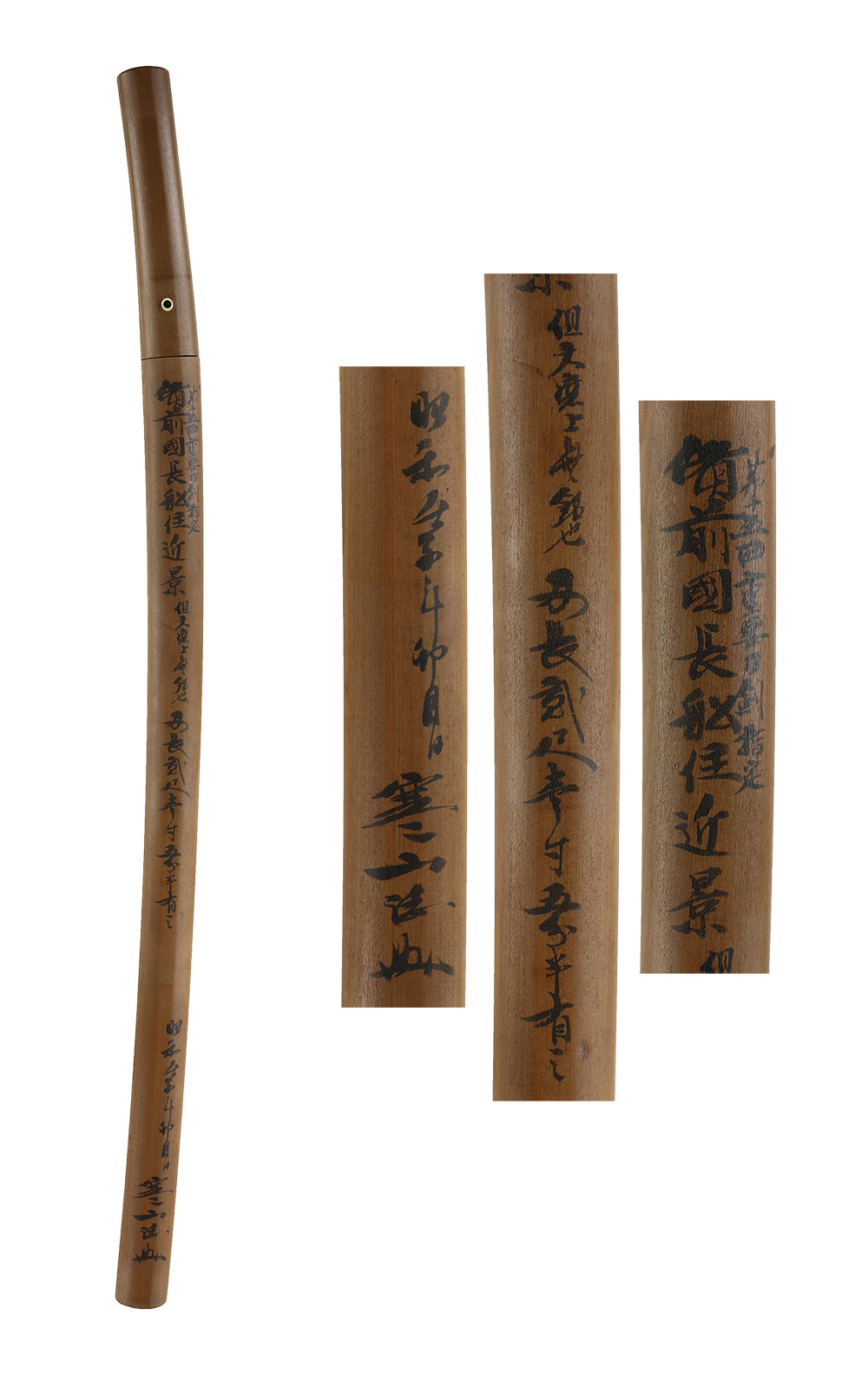
Sayagaki (Inscription on the Shirasaya) by Kanzan Sensei:
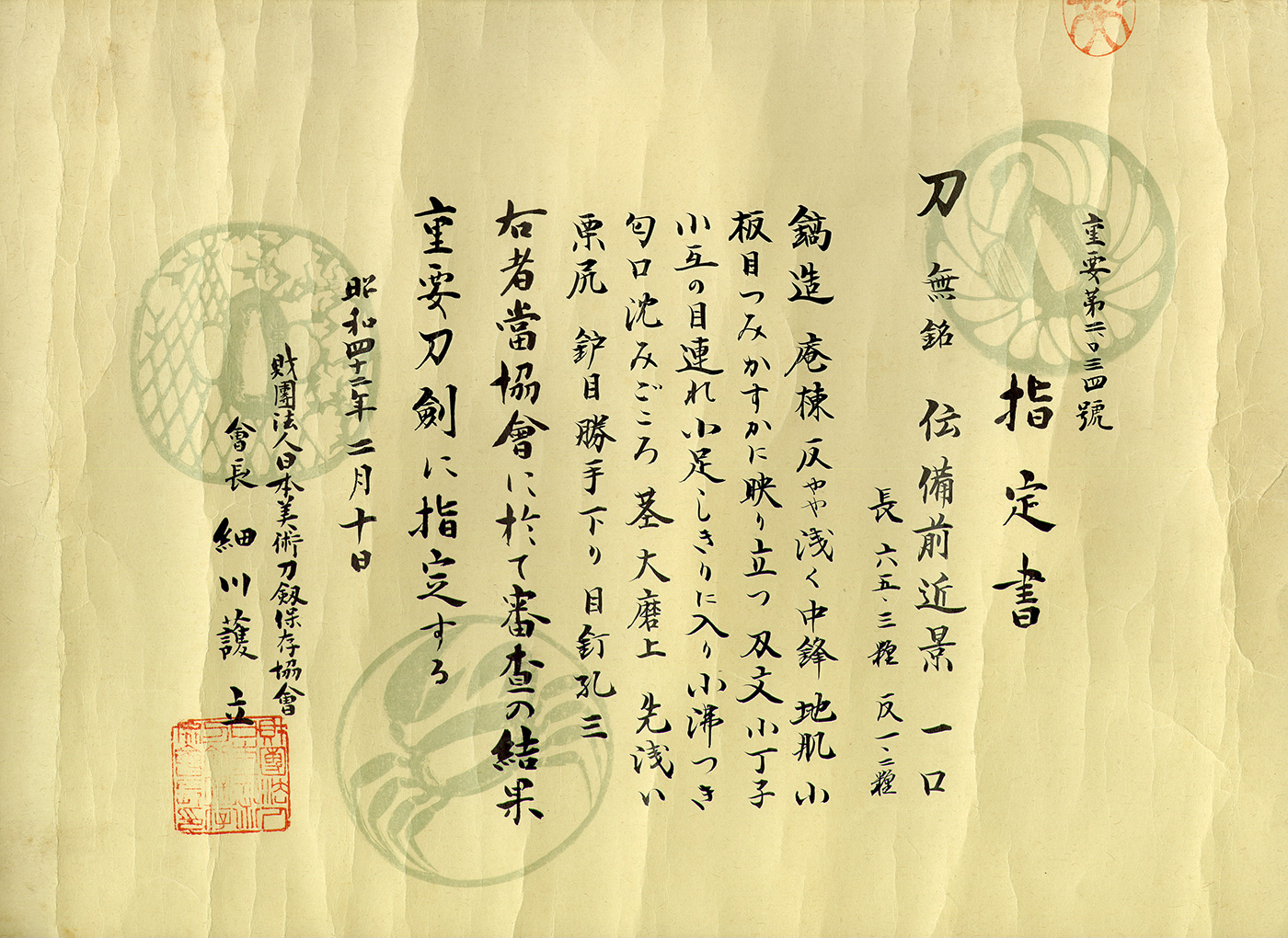
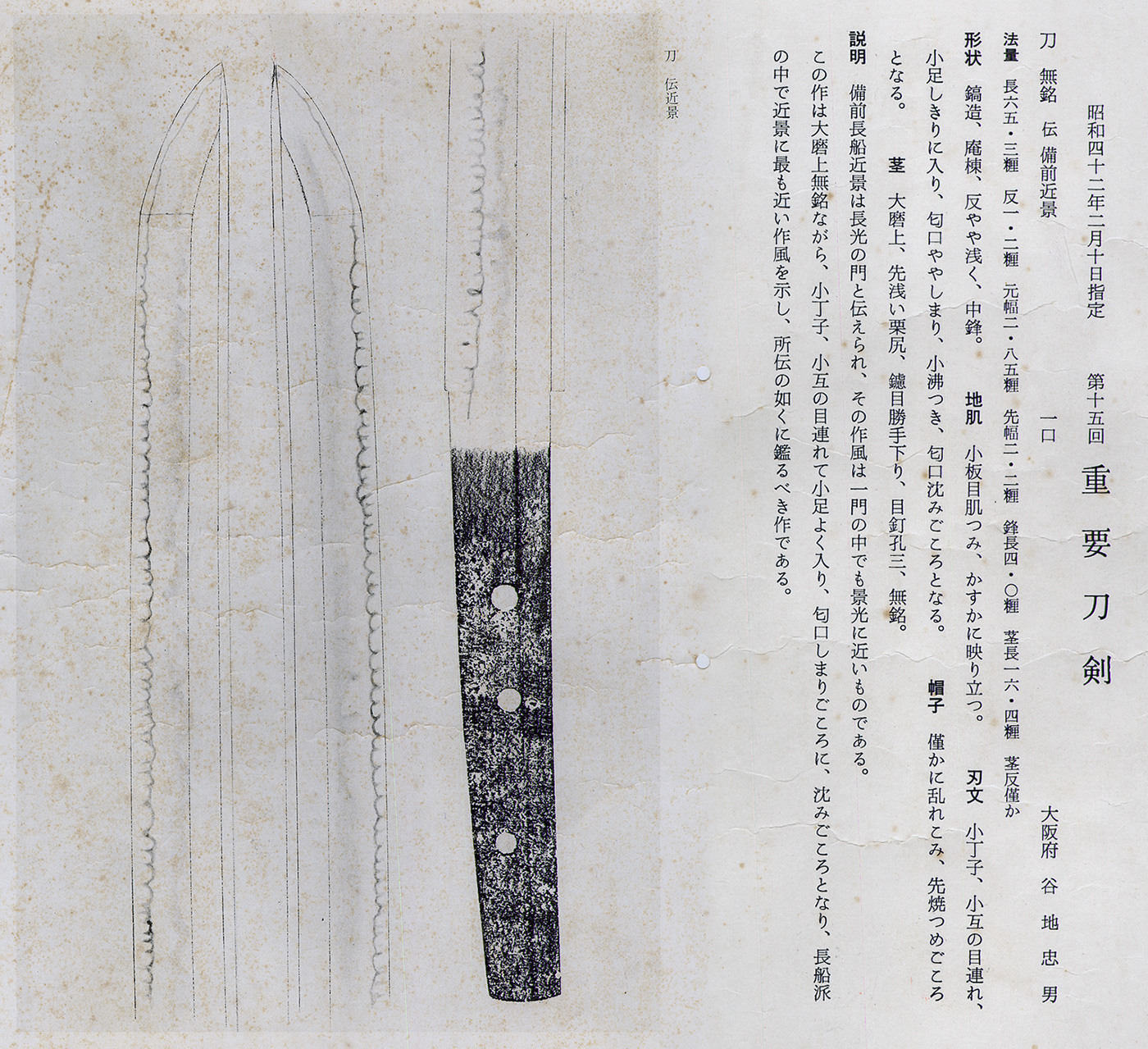
Designated as Juyo Token at the 15th NBTHK Juyo Token Shinsa.
Bizen no Kuni Osafune Ju Chikakage.
However, the blade is O-suriage mumei (greatly shortened and unsigned).
Blade Length: 2 shaku 1 sun 3 bu 5 rin, approximately 64.70 cm (25.47 in).
Inscribed by Kanzan (Kao).
Ryo Wazamono: Chukoto: Jyojyo Saku: Bizen Province
(We divide 4 sections for each sword as Saijyo Saku, Jyojyo Saku, Jyo Saku and Regular Saku).
This blade is ranked as Saijyo Saku among works attributed to Bizen Chikakage.
Habaki: Double gold-foiled habaki.
Blade Length: 65.1 cm (25.63 in).
Curvature: 1.3 cm (0.51 in).
Mekugi Hole: 3.
Width at Base (Motohaba): 3.00 cm (1.18 in).
Width at Yokote: 2.25 cm (0.89 in).
Thickness of rim (Kasane): 0.63 cm (0.25 in).
Sword Weight: 685 g.
Era: Late Kamakura period.
Shape: An O-suriage mumei katana with a slightly wide mihaba and a noticeably elongated kissaki, displaying a beautifully proportioned shape.
Jigane: Beautifully refined and tightly forged ko-itame hada, displaying exceptionally clear and fine-quality steel.
Utsuri is visible in the jigane.
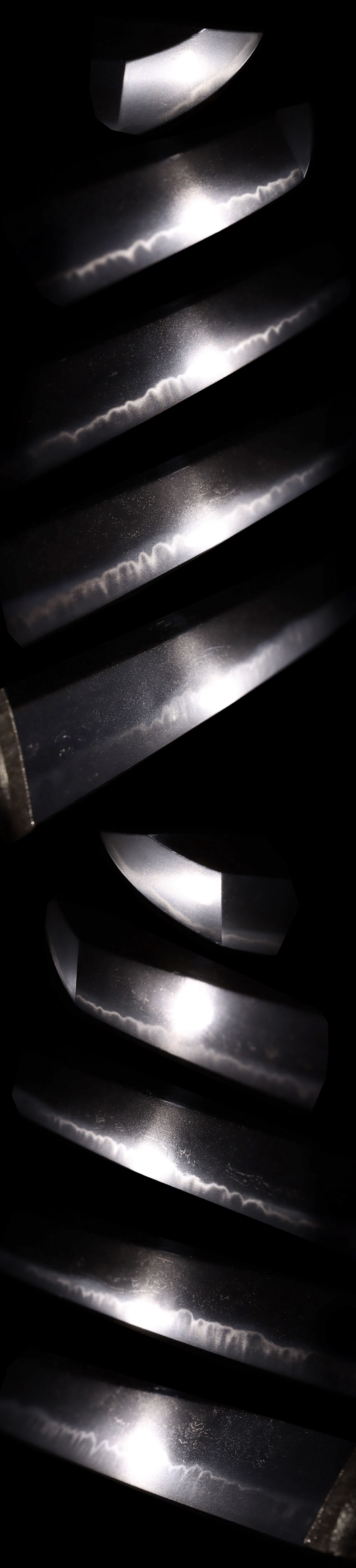
Hamon: A continuous pattern of ko-choji and ko-gunome-midare with abundant ko-ashi activity.
The nioiguchi is relatively tight and displays a slightly subdued appearance.
The boshi exhibits a midare-komi pattern.
Features: Bizen Osafune Chikakage, also known as Saburo Saemon no Jo, was the son of Chikatsune and a disciple of Nagamitsu.
Among the swordsmiths of the Osafune school, his workmanship is particularly close to that of Kagemitsu.
This blade also closely resembles the work of Kagemitsu and displays characteristics reminiscent of Motoshige.
The jigane is especially outstanding.
Koshirae:
Tsuba: Shakudo nanako tsuba featuring a carp carved in high relief and decorated with gold iroe.
Fuchikashira: Shakudo nanako fittings featuring carp motifs carved in high relief and decorated with gold iroe.
Saya (Scabbard): Saya decorated with scattered aogai (mother-of-pearl) inlay.
Menuki: Shakudo menuki featuring carp motifs carved in high relief and decorated with gold iroe.
Kozuka: Shakudo nanako kozuka featuring a carp carved in high relief and decorated with gold iroe.
Kogatana: Included.
Kogai: Shakudo nanako kogai featuring a carp carved in high relief and decorated with gold iroe.
Historical Background: In 1319, during the final years of the Kamakura period, several notable historical events took place in Japan.
This was the year in which the era name changed from Bunpo to Gen'o.
On October 10, 1319, Ashikaga Takauji, who would later establish the Muromachi shogunate, celebrated his genpuku (coming-of-age ceremony) at the age of 15.
At that time, he was known as Matataro.
During the ceremony, he received the character "Taka" from Hojo Takatoki, the head of the main Hojo family (Tokusō) and the effective leader of the Kamakura shogunate.
He subsequently adopted the name Takauji, written with the character "Taka" bestowed upon him by Hojo Takatoki.
15th NBTHK Juyo Token.
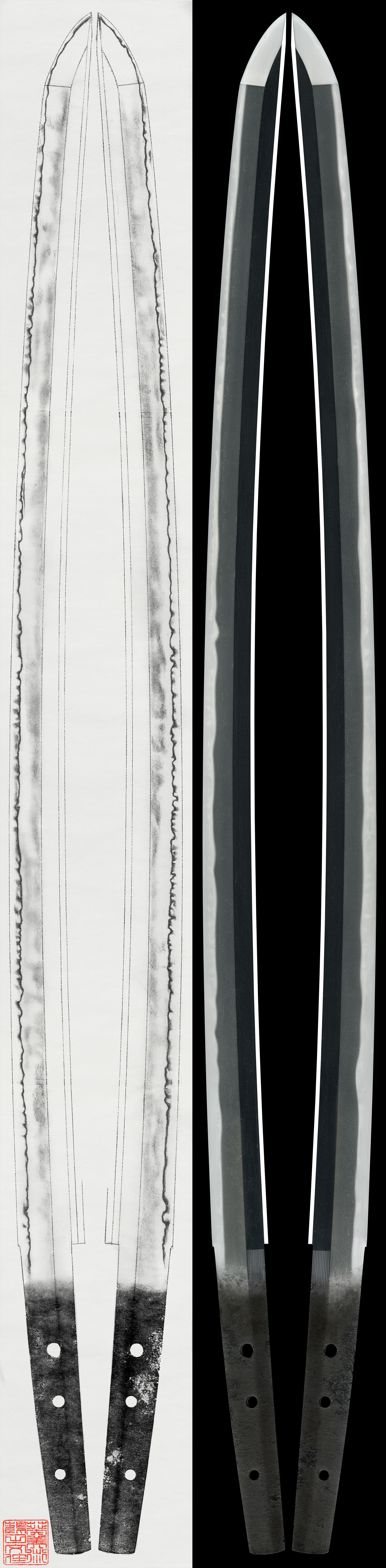
AoiArt estimation paper: Whole Oshigata.
Auction Starting Price: 550,000 JPY



Related Items:
 Katana:Mumei (Unsigned), attributed to Chikakage.(The 41st NBTHK Juyo Token)
 Katana in Shirasaya with Koshirae (27th NBTHK Juyo Token)
 Tanto: Mumei(Unsigned)(judged as Rai Kunitoshi 来国俊) (NBTHK Tokubetsu Hozon Token)
 Katana: Mumei (Attributed to Ōmiya Morikage)(the 15th Juyo Token)
 Nitokoro: Goto Kenjo (the 67th NBTHK Juyo Tosogu)
 Katana: Mumei (Unsigned)(Osafune Morishige) (NBTHK Tokubetsu Hozon Token)