
Ordering Number: AS26502 (Consignment Sale)
Katana in Shirasaya with Koshirae (67th NBTHK Juyo Token)
Signature: Mumei (Unsigned)(Norishige 則重)
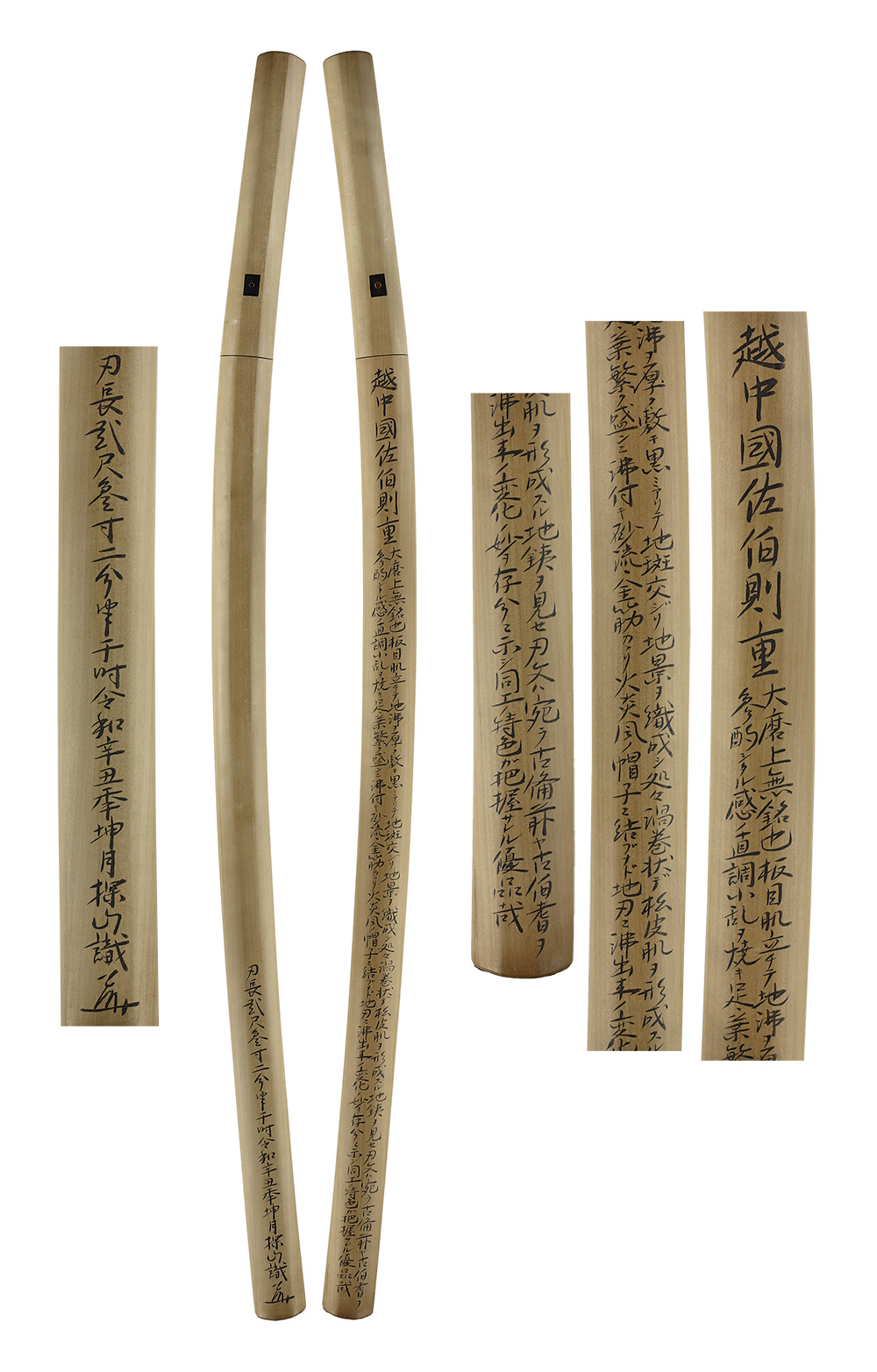
Sayagaki (by Tanobe Michihiro):
Etchu no Kuni Saeki Norishige, O-suriage Mumei.
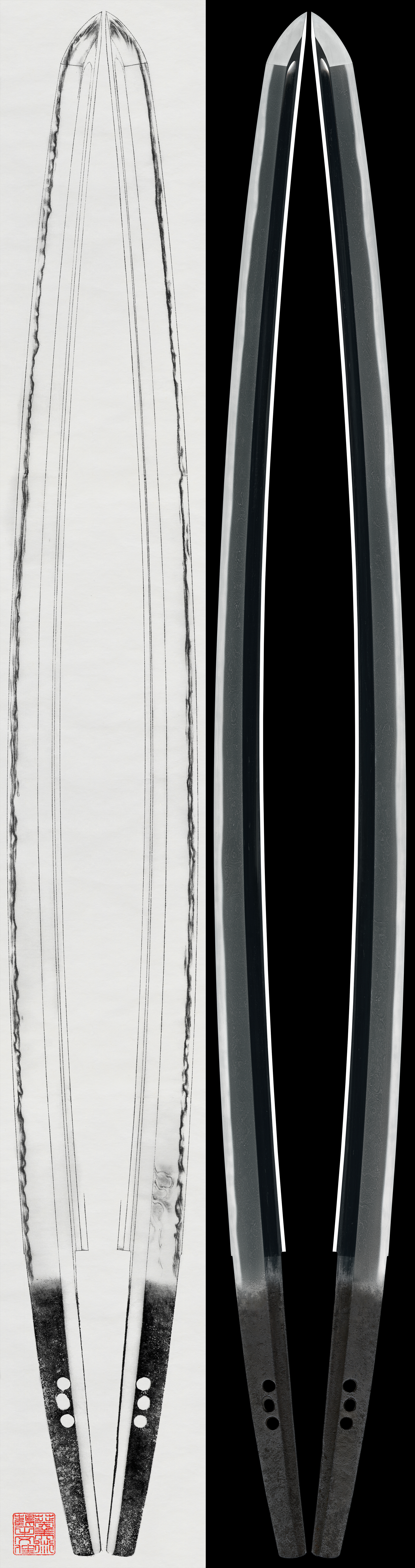
The jigane is a prominent itame hada with thick ji-nie and a darkish tone, mixed with ji-fu and interwoven with chikei, swirling in places to form matsukawa hada.
The hamon is a suguha-based ko-midare reminiscent of Ko-Bizen and Ko-Hoki, with abundant yo, rich nie, sunagashi and kinsuji, and a flame-like boshi.
Both the ji and ha fully display the remarkable variety of nie-deki work, and the characteristics of this smith are clearly evident in this fine piece.
Blade length: 2 shaku 3 sun 2.5 bu
Reiwa Kanoto-Ushi (2021), June, appraised by Tanzan (Kao)
We classify swords into Saijyo Saku, Jyojyo Saku, Jyo Saku, and Regular Saku based on the swordsmith's skill.
This work is ranked as Saijyo Saku for Mumei (Noriyoshi).
Habaki: Gold foiled double Habaki.
Blade Length: 70.2 cm (27.64 in)
Curvature (Sori): 2.0 cm (0.79 in)
Mekugi-ana: 3
Width at Base (Motohaba): 3.08 cm (1.21 in)
Width at Tip (Sakihaba): 2.00 cm (0.79 in)
Thickness (Kasane): 0.60 cm (0.24 in)
Blade Weight: 665 g
Era: Late Kamakura period, circa early 14th century
Shape: Bo-hi are carved through on both sides, with a standard kasane and koshi-zori.
The kasane and mihaba are standard, with koshi-zori, a long blade, and a chu-kissaki.
Jigane: Itame hada mixed with mokume hada, standing out, with thick ji-nie and chikei, forming the so-called "matsukawa hada," with a darkish steel color.
Hamon: Suguha-based with ko-choji and ko-gunome mixed in, with abundant ashi and yo, thick nie, and kinsuji and sunagashi.
The boshi shows yubashiri, is midarekomi with hakikake, and becomes flame-like (kaen).
Koshirae:
Saya (Scabbard): Isogusa
Tsuba: Iron, nadekaku mokko-shape, with a design of a vajra (kongosho) and clouds in gold and silver zogan.
Fuchikashira: Iron, with a cloud design carved and inlaid (zogan).
Menuki: Shakudo, with a dragon design in katabori.
Explanation:
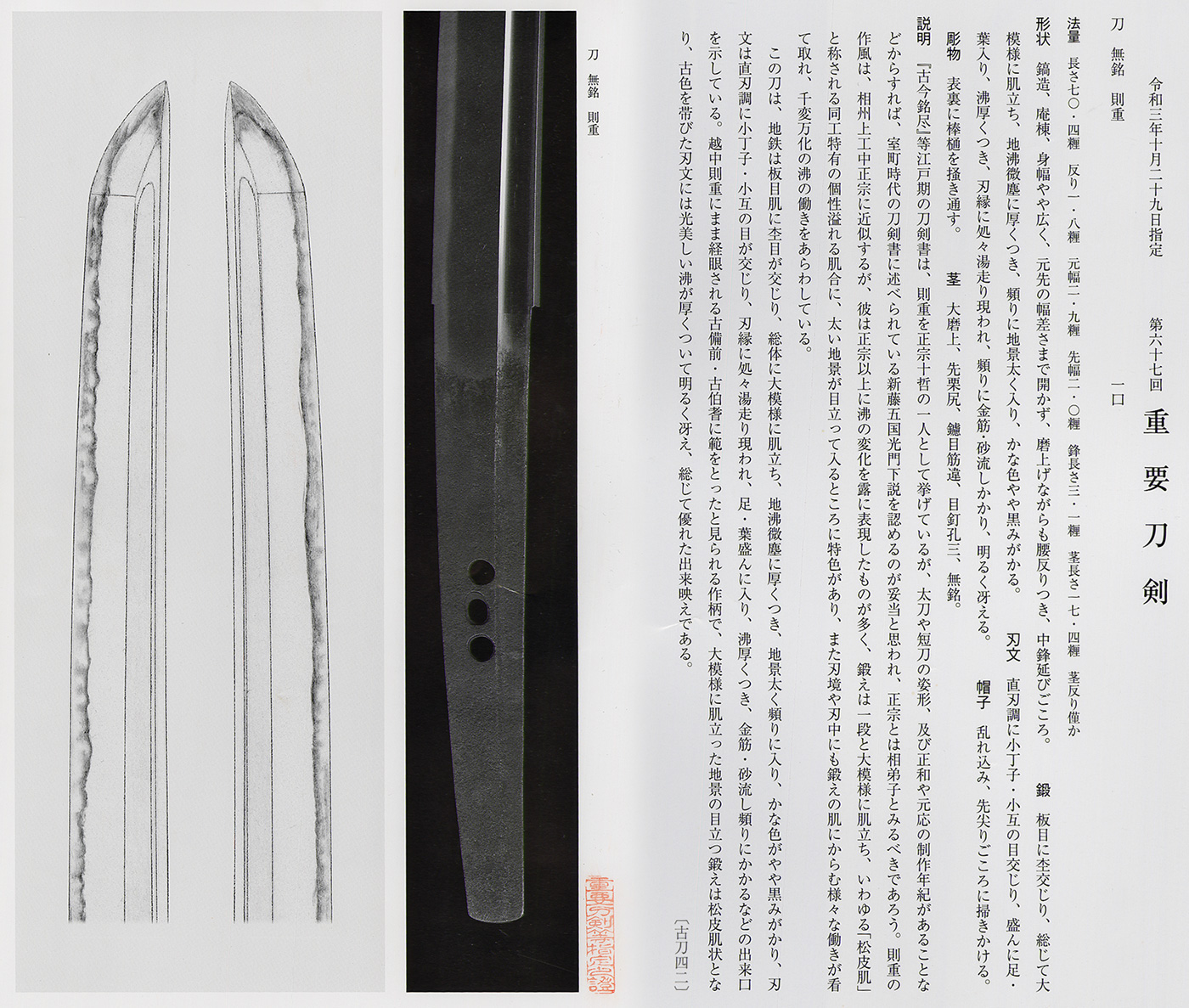
Edo-period sword books such as "Kokon Meizukushi" list Noriyoshi as one of the Masamune Juttetsu (the ten great students of Masamune).
However, judging from the shape of his tachi and tanto, and the existence of works dated Showa (1312–1317) and Gen'o (1319–1321), it is considered reasonable to accept the theory in Muromachi-period sword books that he was a student of Shintogo Kunimitsu, and he is regarded as a fellow student of Masamune.
The workmanship appears to be modeled on Ko-Bizen and Ko-Hoki, with a boldly patterned, prominent jihada forming matsukawa hada, and beautiful, bright nie with an antique appearance applied thickly and clearly.
This is an excellent piece.
Features: The matsukawa hada characteristic of Norishige appears prominently, and the nie changes in countless ways.
Both the hamon and the jigane show lively variation.
This is a highly recommended sword that can be enjoyed for many years.
Aoi Art evaluation paper: Whole Oshigata
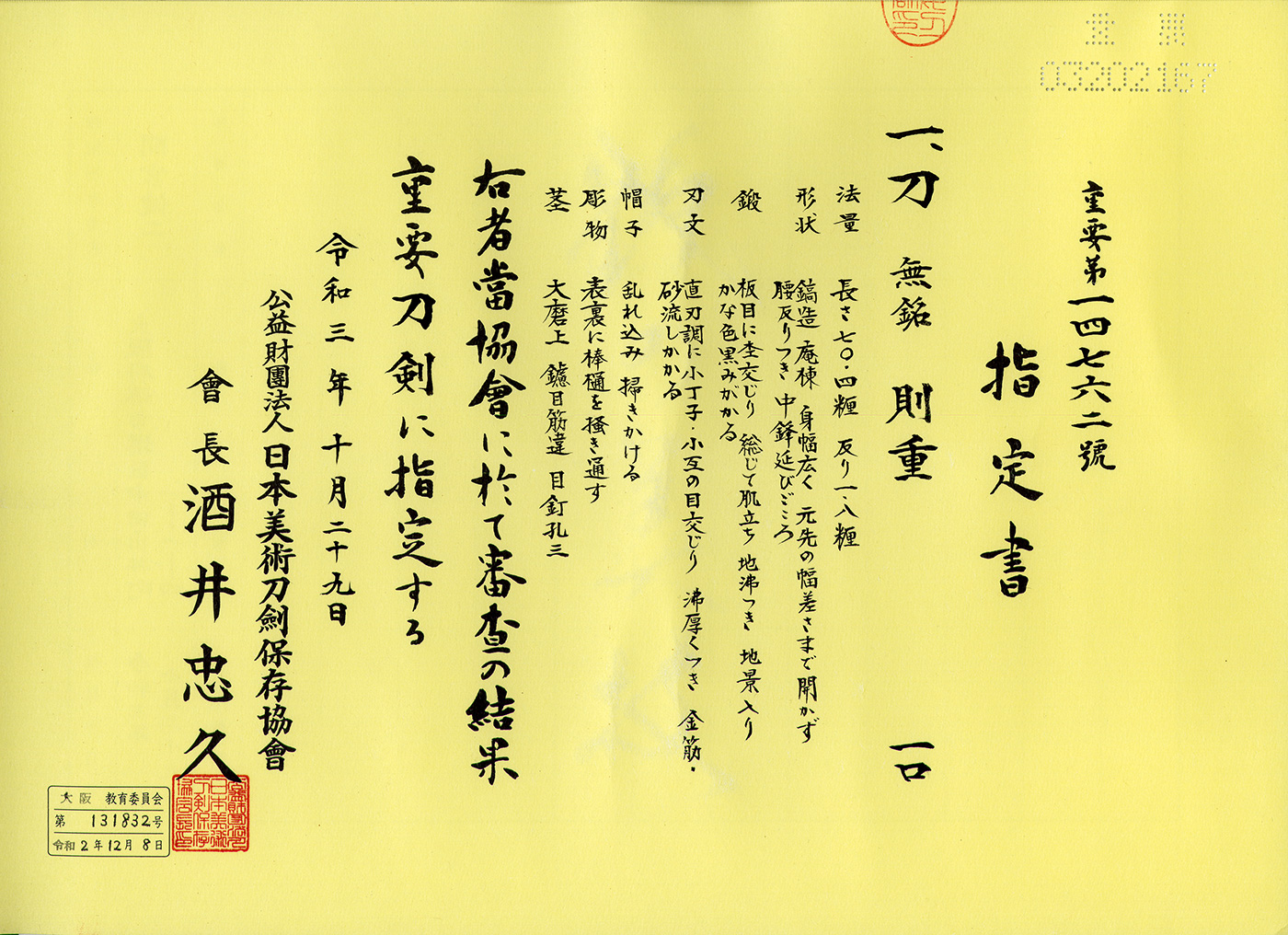
67th NBTHK Juyo Token
Please note: the price does not include the shipping fees.
Auction Starting Price:11,500,000JPY
Place Bid




Related Items:
 Katana: Fujiwara Kuhinide (Enryusai Kunihide)(1847)(NBTHK Hozon Token)
 Katana:Mumei (Unsigned), attributed to Chikakage.(The 41st NBTHK Juyo Token)
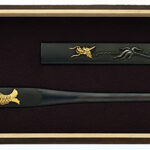 Nitokoro: Goto Kenjo (the 67th NBTHK Juyo Tosogu)
 Set of Tosogu :Kozuka, Kōgai, Menuki(NBTHK Juyo Paper(the 67th NBTHK Juyo Tosogu)
 Katana:Ichi 一 Bizen-koku Yoshioka Sakon Sho (illegible below, Sukemitsu 助光) (the 26th NBTHK Juyo Token)
 Katana: Mumei (Unsigned)(Osafune Morishige) (NBTHK Tokubetsu Hozon Token)