
Ordering Number: AS25633
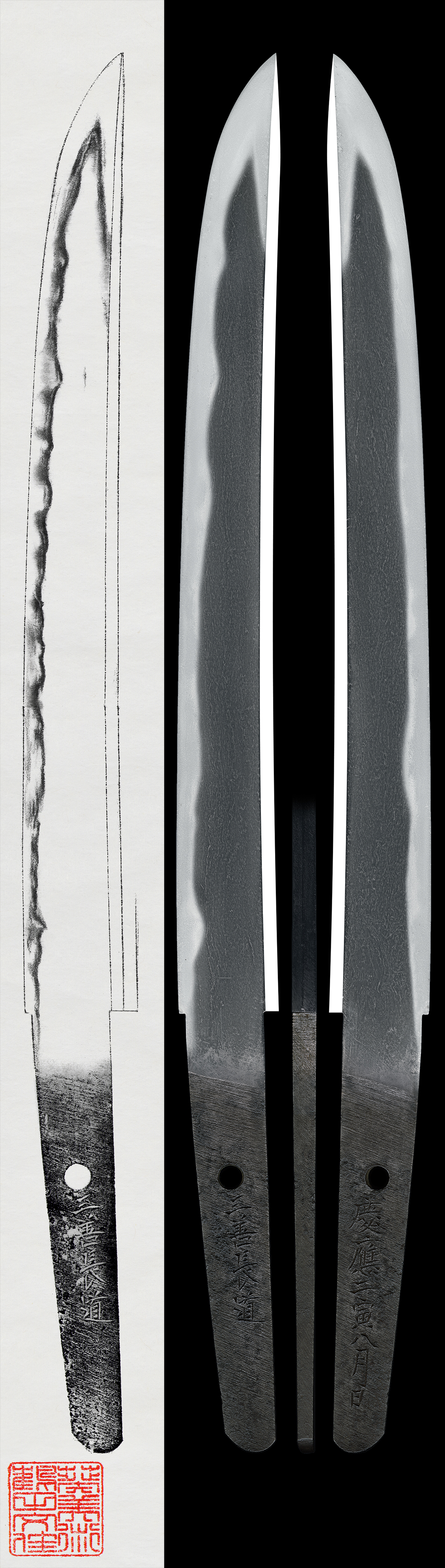
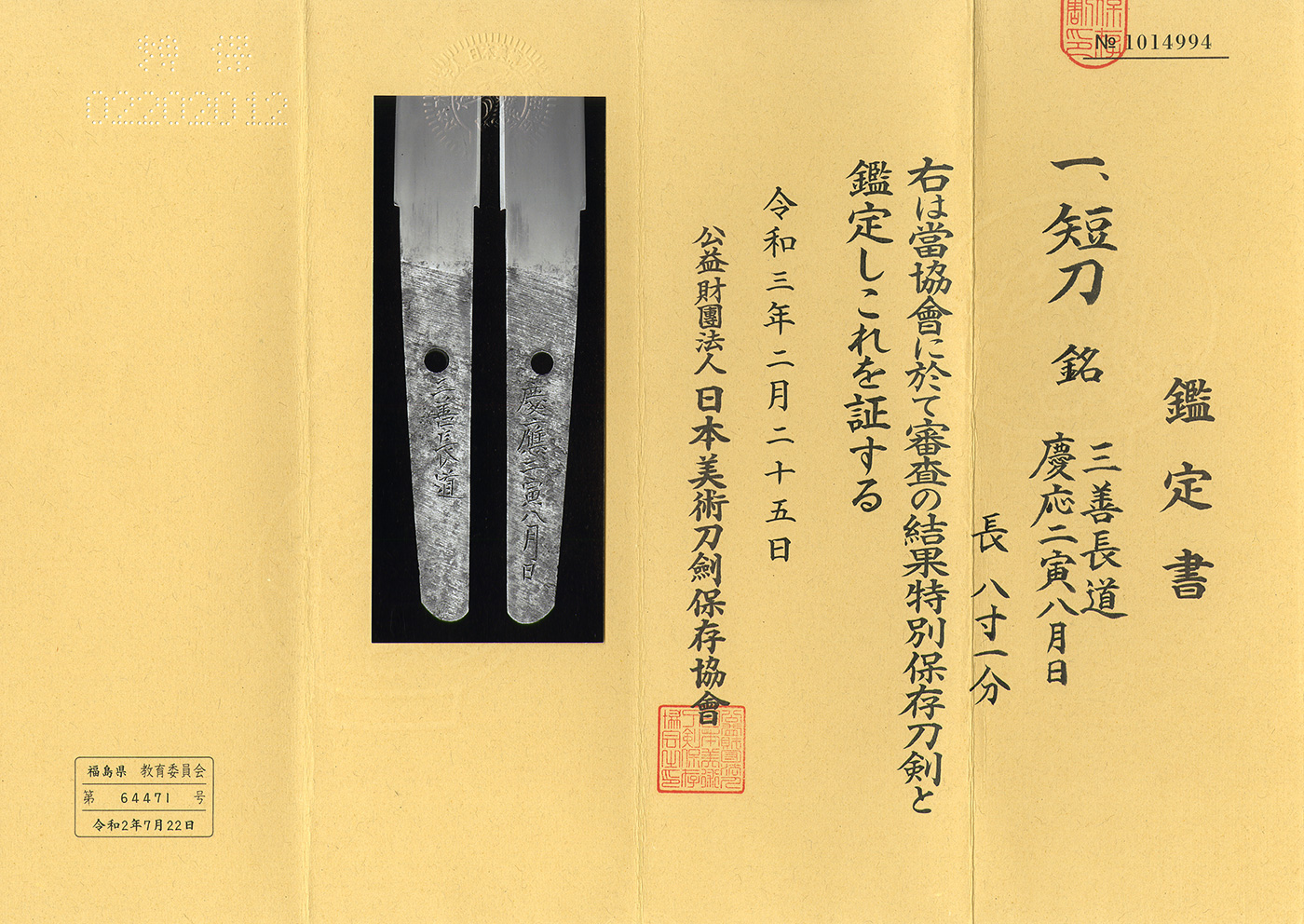
Tanto: Shirasaya with Koshirae (NBTHK Tokubetsu Hozon Token)
Signature: Miyoshi Nagamichi
Dated: August, 1866 (Keio 2, Year of the Tiger)
Shinshinto: Jyojyo Saku: Aizu
We divide 4 sections for each sword as Saijyo Saku, Jyojyo Saku, Jyo Saku and Regular Saku.
This work is ranked as Jyojyo Saku (Upper-Upper Grade).
Habaki: Single-layered copper
Blade Length: 24.5 cm (9.65 in)
Curvature: 0.0 cm (0.00 in)
Mekugi Hole: 1
Width at Base (Motohaba): 2.29 cm (0.90 in)
Width at Tip (Sakihaba): 1 cm (0.39 in)
Thickness of rim (Kasane): 0.5 cm (0.20 in)
Sword Weight: 160 g
Era: Edo period, Keio 2 (1866)
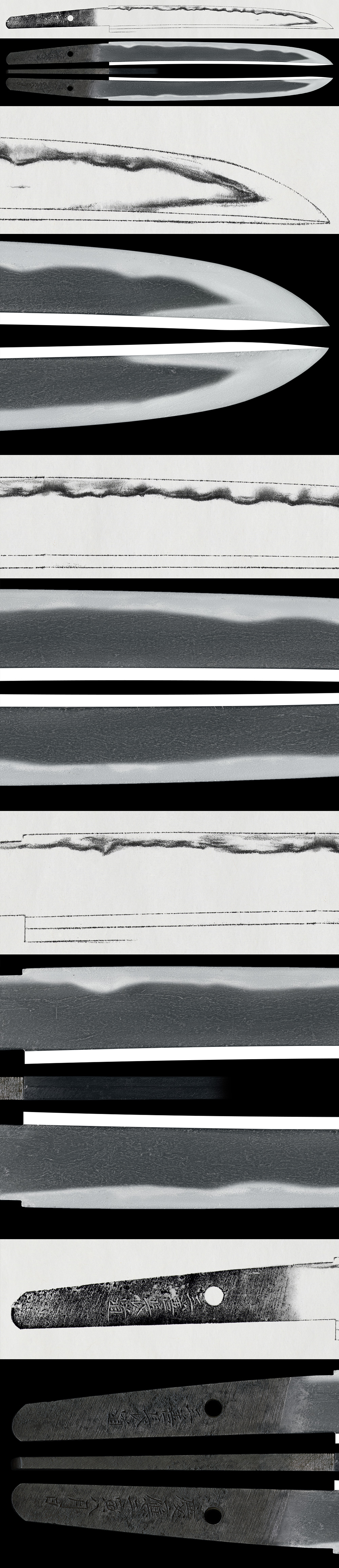
Shape: This piece has a standard width and thickness, with the original temper remaining, making it a healthy blade.
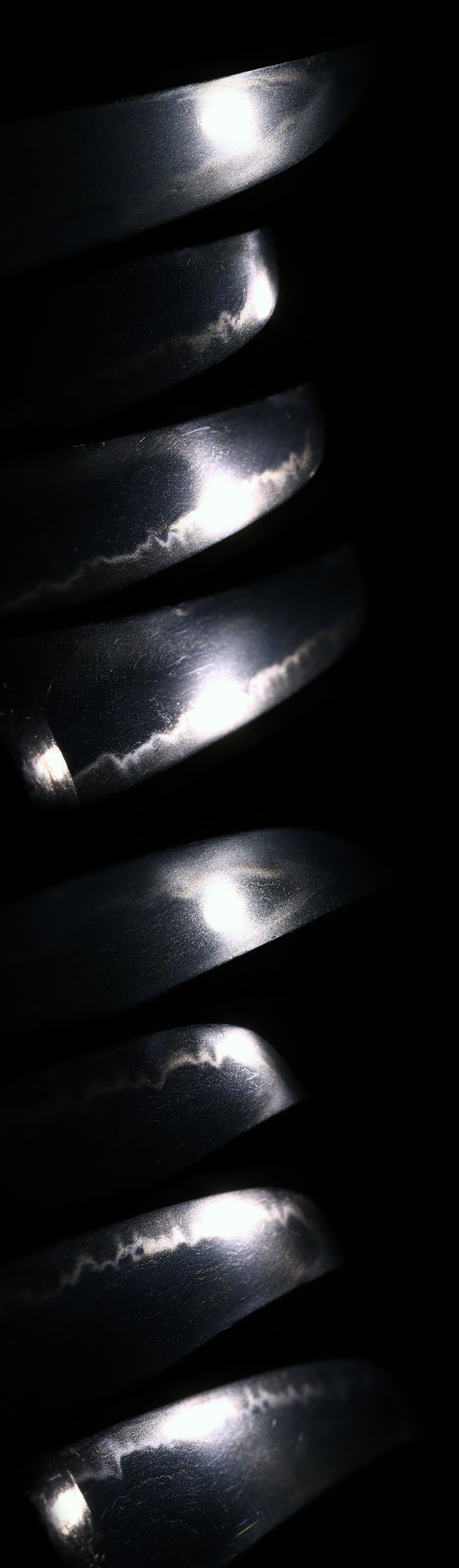
Jigane: The ko-itame hada is well-forged, with visible chikei and clear grain, showing strong resemblance to the style of Kanesada of the Shinshinto period.
Hamon: Choji-midare with nie.
Features:
Miyoshi Nagamichi was active around the Kanbun era of the Edo period, and later revived his work during the Keio era.
The transformation of his jigane from the clear and refined hamon of earlier times to the Shinshinto style of Miyoshi Nagamichi is quite surprising.
This change is thought to have been influenced by the style of Kanesada.
Koshirae:
Fittings: Plain copper, single-layered.
Tsuba: Square-shaped iron tsuba with gold-inlaid patterns.
Fuchikashira: Made of small iron, with high-relief plum blossom designs.
Saya (Scabbard): Glossy black lacquer.
Menuki: Designed with samurai motifs, attributed to Motonori of the Mokarako school.
Kozuka: Iron base with plum blossom design.
Aoi Art’s Comment:
This tanto has a long nakago and retains its original temper, showing that it is a well-preserved piece.
Historical Background:
In 1866 (Keio 2), after the death of the 14th Shogun Tokugawa Iemochi, Tokugawa Yoshinobu became the 15th and last Shogun.
That same year marked the Second Choshu Expedition, in which the Shogunate was defeated and the campaign was abandoned.
Yoshinobu's succession as shogun came in December 1866, following Iemochi’s death during the campaign.
Although the Shogunate aimed to punish the Choshu domain, the effort failed due to both the shogun’s death and unfavorable war conditions.
This work may not have a striking flamboyance, but its modest koshirae reflects a calm and composed atmosphere.
In Aizu's Hinoemata region, such modest pieces were preferred and valued.
While Miyoshi Nagamichi's original works date back to the Kanbun era, this piece was crafted by his descendant during the late Edo period.
Tanto by Miyoshi Nagamichi are considered extremely rare, and the hamon represents a new style distinct from his earlier works.
Certified as genuine by Aoi Art
Whole Oshigata:
Please note: the price does not include the shipping fees.
Auction Starting Price:550,000JPY
Place Bid



Related Items:
 Tanto:Gassan Sadakatsu Kinsaku(Kao)(NBTHK Tokubetsu Hozon Token)
 Tanto:: Mumei (Attributed to Kashu Sanekage) (NBTHK Tokubetsu Hozon Token)
 Tanto: Munetsugu (Province unknown, Shinshinto period)(NBTHK Hozon Token)
 Tanto:Mumei (attributed to Shinshinto Kaifu)(NBTHK Hozon Token)
 Tanto:Chikuzen no Kami Nobuhide Meiji 9 Nen 8 Gatsu Hi (August, 1876)(NBTHK Tokubetsu Hozon Token)
 Tanto: Ichi Chounsai Tsunatoshi (2nd Generation)(NBTHK Tokubetsu Hozon Token)