
Ordering Number: AS25583
Katana with Koshirae (NBTHK Tokubetsu Hozon Token)
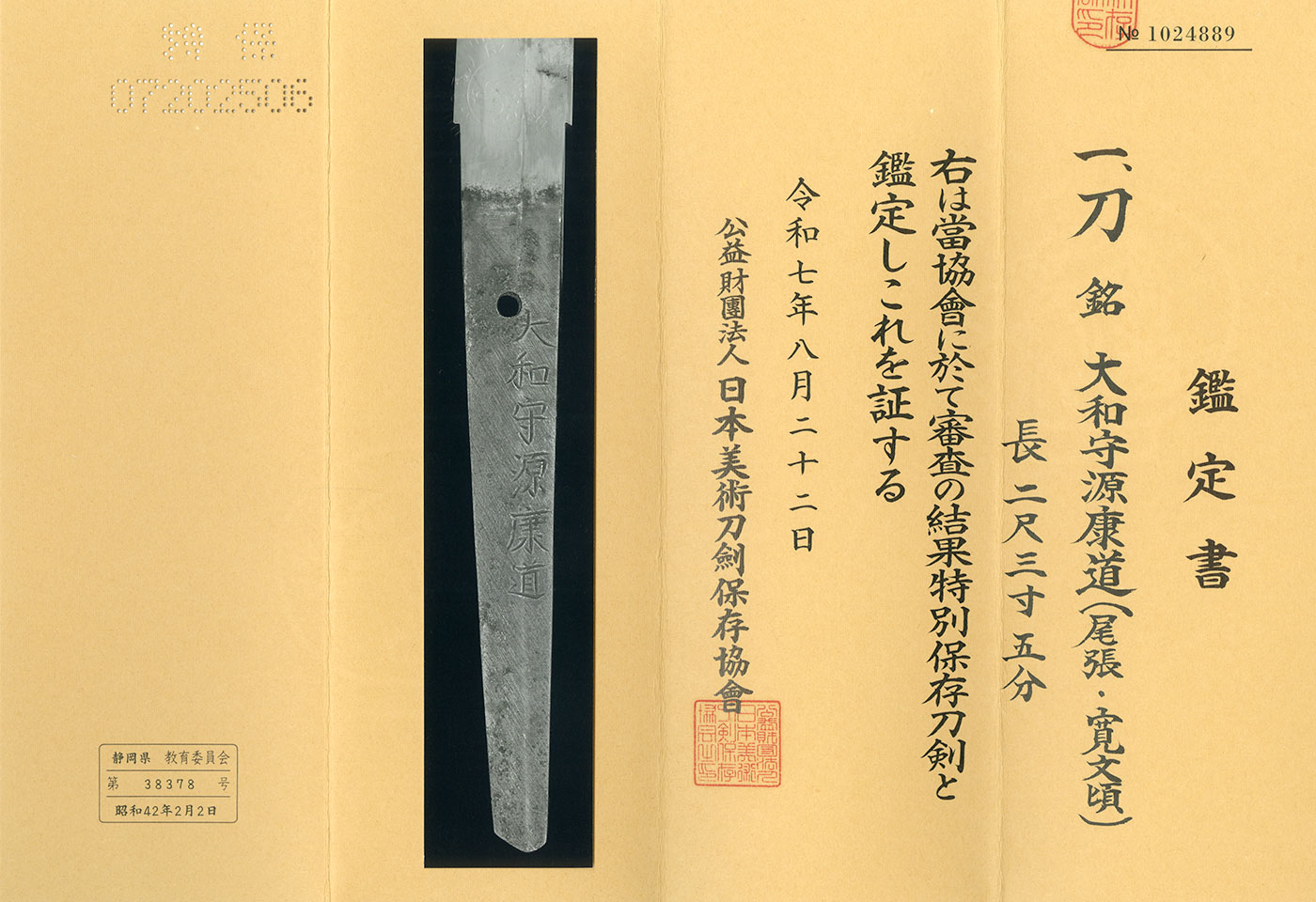
Signature: Yamato no Kami Minamoto Yasumichi
Shinto: Jyo Saku: Mino
We divide 4 sections for each sword as Saijyo Saku, Jyojyo Saku, Jyo Saku and Regular Saku.
This work is ranked as Jyo Saku.
Habaki: Silver-plated, single-piece
Blade Length: 70.2 cm (27.64 in)
Curvature: 0.9 cm (0.35 in)
Mekugi Hole: 1
Width at Base (Motohaba): 3.08 cm (1.21 in)
Width at Tip (Sakihaba): 2.16 cm (0.85 in)
Thickness of rim (Kasane): 0.76 cm (0.30 in)
Sword Weight: 780 g
Era: Edo period
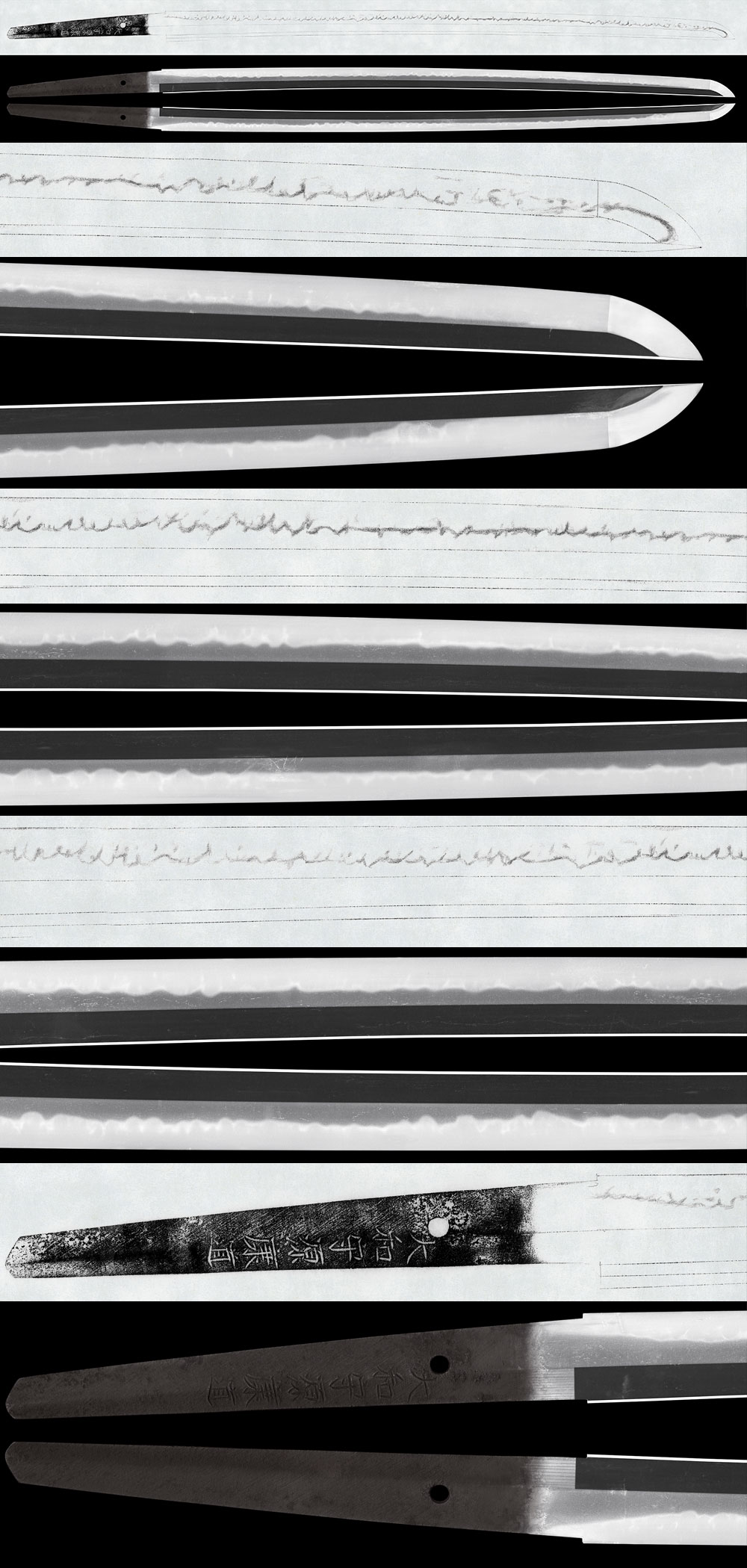
Shape: Ubu nakago, with standard width and thickness.
The kissaki is slightly extended with a shallow curvature, giving the impression of a sharp and functional blade.
Jigane: Well-forged ko-itame hada, resulting in a beautiful steel surface.
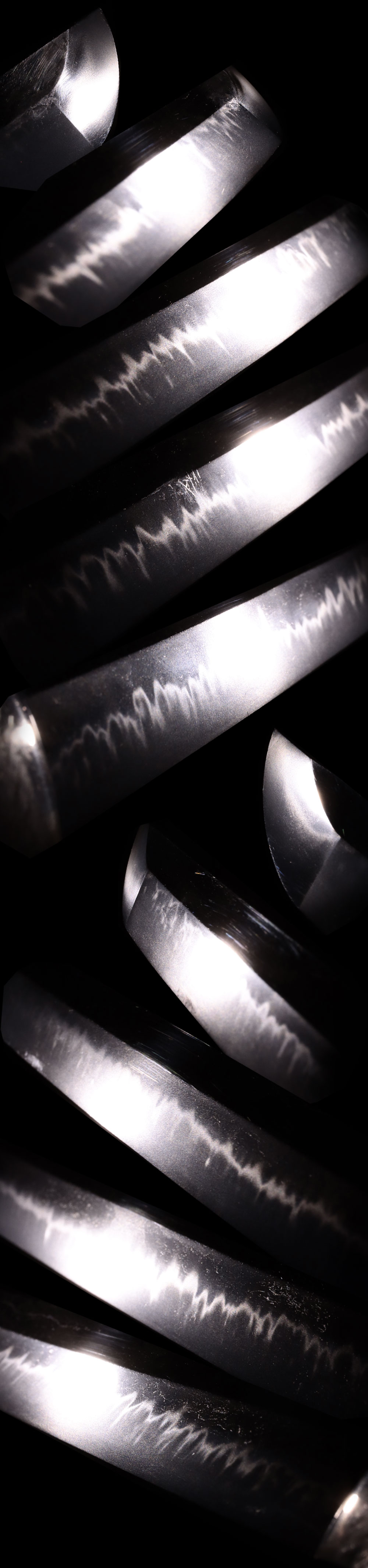
Hamon: Starts with a straight temper line (suguha) near the hamachi, transitioning into a choji-midare pattern.
The nioiguchi is deeply defined, and from the hamachi to the middle of the blade, the hamon resembles an Ichimonji-style pattern.
Features: A very well-made blade with a choji hamon in Ichimonji style, particularly fine from the hamachi to the middle of the blade.
Beyond that point, the hamon reaches the shinogiji, and the boshi curves roundly, resembling an ichimai-style turn.
Koshirae:
Tsuba: Round iron tsuba with a silver-wrapped rim.
Openwork engraving of bamboo patterns, with additional gold decorations.
Fuchikashira: Made of shakudo with high-relief carving of sea shells and gold inlay coloring.
Saya (Scabbard): Unique lacquer with a mix of dark brown and black.
Kojiri: Iron with engraved patterns.
Menuki: Shakudo with high-relief carving and gold inlay coloring.
Aoi Art’s Comment:
This blade displays a well-executed choji hamon in Ichimonji style, with excellent craftsmanship and superior jigane.
Masame pattern appears in the shinogiji.
Historical Background:
As the Muromachi period gave way to the Edo period, the shape of swords changed significantly.
This piece reflects the Kanbun Shinto style, characterized by a longer boshi.
In Mino province during this time, the production of tanto decreased dramatically due to low demand, leading smiths to focus on katana and wakizashi.
This work, clearly aiming to emulate the Ichimonji style, was skillfully produced in such an era.
It is believed that the smith worked wherever he could to survive, producing swords with determination.
AoiArt estimation paper
Whole Oshigata
NBTHK Tokubetsu Hozon Token
*Shipping fee is not included in the price.
Please note: the price does not include the shipping fees.
Auction Starting Price:650,000JPY
Place Bid




Related Items:
 Katana:: Mumei (Ichimonji) (NBTHK Tokubetsu Hozon Token) (Consignment Sale)
 Tachi : Ichi(judged as Yoshioka Ichimonji)(NBTHK the 41st Juyo Token)
 Katana:Mumei (attributed to Den Ichimonji)(NBTHK Tokubetsu Hozon Token)
 Katana: Mumei (Iwato Ichimonji) (also known as Shochu Ichimonji)(NBTHK Tokubetsu Hozon Token)
 Tachi: Norinari (Ko-Ichimonji)(69th NBTHK Juyo Token)
 Katana:Kawachi Kami Kunisuke (Second Generation, Nakakawachi) (NBTHK Tokubetsu Hozon Token)